


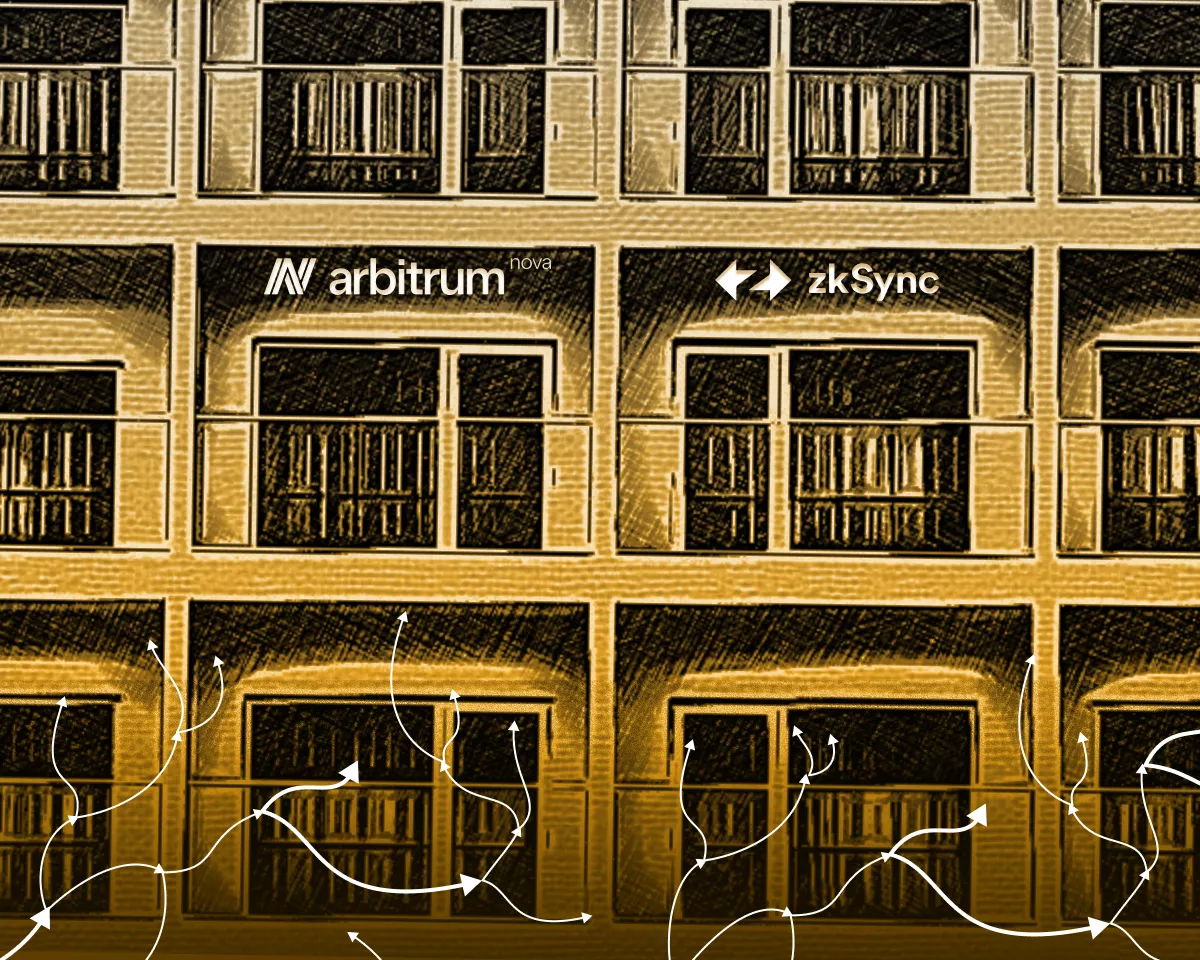
Expert Advocates for Rollup Diversity, Comparing Them to City-States
Second-layer solutions are finding it increasingly difficult to retain developers and attract major dapps, according to Dovey Wan, founder of Primitive.Ventures. She likened the governance model of rollups to city-states.
GM Denver, some thoughts on the dynamic bwtn supers dapp and L2s in my morning coffee journal ? (a bit wordy):
I don’t know what’s the edge/moat for all up and coming generic L2s to retain devs and super dapps. long tails dapps gonna be just dev farm, and top dapps like… pic.twitter.com/Jev11Pix0T
— Dovey “Rug the fiat” Wan (hiring) (@DoveyWan) February 27, 2024
In her view, many projects with “limited vision” will become “farming grounds” for developers, while large decentralized applications will launch their own networks.
“I expect to see more and more sovereign rollups in addition to existing ones like Osmosis in the Cosmos ecosystem and many others. Tendermint SDK is the most viable modular solution, functioning since 2017,” Wan added.
She also noted that the largest solutions by TVL — Arbitrum and Optimism — are simultaneously important infrastructure platforms for many dapps.
“L2 is essentially a service: block execution time, proof method, liquidity, volume, data storage. All of this can fit into one service. A cheap and fast market entry is all that decentralized application developers want,” added the head of Primitive.Ventures.
For Wan, managing second-layer networks “resembles playing SimCity,” where one must simultaneously develop technical infrastructure, business, and culture.
She drew an analogy between rollups and city-states. In the former, demand represents the consumption of computing resources by developers and dapp users, while in the latter, it is the willingness of citizens and merchants to stay and transact.
Similarly, Wan compared taxes to gas fees and token inflation.
“Different city-states emphasize their uniqueness to citizens — some may boast the best financial services, like Hong Kong and Singapore, others offer excellent healthcare or retirement options, like Florida in the USA […]. Each new L1 or L2 network inevitably evolves, developing its own distinctive atmosphere and unique attributes, creating microspaces,” concluded the entrepreneur.
Previously, Ethereum co-founder Vitalik Buterin expressed concern about the “complexity” of L2 solutions. He called for balanced development of different layers to reduce risks and prevent bugs.
Earlier in February, Tron founder Justin Sun announced plans to develop a network for scaling Bitcoin. Before that, Cardano head Charles Hoskinson criticized the idea of L2 networks on the first cryptocurrency’s blockchain.
Рассылки ForkLog: держите руку на пульсе биткоин-индустрии!