



Weekly Review: Ethereum Outpaces Bitcoin, Tornado Cash Sanctions Lifted
Bitcoin remains stagnant at $97,000, Ethereum reaches $3,700, a court lifts sanctions against Tornado Cash, Russia legalizes cryptocurrency taxes, and other events from the past week.
Bitcoin Stalls, Ethereum Shows Growth
Over the past week, the price of the leading cryptocurrency has remained largely unchanged. At the time of writing, Bitcoin is trading around $97,000.
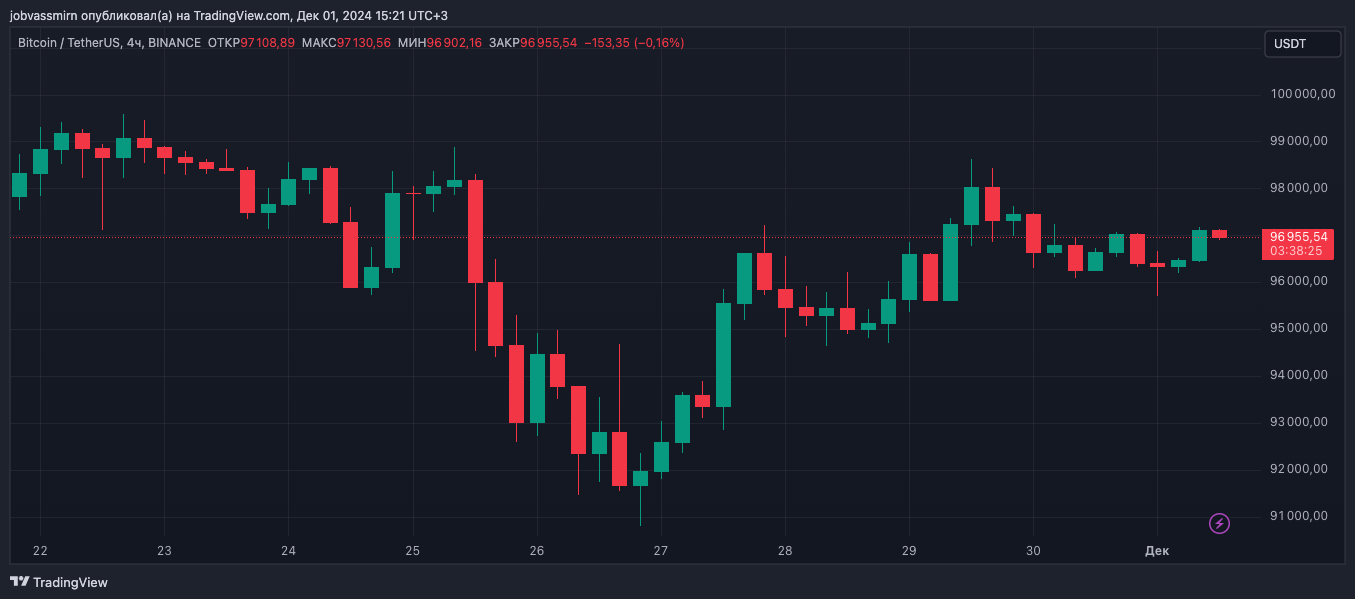
Midweek, Bitcoin experienced high volatility, rapidly dropping from $98,000 to $91,000, only to quickly recover to its previous levels.
In contrast, Ethereum’s price showed positive momentum. On the night of November 28, it rose and stabilized around $3,700, surpassing Bitcoin in weekly growth — 12% compared to 0.2%.
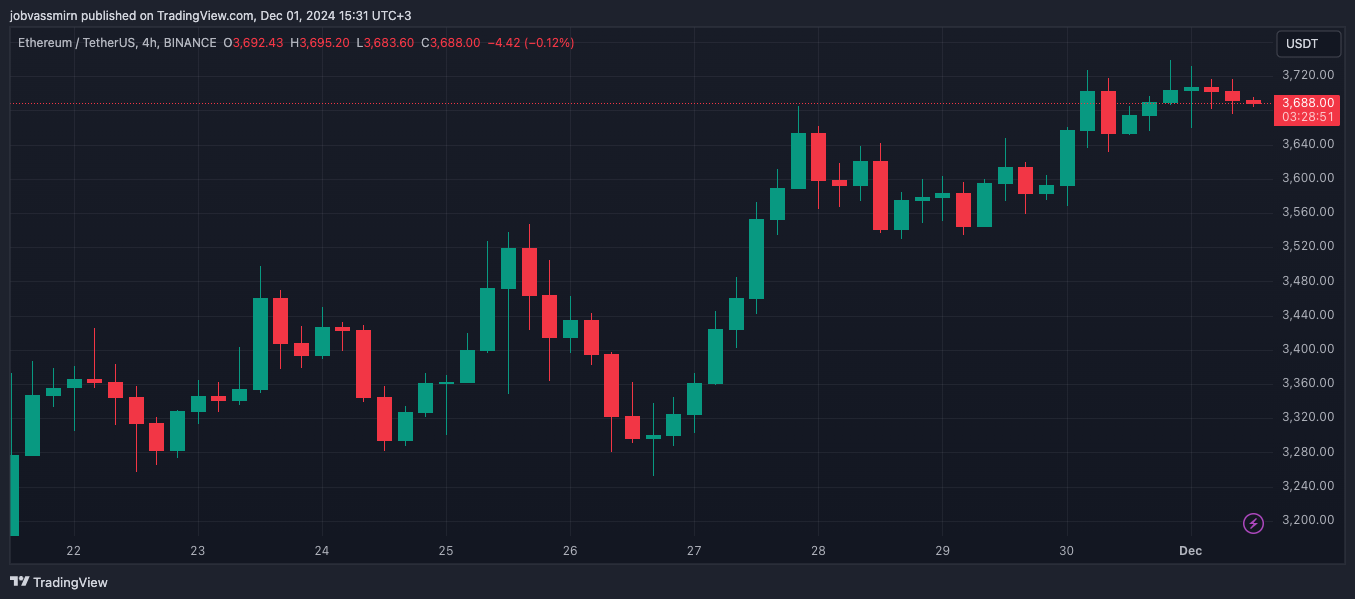
An analyst known as Wolf identified a “Triangle” pattern forming on the ETH chart since November 2021. He believes a potential breakout from this consolidation zone targets $20,000. Another expert, VentureFounder, pointed to a “cup and handle” pattern with a target of $7,200 by Q1 2025.
Additionally, the blockchain of the second-largest cryptocurrency by market capitalization regained dominance in USDT stablecoin supply after TRON took the lead in August 2022.
Other top-10 assets show mixed results.
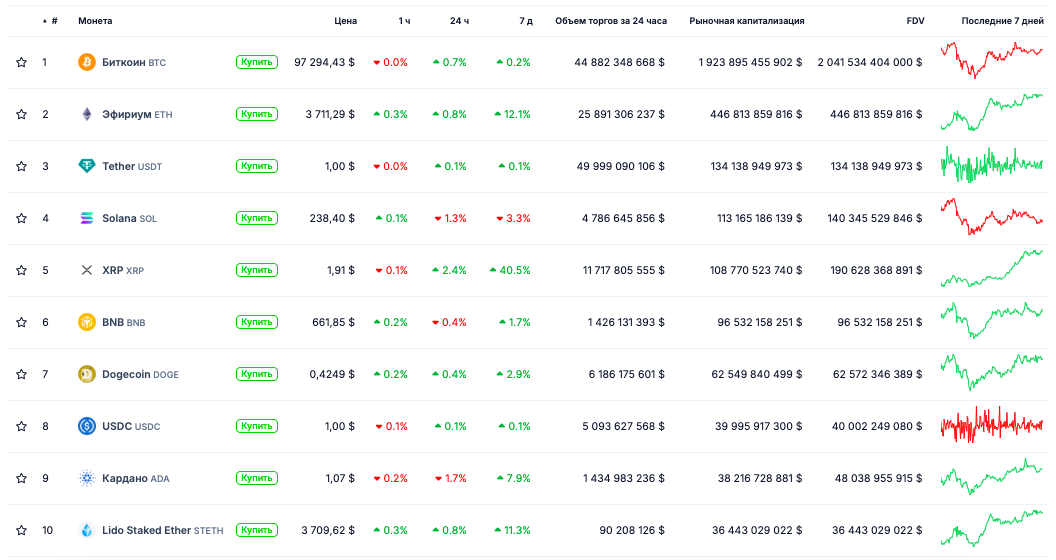
XRP emerged as the week’s leader with a 40% increase. The asset is approaching $2 and is currently trading around $1.9, buoyed by the change in leadership at the SEC and the potential resolution of the lawsuit against Ripple.
Solana experienced the largest decline (-4.8%), entering a correction after reaching a recent all-time high.
The total cryptocurrency market capitalization exceeds $3.59 trillion. Bitcoin’s dominance index stands at 53.5%, while Ethereum’s is 12.4%.
Tornado Cash Sanctions Lifted
On November 26, the U.S. Fifth Circuit Court of Appeals ruled that the OFAC overstepped its authority by imposing sanctions on the cryptocurrency mixer Tornado Cash.
“The immutable smart contracts of Tornado Cash (lines of code ensuring privacy) are not ‘property’ of a foreign national or entity, meaning they cannot be blocked under the IEEPA and that OFAC exceeded its congressionally delegated authority,” stated the panel of judges.
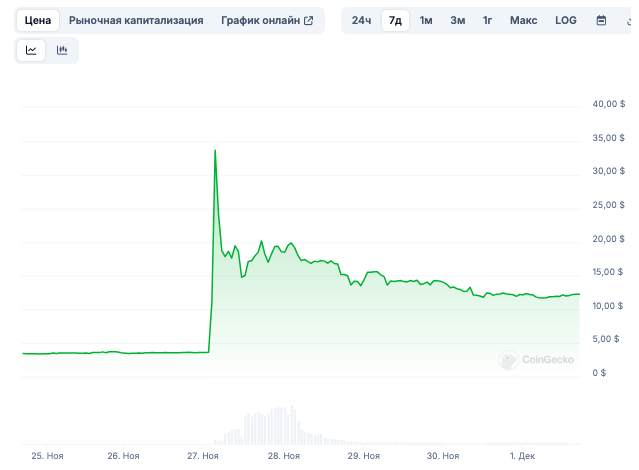
Following the news, the price of the mixer’s utility token TORN surged approximately 870% — from $3.6 to a peak of nearly $35. At the time of writing, it is trading at $12.25.
In a special ForkLog article, lawyer and Aurum partner Sergey Ostrovsky analyzed the decision, key positions in the case, and its potential implications for the blockchain industry. He stated that the event represents a significant victory for the sector and holds great importance for financial privacy overall.
Nevertheless, the fate of Tornado Cash team members remains unchanged. At the end of November, a court extended the pre-trial detention of developer Alexey Pertsev. Co-founders Roman Storm and Roman Semenov also face charges of money laundering and sanctions violations in the U.S.
New Theory on Satoshi
According to a new hypothesis by BTCparser researchers, Bitcoin creator Satoshi Nakamoto did not disappear but became a “mega whale.”
The theory suggests that after leaving the public eye, Satoshi anonymously mined Bitcoin and amassed a significant fortune. In 2010, he created numerous wallets, each holding 50 BTC. The developer deliberately avoided using old addresses for privacy reasons.
Since 2019, a researcher has been tracking a cluster of wallets selected based on specific criteria and found that about 24,000 BTC have been withdrawn from them over this time.
The first presumed cash-out occurred in November 2019. The latest — on November 15, 2024 — involved the “awakening” of 2,000 BTC across 40 wallets, valued at approximately $176 million. Coinbase is reportedly aware of the “mega whale’s” identity.
End of Streams on Pump.fun
The new streaming feature on the meme-token creation platform Pump.fun initially seemed harmless, but users began resorting to controversial methods to draw attention to their tokens.
Streamers on the platform locked themselves in dog cages, fired guns out of windows, and threatened to kill family members. Amid the scandal, community members urged developers to address the issue.
As a result, the Pump.fun team had to disable the live streaming feature, citing a lack of moderators amid significant popularity growth.
The decision severely impacted the platform’s finances — by November 27, daily revenues for the “meme-token factory” fell to $3.5 million from a peak of $5.3 million just days earlier.
Simultaneously, leading meme-coins lost their growth momentum. Over the week, the GMMEME indicator, which tracks the top-30 meme-coins, decreased by 0.95%. Min Chong of Presto Research pointed to an “overheating” of the sector.
Arthur Cheong, founder, CEO, and CIO of Defiance Capital, noted a resurgence of interest in Ethereum and DeFi protocols. Inflows into the segment may come from closing positions in meme-tokens, the expert suggested.
What to Discuss with Friends?
- Peter Schiff predicts MicroStrategy’s bankruptcy.
- Scientists create an AI device for speech restoration.
- Analysts name the leading countries in crypto project failures and scams.
- Ethereum co-founder transferred 20,000 ETH to Kraken.
Bridge to Bitcoin in TON
The Open Network (TON) team has published technical documentation for the TON Teleport BTC cross-chain bridge. The solution allows autonomous, third-party-free transfers of the leading cryptocurrency within the ecosystem.
Asset transfers from the Bitcoin blockchain occur via a unique TON Teleport address. After six block confirmations, a smart contract issues an equivalent amount of tgBTC. The process is verified by the Bitcoin Light Client, which also operates as a TON contract.
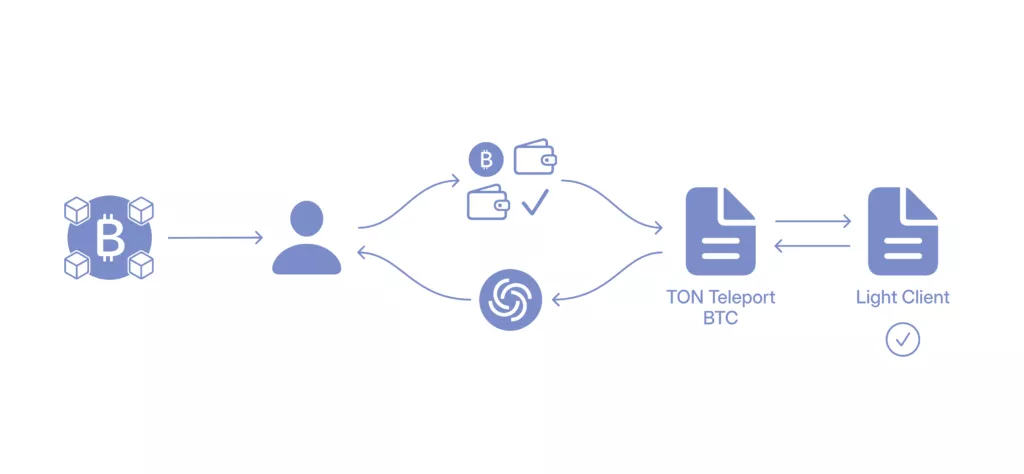
To withdraw, a user burns their tgBTC, initiating the transfer of coins to a specified address. Compliance with all parameters is overseen by masterchain validators.

Developers noted the potential of the Bitcoin bridge for the DeFi segment. However, the solution will operate in testnet mode until the end of the year, with the mainnet launch planned for Q2 2025.
Cryptocurrency Taxes in Russia
On November 26, the Russian State Duma passed a law on digital currency taxation in both the second and third readings. On November 29, it was signed by President Vladimir Putin.
The document, which recognizes cryptocurrency as property, has already come into effect. The tax base is determined as the excess of the asset’s value over the costs of its purchase or mining.
Individuals are subject to a personal income tax rate of 13-15%. Legal entities are charged a 20% profit tax — which will increase to 25% in 2025. Mining and asset sales are exempt from VAT.
However, cryptocurrency mining infrastructure operators must report their activities to the FTS. Failure to comply with this requirement results in a fine of 40,000 rubles.
According to the Central Bank, Russian users conducted cryptocurrency transactions worth 4.8 trillion rubles in the second and third quarters of 2024. This figure is 18% higher than the previous reporting period.
Also on ForkLog:
- Quantum technologies or supercomputers: Who will crack Bitcoin?
- A collector borrowed $2.75 million against a CryptoPunk.
- Experts call the current Bitcoin pullback a pause before a rise to $100,000.
- A YouTuber was caught in a $3.5 million meme-coin scam.
What Else to Read?
ForkLog explored how cryptocurrency scams are similar to and different from traditional ones.
In the traditional digest, we gathered the week’s main events in cybersecurity.
Рассылки ForkLog: держите руку на пульсе биткоин-индустрии!