Dmitry Buterin on conspiracy theories about Ethereum and the Foundation
The surge in institutional demand for ether is the result of several fundamental shifts. Dmitry Buterin discusses a crypto-friendly Donald Trump administration, developers on the Ethereum payroll and Vitalik Buterin’s lack of interest in money.
ForkLog (FL): I know you were born in Grozny and lived there until you were 18. What do you remember about the city of your childhood?
Dmitry: It was the Soviet Union, where the prevailing idea was that one wise state machine could make decisions for everyone. And it clearly didn’t work. Everything ran ass-backwards. Enterprises, health care, education—everything worked so-so. But that’s me speaking now with the benefit of life experience.
FL: What was your dream?
Dmitry: I don’t remember if I had a dream, but I was very curious. And I learned to read early. From about three and a half, I think. Our home had a huge number of books—several thousand, probably. I read everything. Then came an interest in electronics, then computers, and a desire to work with computers and programming. Although, in the end, I worked as a programmer for a very limited period.
FL: After moving to Canada you had several businesses, and you sold the last one for $15m and retired. What are you doing now?
Dmitry: My mind is absorbed by a few things. I continue to be interested in cryptocurrency and follow the space closely. Another area I’m diving into is AI. The technology will clearly be a radical driver of change for all humanity in the coming years.
FL: Are money an important component of a happy life?
Dmitry: A happy life has no components. You can take a person who has all the wonderful components of life: money, relationships, children. And he goes and kills himself. Happiness is something people invent for themselves. They try to simplify and think that happiness is the result of certain circumstances. I no longer believe that. Happiness is available in any circumstances and, conversely, no circumstances can bring or guarantee happiness.
Money is a very powerful abstraction and concept, because fundamentally there are very few basic things at the core of a human being.
FL: You mentioned you follow crypto. Which projects would you single out now?
Dmitry: I wouldn’t say I’m particularly focused on tracking specific projects. I try to look on a deeper, intuitive level at what’s happening overall. And I have considered and still consider Ethereum the best crypto system anyone has invented. I mainly look at it and the huge number of things built on top of it—various L2s and applications.
FL: How much money do you keep in crypto assets?
Dmitry: 95%.
FL: Vitalik came up with ether after moving to Canada. Were conditions there better for creating a cryptocurrency than in Russia?
Dmitry: Things happen only the way they can happen. At that time there were no ideas of cryptocurrencies yet. There was the concept of Bitcoin. And many already realised that it was a cool idea and seemed to work. People in many countries started trying to improve it. Initially Vitalik’s idea was to add a programming language to the first cryptocurrency; that would make it a much more powerful construct.
FL: Vitalik doesn’t live like a billionaire—no yachts or expensive cars. Why?
Dmitry: Such is God’s will that he absolutely couldn’t care less about money. He respects it and spends carefully. There was a thread on Twitter recently where Vitalik wrote that when he’s in a hotel, he doesn’t feel like spending $4 to have his underwear laundered. He can wash it by hand in the room. And at the same time he’ll have no problem donating $100,000 for Roman Storm’s legal defence or $10m to support Ukraine. His attitude to money is entirely different from others’.
FL: What happens to Ethereum without Vitalik? Is he a single point of failure?
Dmitry: I see that he’s still a very important figure for the Ethereum ecosystem. Although he has always wanted to avoid that role. Even at the start, when he wrote the white paper, he thought he would propose smart ideas, publish them on the internet, then some cool people would come and implement everything. It didn’t turn out that way; life forced him to be very deeply involved. It was often not easy, because he’s a sincere person and a wonderful leader, but he isn’t drawn to operational management. He couldn’t run a big corporation like Jeff Bezos.
FL: How did changes at the Ethereum Foundation affect the renewed interest in ether?
Dmitry: The Ethereum Foundation has become much better at communication, focusing not only on core technologies—which is super important and remains a big focus—but also on engagement with the community. At long last the Ethereum Foundation has started doing some sort of marketing.
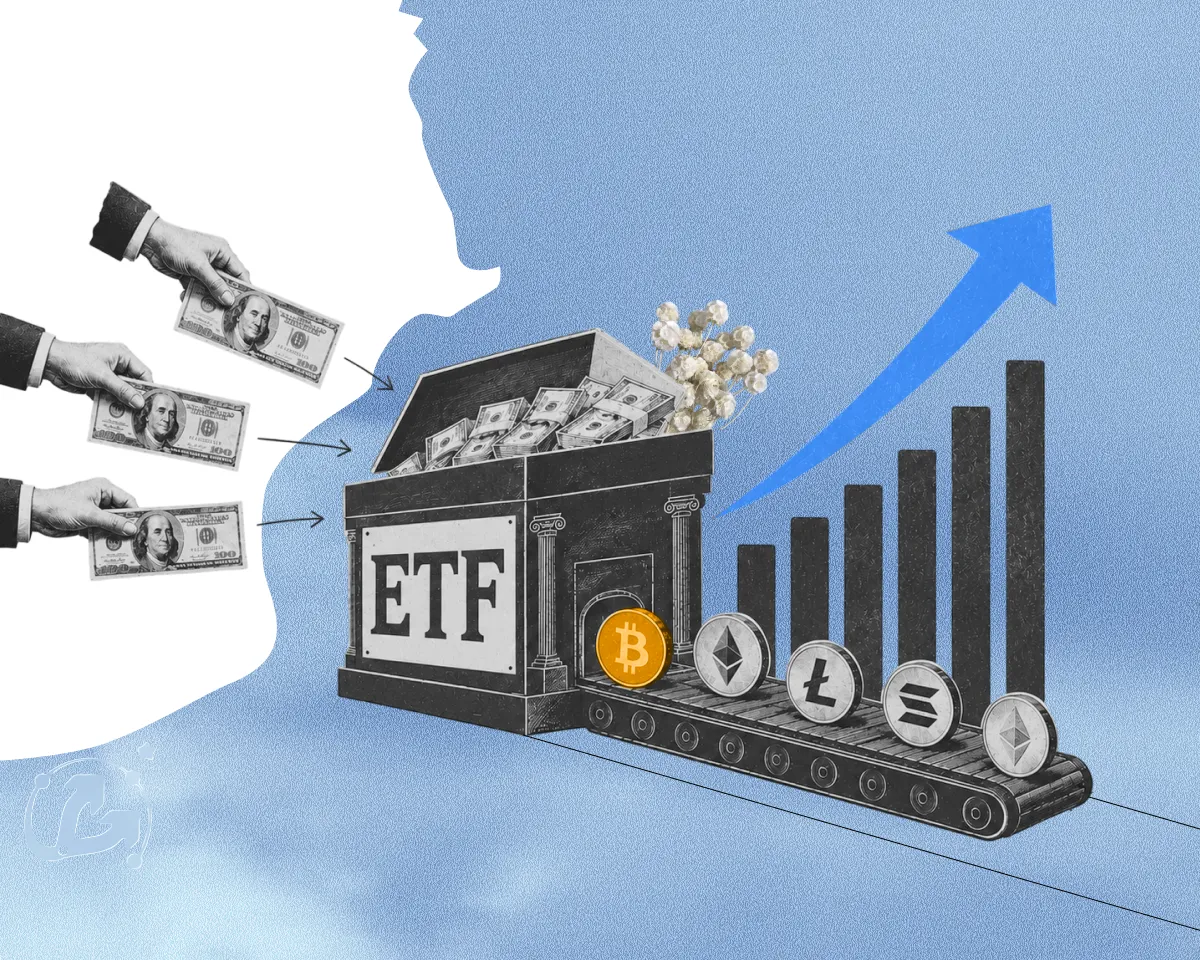
FL: Lately we’ve seen strong institutional demand for ether, which wasn’t there before. Was this driven by changes at the Ethereum Foundation?
Dmitry: Everything has endless causes. The reshuffling at the Ethereum Foundation is only one component. The second big part is changes in the American administration. The previous four years, under [Joe] Biden, it was very aggressive and negative, and treated cryptocurrencies in a downright brutish way. There was no clarity. That has changed sharply. Another reason is the development of the protocol itself—its maturity.
FL: Which is better: Proof-of-Stake or Proof-of-Work?
Dmitry: To me it’s obvious: Proof-of-Work is more centralised. It’s purely a matter of mathematics. Say you have $1m or $10m. If you stake it, then, give or take, you’ll still have that $1m or $10m. If you mine, you get far more economic advantage. If you have $10m, not $1m, you’ll buy chips at different rates and electricity cheaper. If you have more money, you get more yield. And that inevitably leads to growing centralisation in mining, in Proof-of-Work. From my point of view, staking is a much more democratic system, with its inevitable problematic constraints that the Ethereum ecosystem is, in fact, trying to address.
FL: There’s an opinion that Ethereum Foundation developers draw salaries and write code for ether—and if you remove the organisation, everyone will scatter, unlike with Bitcoin. Do you see an element of centralisation in this?
Dmitry: They’re both open-source projects. As I understand it, most protocol developers are not on the Ethereum Foundation payroll. That’s precisely what the foundation was long criticised for. Instead, they have many other mechanisms. They give grants and coordinate certain things. Look at decentralisation from the standpoint of the variety of clients. How many different implementations of the Bitcoin or Solana protocol are there?
FL: Do you see an element of centralisation in the sudden appearance of many public companies buying ether? As if there’s an invisible hand in the form of the Ethereum Foundation and people connected to it that snapped their fingers and launched the process.
Dmitry: We can dream up a million explanations—for example, that a devious Vitalik sat in a basement and plotted such a strategy. But in reality it’s the result of everything we’re seeing in the world. There are thousands, hundreds of thousands, millions of people doing their own things, and sometimes all those actions add up to big changes, very abruptly.
FL: What opportunities do you see for the symbiosis of cryptocurrencies and artificial intelligence?
Dmitry: One very obvious thing is AI agents. When they interact with each other, the question arises of how to handle payments. Ordinary money won’t do for them, but cryptocurrencies will.
Subscribe to the podcast:
Рассылки ForkLog: держите руку на пульсе биткоин-индустрии!