


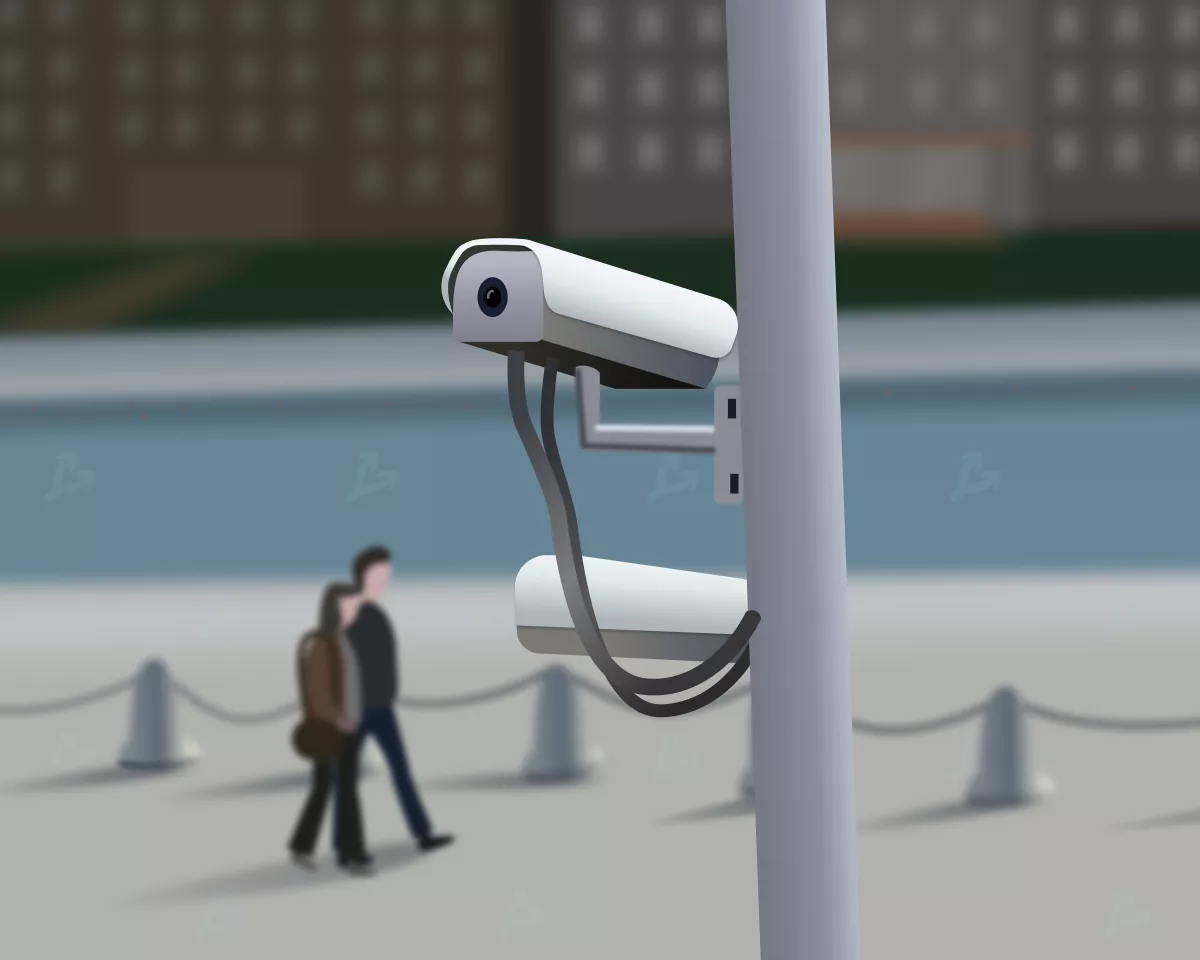
From the capital, with love: how facial-recognition technology is being rolled out in Russian cities
The rise in the number of surveillance cameras on streets in megacities and small towns is a global trend. Authorities justify such measures as safeguarding public and national security, while human rights advocates call it an invasion of privacy.
Russia is no exception. As TelecomDaily notes, by the end of 2020 the countrywide total of surveillance cameras stood at 13.5 million. Of these, 4.4 million were installed at the state’s expense, for example in schools, hospitals, on roads and in squares.
These cameras cannot be described as “smart”. Most of them merely record what happens within their field of view, and when necessary, operators or law enforcement review the footage to search for offenders.
But the more cameras there are, the more hours of video they generate, which is impractical to analyse manually. Therefore the public sector is keen to develop and use ready-made intelligent tools for automatically detecting the people and events it needs.
- By 2020, 4.4 million cameras were installed at public expense.
- Moscow leads Russia in the use of facial-recognition technologies from street surveillance cameras.
- In 2020, the Moscow facial-recognition system began operating in full.
- Regions plan to develop urban security systems along Moscow’s model.
- Human rights advocates emphasise the lack of a legal framework for the use of facial-recognition systems in Russia.
Moscow’s blueprint: from pilot to large-scale rollout
Surveillance cameras have adorned Moscow’s buildings, streets and squares for decades. However, before 2016 they were used chaotically, and many did not work at all.
Moscow’s mayor Sergey Sobyanin promised to bring the situation under control, announcing the integration of Moscow’s cameras into a single “Safe City” complex, which at the time numbered over 150,000. There was also talk of using facial-recognition technologies within the capital’s surveillance system. These measures were intended as the first step toward implementing the federal programme approved by the Russian government on 3 December 2014.
Over the year, Moscow’s Department of Information Technologies (DIT) launched a pilot project, connecting 3,000 city cameras to the facial-recognition system. At the time, it was one of the world’s largest infrastructures for identity identification at that scale.
According to DIT, the system could identify a person, determine their age and gender within a few seconds. Neither the mayor’s office nor the department named the supplier of biometric-identification technologies, but according to Bloomberg, they used a solution from the Russian company Ntech Lab, which in 2016 released the FindFace app, allowing one to locate a profile on the VKontakte social network from a single photograph.
In 2017 the system was connected to 16,000 cameras. During the trial, police managed to detain 50% of offenders who were being sought with the help of the analytical tools. Authorities stressed that access to the system was restricted, and law enforcement could consult it only in accordance with current law, recording each request.
In 2018 testing continued. City authorities increased the number of cameras in public places and updated about 40% of the existing equipment. In December, Sobyanin said that full launch of the city’s “Safe City” system was planned for 2019, allocating 13.5 billion rubles in the city budget for this purpose.
However the launch was delayed again and took place only on 1 January 2020. At that time Moscow authorities confirmed that they had acquired the facial-recognition technology from the company Ntech Lab.
Expansion into the Regions
In the regions, the rollout of the state programme “Safe City” looks different. Unlike the capital, provincial cities cannot afford to invest hundreds of millions of rubles in a surveillance system from local budgets without federal subsidies.
According to Government Resolution of 25 March 2015, local authorities were obliged to compile a list of places with large crowds, install surveillance cameras there and store the data from them for 30 days.
In October 2017, the authorities of Saint Petersburg launched a pilot test of the “Safe City” complex using AI algorithms the same as in Moscow.
In 2020, the Committee for Information and Communications published that the number of city cameras connected to the system exceeded 39,000.
Other Russian cities are also attempting to implement the capital’s model. At the end of 2020 it emerged that Moscow’s video-analytics system would be launched in 10 large cities across Russia, though which ones was not specified.
The same Ntech Lab supplied the facial-recognition systems; the solutions are used in Moscow and Saint Petersburg. Using Nizhny Novgorod as an example, developers explained how they are rolling out the complex in the regions.
According to Ntech Lab, implementing the “Safe City” programme using their solutions requires an investment of 100–110 million rubles. In Nizhny Novgorod, 3,000 cameras have already been connected to the city’s surveillance system to identify criminals and detect violators of quarantine.
Rights groups push back
Rights groups were among the first to express concerns about the widespread deployment of facial-identification systems in Russian cities. They argue that authorities will attempt to use biometric identification to curb citizens’ right to privacy. In their view, unrestricted access to the database by security services and officials would enable them to pursue public activists.
In 2018, Alena Popova went on a solo picket to the State Duma against harassment, where she was immediately detained and charged with violating the rules on organising and conducting public events. Later, Moscow’s Tverskoy Court fined the activist 20,000 rubles, using footage from the city’s surveillance cameras as evidence. Popova says that the use of facial-recognition technology is an intrusion into her private life, which led to a lawsuit against the Ministry of Internal Affairs, the IT Department and Roskomnadzor, but the court refused to grant her complaint.
Another problem with using facial-identification technologies is the lack of a legal basis. Under current law, the collection and processing of biometric data is permitted only with the citizen’s consent. Clearly, in a city of millions it is impossible to obtain consent from everyone who comes into a camera’s field of view. Another way to address this issue is to draft and pass corresponding amendments in the State Duma. Yet lawmakers have not rushed to pursue such initiatives.
“Biometric personal data are a separate headache. Their collection and processing amount to a violation of the Personal Data Law. Apparently, authorities have decided to frame this under crime-prevention in the framework of operational-search measures. For government bodies, justification of what is effectively illegal actions with the pretext of ‘the safety of citizens and the state’ has become standard and, from their point of view, not up for discussion,” said Mikhail Tretyak, partner at the Digital Rights Center, in a ForkLog interview.
Unrestricted access to the facial-recognition surveillance system could jeopardise Russians’ personal data security. In September 2020, Roskomsvoboda volunteer Anna Kuznetsova filed a lawsuit against Moscow authorities, stating that she could easily access recordings from 79 city cameras, including detailed information about her movements over a month with facial-recognition accuracy of 71%. Kuznetsova says she freely bought this information on the dark web.
Crime reduction or privacy
Moscow officials regularly report on the effectiveness of the “Safe City” complex. According to the press service of the Moscow Main Directorate of the Interior, in the first six months of 2020 police managed to solve more than 2,400 crimes using the system.
Against the backdrop of the programme’s success, the Moscow city government allocated 9.3 billion rubles for developing the “Safe City” complex for 2021, of which 1.9 billion rubles are planned to be spent on placing cameras and computing equipment in public transport, including the metro.
Meanwhile, rights advocates continue to insist on illegality and danger of using facial-recognition technologies in public places, at least until a proper legal base exists. They call for either a full ban on biometric identification based on a facial image, or at least a moratorium on its deployment until regulatory frameworks are in place, as in Los Angeles Los Angeles or New York.
Yet nothing suggests city and federal authorities intend to stop. Despite precedents of using biometric identification technologies with surveillance cameras against public activists and data leaks from data centres, facial-recognition systems are already moving to the regions.
Subscribe to ForkLog news on Telegram: ForkLog Feed — full news feed, ForkLog — the most important news and polls.
Рассылки ForkLog: держите руку на пульсе биткоин-индустрии!