


What is yield farming?
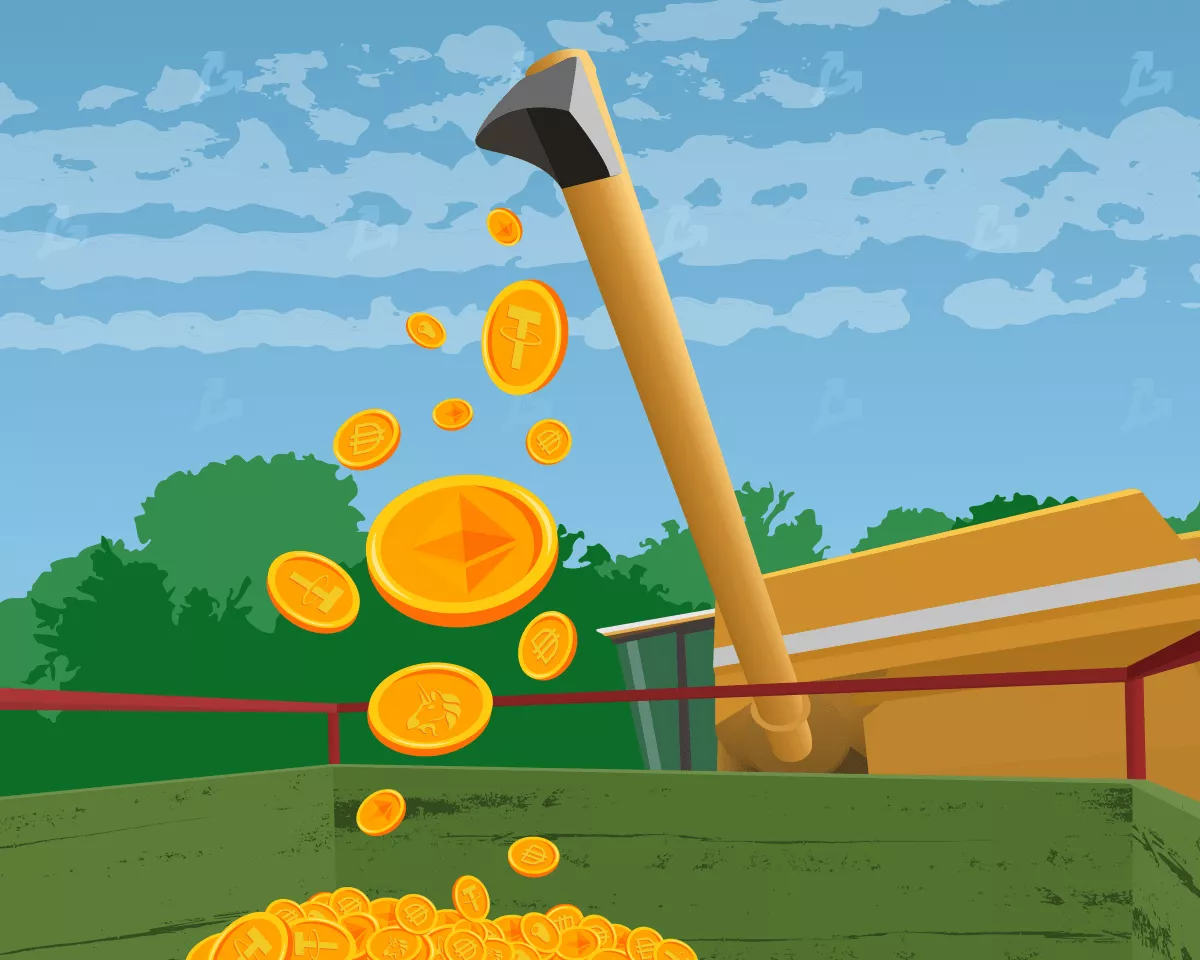
What is yield farming?
Attention! The article is outdated and awaiting an update.
Yield farming is the practice of earning additional returns—typically in the form of governance tokens—by users of DeFi protocols for supplying or taking out loans, as well as for providing liquidity to decentralised exchanges (DEXs).
The first successful project in this area is considered to be Synthetix, a decentralised-derivatives platform. The boom in yield farming began after the launch of Compound’s governance token (COMP). By distributing it, the project attracted many liquidity providers and the token’s price rose sharply. Other projects quickly followed Compound’s lead.
How do you earn from yield farming?
Earning interest via lending
Both borrowing and lending involve placing funds into a liquidity pool either as collateral or as a deposit. A farmer registers with a lending project and supplies funds to another user who takes a loan on terms that include interest. The farmer’s income consists of bonus tokens alongside the interest received.
Liquidity mining
A liquidity pool is a smart contract on DEXs based on automated market-making (AMM). During trading, the ratio of tokens in the pool changes, as do their prices. For example, a user buys 100 ETH via an ETH/USDT pool. The amount of USDT in the pool increases and the amount of ETH decreases. As a result, the price of ETH rises.
A liquidity provider receives two types of tokens: LP tokens, which represent a share and prove that liquidity has been supplied to the pool, and which are burned on-chain when liquidity is withdrawn; and bonus tokens of the DEX or DeFi protocols, which serve as a reward for activity.
A pool can incentivise participants to provide more liquidity in a particular asset by paying higher rewards in bonus tokens. The pool’s fee income is distributed proportionally to the funds supplied by participants.
Farmers sell bonus tokens on an exchange for the base liquidity, supply it again to a chosen pool, and receive new bonus tokens. They repeat this cycle as long as it remains profitable after trading fees and Ethereum network charges.
How is profit from yield farming calculated?
Profit from yield farming is quoted as annualised interest, as in a bank, says Streamity founder Vladislav Kuznetsov.
The most common metrics are annual percentage rate (APR) and annual percentage yield (APY). The difference, according to Kuznetsov, is that APR does not take compounding into account. Here, compounding means directly reinvesting proceeds to earn higher returns.
What risks are associated with yield farming?
Among the main risks of farming, Streamity founder Vladislav Kuznetsov cites errors and vulnerabilities in smart contracts, fraud, a token’s decline amid inflated yields, or the project’s overall economic unsustainability.
- Smart contracts. In DeFi, many protocols are built by small teams with limited budgets, which increases the risk of bugs and vulnerabilities in the code.
- High fees on Ethereum, which can render farming-related transactions unprofitable.
- Withdrawal of funds from liquidity pools. Any user of a DeFi platform can withdraw their liquidity from the market, except in scenarios where it is locked via a third-party mechanism. In addition, in most cases developers control large volumes of the underlying assets and can easily dump these tokens on the market.
- AMMs operate using invariant functions to determine token prices in liquidity pools. Because external market prices move, AMM quotes can diverge, which arbitrageurs exploit. On withdrawal, liquidity providers may receive fewer tokens due to the risk of impermanent loss.
Subscribe to ForkLog on Telegram: ForkLog Feed — the full newswire, ForkLog — the most important news and polls.
Рассылки ForkLog: держите руку на пульсе биткоин-индустрии!