Telegram (AI) YouTube Facebook X
Ру

What is Robonomics, and why would a drone need a crypto wallet?

What is Robonomics, and why would a drone need a crypto wallet?
Intermediate
What is Robonomics, and why would a drone need a crypto wallet?
Intermediate

What is Robonomics?

Note: This article is outdated and awaiting an update.

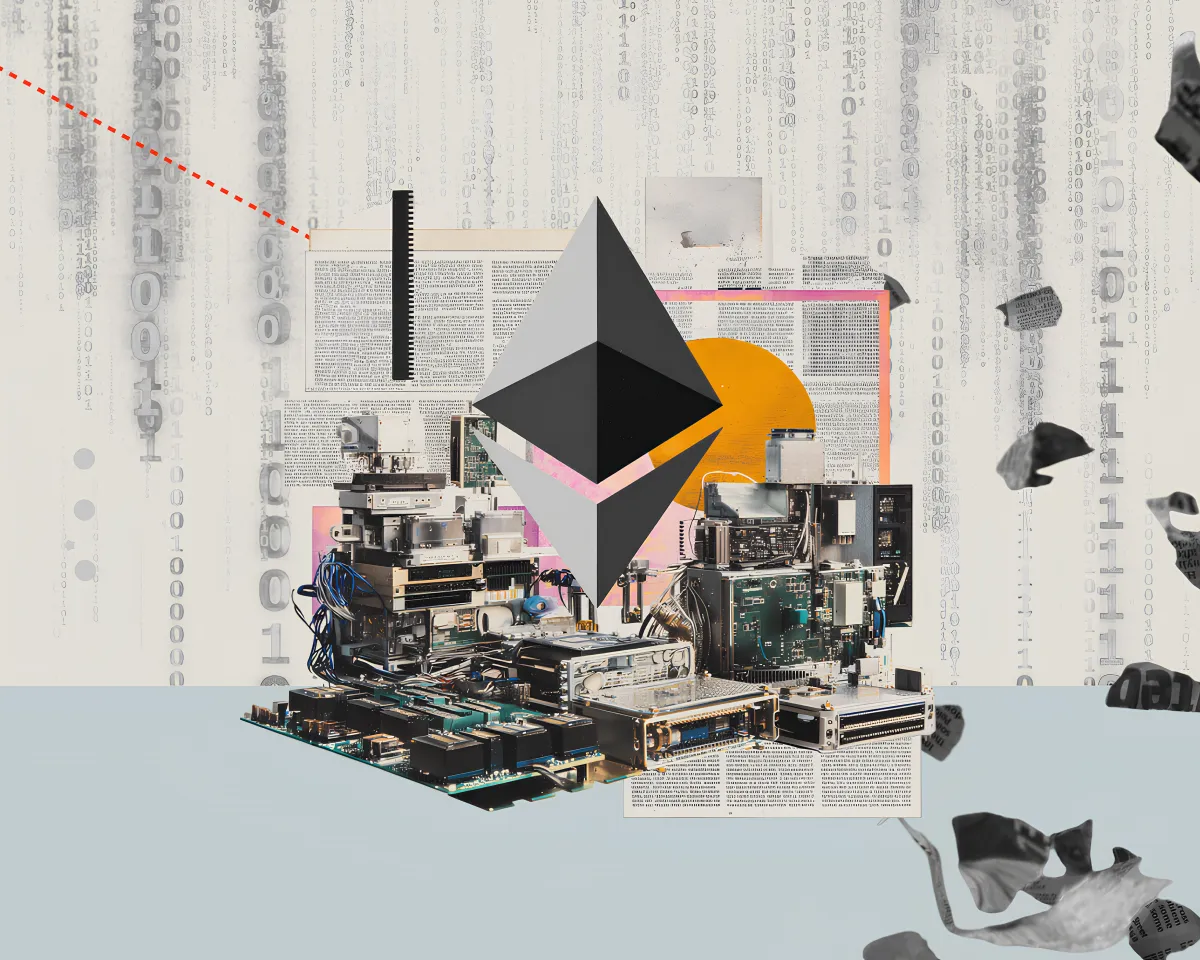
Robonomics is an open-source IoT platform that supports Web 3.0 technologies: IPFS, Ethereum and Polkadot.

Applications, IoT services and robots running on the platform exchange economic and technical information as atomic transactions.

With Robonomics, developers can deploy IoT devices in a decentralised cloud—coffee machines, drones and sensors—as well as smart systems such as autonomous factories or vehicle fleets.

What does the Robonomics ecosystem include?

  • Robonomics Web Services and the RWS token—a decentralised cloud for networking robots and relaying commands and transactions between devices and users;
  • the XRT token for internal payments;
  • Robonomisc.js—an API library that simplifies the development of IoT applications;
  • software and components for robot control;
  • smart contracts for economic interaction between robots.

Robonomics supports:

  • the Rust, Python, JavaScript and Haskell languages;
  • the technologies NixOS/Linux, Robot Operating System (ROS.org), web3.js, IPFS, lib2p2, the Ethereum protocol and the Substrate framework.

Participants interact via transactions atop Ethereum and Polkadot.

What are the XRT and RWS tokens?

XRT is an ERC-20 token used to pay transaction fees and services on the Robonomics network. Nodes publish reports on participant interactions to the Ethereum blockchain and receive rewards in XRT. The greater the gas expenditure, the higher the token’s price. On moving to Polkadot, the developers will update XRT tokenomics to preserve incentives for node operators.

RWS is a token for subscribing to transactions on the Robonomics network. Once activated, a user gains the right to send one free transaction per second. The developers issued 100 RWS; 50 of them can be obtained by teams that use Robonomics for research and development.

What are the team’s goals?

Short-term goals:

  • to secure a parachain on Kusama, Polkadot’s experimental network;
  • to launch a public beta of the decentralised Robonomics Web Services cloud.

Medium-term goals:

  • to train IoT developers to use Web 3.0 technologies to build a robot economy;
  • to build an ecosystem of useful dapps around Robonomics;
  • to launch Robonomics Web Services—a decentralised competitor to AWS and Microsoft Azure.

The long-term aim is to create a decentralised infrastructure for managing IoT networks, smart factories and cities. How it differs from centralised cloud platforms:

  • no censorship—users and IoT devices interact via an open blockchain;
  • cryptographic resilience to attacks—transactions are protected by the sender’s private signature;
  • speed—an atomic transaction carries both economic and technical data;
  • broad applicability—users can engage economically with complex robotics and IoT devices;
  • decentralisation and no single point of failure—the loss of several nodes does not impair the blockchain or the platform.

The functionality and cost of services on Robonomics will be comparable to, or better than, similar centralised offerings such as Microsoft Azure and Amazon Web Services.

Who is building Robonomics?

The work is done by the Robonomics Network team:

  • Sergei Lonshakov—the network’s architect and creator;
  • Alexander Kapitonov—Candidate of Technical Sciences, dean of the Faculty of Infocommunication Technologies at the Saint Petersburg National Research University of Information Technologies;
  • Alexander Krupenkin—one of the main contributors to Robonomics on Substrate, a developer in robotics, IoT and Ethereum smart contracts;
  • Evgeny Radchenko—a systems engineer;
  • Alexander Starostin—a web developer and Ethereum smart-contracts developer;
  • and 25 more engineers, economists and other specialists.

What can you do with Robonomics?

Users turn IoT devices into autonomous economic agents. A robot receives a wallet address—and with it the ability to accept payment for work done and to pay for other agents’ services.

Что такое Robonomics и зачем дрону  криптокошелек?

Human and robot interact as follows:

  1. The robot posts an offer to perform work on specified terms.
  2. The user creates a request to execute the task.
  3. The Robonomics network concludes a smart contract between the robot and the person.
  4. The robot receives information about the smart contract, performs the task and submits a report.
  5. The smart contract verifies the report and sends payment to the robot.

The robot then uses the funds earned to:

  • pay for electricity and other resources;
  • pay for other robots’ services;
  • pay for its own repairs and maintenance.

In future the robot will be able to share profits with its owner. For example, a Tesla will ferry Uber users while its owner is at work. At day’s end the car will visit a car wash, pay for charging and pick up its owner from the office.

Why does Robonomics use a blockchain?

With blockchain the platform’s developers:

  • standardise interactions between network participants via smart contracts, simplifying the creation of software for connecting new devices;
  • assign personal accounts to robots, enabling IoT devices to receive payment for services;
  • send a technical task and remuneration in a single transaction, ensuring transparency and traceability of task execution;
  • create open smart contracts for reuse in IoT projects, allowing others to build applications on top of public contracts.

How to build applications on Robonomics?

The team maintains code repositories for building IoT applications and controlling devices via blockchain. To develop an application you need to:

  • buy the XRT token or a Robonomics Web Services subscription;
  • learn the commands for controlling a robot via blockchain;
  • choose or create a digital-twin template for the device. The template defines the data types exchanged between the device and the service;
  • connect the digital twin to a service for data exchange;
  • write a dapp to work with the device directly.

How does Robonomics plan to change the world?

Robots will become full-fledged economic actors. For example, a drone will independently fly to a technician and pay for maintenance.

Robots will also interact with each other without human involvement: buying goods and services, competing with other robots and turning a profit. For example, a 3D printer will seek orders and buy plastic for printing.

People will make use of robots profitably. For example, they could:

  • buy a drone and put it to work in a delivery service;
  • install sensors for air composition, temperature and sound, then sell the resulting data on a decentralised market;
  • set up a smart fridge to order groceries automatically.

Thanks to the use of blockchain, states and corporations will not learn more about users than they choose to disclose.

How can Robonomics be used today?

The Robonomics Network team has implemented 13 use cases, including:

  • Distributed Sky—a p2p framework for drone-fleet management. Under it, drones exchange flight information, choose optimal routes and avoid collisions. Distributed Sky stores flight data on a blockchain and can forcibly change a course or switch off a drone when danger arises;
  • MOBI Grand Challenge—management of autonomous vehicles via an auction. A passenger chooses to pay more and arrive faster than the estimated time, or pay less and travel more slowly. During the trip the “fast” car pays the “slow” ones to slow down and let it pass;
  • DAO IPCI—a decentralised environment for investing in environmental initiatives. Issuers register initiatives and issue MITO tokens. Users buy the tokens and thereby offset a carbon footprint.

You can test the platform for free: request temperature data from a sensor on Mount Fuji.

Follow ForkLog on social media

Telegram Instagram
Found a mistake in the text? Highlight it and press CTRL+ENTER.

Рассылки ForkLog: держите руку на пульсе биткоин-индустрии!

We use cookies to improve the quality of our service.

By using this website, you agree to the Privacy policy.

OK