


What is post‑capitalism?

Key points
- Post‑capitalism is a term describing a new economic system intended to succeed capitalism.
- The British journalist Paul Mason detailed the concept. He argues the current capitalist model has run its course, leading to mass impoverishment and widening inequality.
- In Mason’s view, humanity is moving towards post‑capitalism. Global trends such as ubiquitous automation and the spread of information technologies will, in time, minimise the cost of basic goods and services, markedly improving living standards.
- Centralised, hierarchical economic structures will give way to horizontal models of voluntary collaboration.
- Critics say Mason’s post‑capitalism is utopian and biased towards left‑wing ideology.
The ‘neoliberal revolution’
Paul Mason set out the theory of post‑capitalism in his 2015 book PostCapitalism: A Guide to Our Future.
He pointed to structural problems in Western economies and the growing popularity of the far right as troubling signs of a systemic crisis of capitalism. Volatility in the socio‑economic life of developed countries, he argues, stems from the fact that “neoliberalism is broken”.
Mason noted that real wages stopped rising in line with productivity from the early 1970s. By the early 1980s, economic growth was increasingly propped up by debt, pushing the total stock to more than 300% of world GDP by 2010. In autumn 2021, global debt exceeded $300trn, or 350% of global GDP.
Monetary policy helped fuel the rise in debt: benchmark rates in the United States and Europe fell steadily from 1980, encouraging growth through cheap investment. Another factor was the massive expansion of the money supply, including through quantitative‑easing programmes launched from 2008. The result was faster inflation and negative real returns on deposits and government bonds.
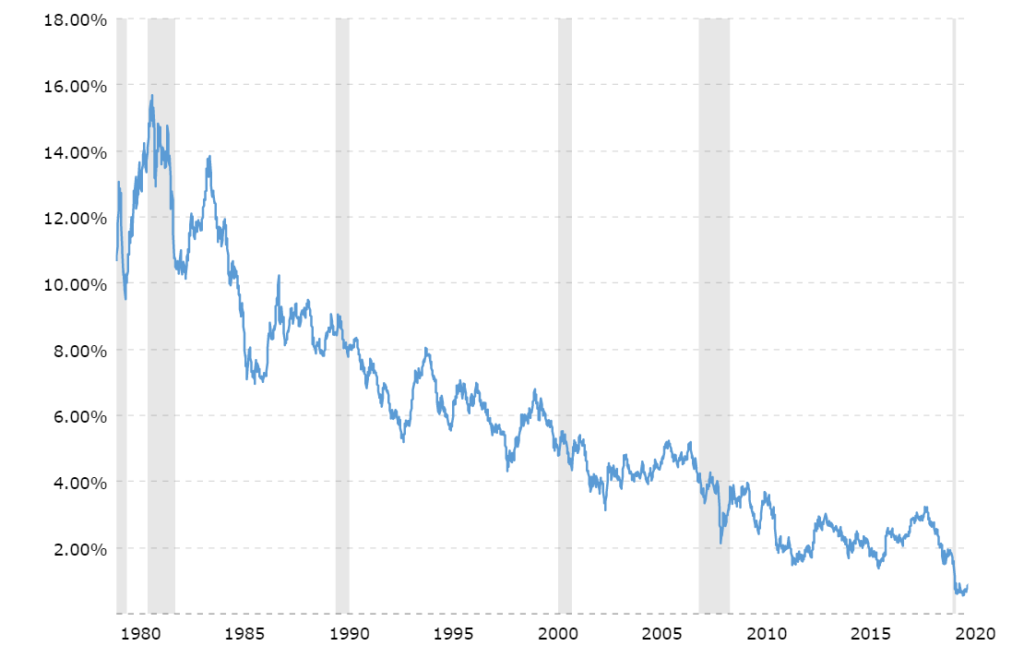
In 1979 a “neoliberal revolution” occurred, Mason contends. For the first time in centuries, the capitalist elite emerged from crisis not by compromising with the “working majority” but by rapidly ramping up debt through money issuance. That produced rising productivity without gains in real incomes over the following decades.
Capitalism’s crisis
“Capitalism is no longer able to adapt as it did in the most successful times of the early 20th century and after the Second World War. It no longer allows value to be created from skills and capacity for work,” Mason believes.
The modern economy is heavily shaped by the so‑called “information effect”. According to Mason, the rapid growth and free dissemination of information have made many services and goods accessible. Yet, owing to capitalism’s structural features, they have not solved the productivity problem, which remains in stagnation.
Mason says the digital economy, within the current structure of “classical” capitalism, has fostered an unprecedented concentration of wealth in the hands of large technology corporations that have monopolised the information environment via platforms. As a result, social stratification has widened in recent decades, reflected in the constant creation of meaningless jobs (bullshit jobs).
Another consequence of neoliberal relations is the marketisation of activities that were previously public and voluntary, as well as the financialisation of a variety of goods and assets.
The shift to post‑capitalism
Mason is convinced the world economy stands on the verge of a new 500‑year historical cycle. The previous cycle began in the 15th century and gave rise to capitalism. He calls the new type of economic relations post‑capitalism. Its arrival has been made possible by technological progress.
The transition to post‑capitalism, which could address these problems, will be propelled by several global trends:
- Total automation of industry and services by machines, AI and robots;
- Introduction of a universal basic income;
- Widespread affordability of essential consumer goods;
- Spread of the open‑source principle;
- Combating rent‑seeking economic models and monopolies;
- Reducing public debt by regulating the banking sector and keeping rates below inflation.
Mason urges investors to prioritise information‑intensive technologies, for example in industry and healthcare. That, he argues, would substantially reduce the cost of living and improve its quality while easing pressure on the welfare system.
The upshot of these trends, he says, will be the minimisation of the cost of most goods and services, lifting overall prosperity and rendering low‑skilled work largely unnecessary. The volume of compulsory work will shrink and people will enjoy more free time. Centralised structures and vertical hierarchies rooted in inequality will lose their primacy.
In their place, decentralised models will spread, in which individual specialists voluntarily band together to deliver projects, spending their free time and often asking no pay in return.
Critiques
Though some experts acknowledge the force of Mason’s ideas, others take issue with his proposals and conclusions. Christian Fuchs of the University of Westminster calls the author of PostCapitalism a “utopian socialist” who pins hopes on information technology as a way to solve economic problems.
He argues that technology is shaped by capitalism’s hierarchical system itself and therefore is more likely to strengthen it than to precipitate its collapse.
The Guardian’s Chris Mullin writes in his review that Mason’s view of trade unions and the labour movement in the 1960s and 1970s in the West, particularly in Britain, is overly idealised.
Mullin also points to Mason’s past: in his youth he took an active part in left‑radical movements. This, the critic suggests, may explain why Mason devoted a significant part of his book to criticising capitalism while offering an overly simple and vague programme of action that harks back to Marx and socialist politicians of the past.
Further reading
What is the Austrian School of economics?
How does the Fed’s rate affect crypto prices?
Рассылки ForkLog: держите руку на пульсе биткоин-индустрии!