



VkusVill Opens Autonomous Store; Apple Buys AI Startup, and Other AI News
We aim to inform readers not only about developments in the Bitcoin industry but also about what is happening in adjacent technology spheres—from cybersecurity to, now, the world of artificial intelligence (AI).
ForkLog AI has gathered the most important AI news from the past week.
- “VkusVill” opened the first store without cashiers and sales staff in Moscow.
- The American military tested an unmanned Black Hawk helicopter.
- WHO published recommendations to prevent discrimination of older people by AI systems.
- U.S. lawmakers urged several departments to discontinue the use of Clearview AI facial recognition.
- Nova Poshta opened an automated sorting centre.
- Apple acquired a startup developing AI for generating musical tracks.
- An artist used neural networks to imitate 1970s sci‑fi book covers.
- The week’s most notable AI deals.
The first cashierless store opens in Moscow
The VkusVill supermarket chain opened an automated store without cashiers or sales staff in Moscow. It is the retailer’s first store in the new format.
Covering 52 square metres, the store stocks around 220 items. Customers simply scan a QR code via the VkusVill app at entry, pick products from the shelves, place them in a bag and exit through a dedicated turnstile—the payment is automatically debited from their card.
The store is equipped with an AI-powered computer-vision system from Neurus. Staff visit the store in the morning to stock shelves, and a consultant greets shoppers at the entrance.
According to VkusVill, in the first two weeks of operation the store processed around 70 purchases per day, with each receipt containing up to three items. The project’s next phase will be guided by consumer feedback.
The US tests unmanned Black Hawk helicopter
The US military tested a Black Hawk helicopter without crew on board. The aircraft flew autonomously for 30 minutes over Fort Campbell in Kentucky.

DARPA’s Office of Advanced Research Projects has fitted the helicopter with the ALIAS autonomous flight automation AI system—a “configurable, installable, removable kit” that combines hardware and software to reduce crew workload.
During testing the vehicle completed a preliminary flight, took off autonomously, and traversed a simulated New York, skirting virtual skyscrapers on Manhattan, before landing autonomously.
DARPA said that, in the future, ALIAS will make aircraft smarter and safer, allowing pilots to focus on flying rather than mechanics.
WHO outlines principles to prevent ageism in AI systems
The World Health Organization (WHO) published recommendations to prevent age discrimination by AI systems. The organisation proposed:
- to involve older people in the process of developing algorithms;
- to collect data with age in mind;
- to include multi‑age engineering teams in AI development;
- to invest in digital literacy for older people, health-care providers and caregiving staff;
- to give older people the option to opt out of interactions with AI or to challenge AI-made decisions;
- to establish ethical standards for AI development and deployment;
- to create mechanisms to prevent ageism in the work of government bodies, international agencies and NGOs.
According to WHO representatives, explicit and implicit biases in society, including those related to age, are often reflected in AI technologies. To guarantee AI’s usefulness, ageism must be eliminated at the design, development, use and evaluation stages.
US DoD JAIC signs contracts with 79 companies to supply AI technologies
The Joint Artificial Intelligence Center (JAIC) signed contracts with 79 companies to provide tools for testing and evaluating AI systems. Each deal is valued at up to $15 million.
The comprehensive procurement agreements are aimed at creating a decentralized AI testing mechanism, developing criteria, standards and best practices for AI system testing.
Contracts include the following categories:
- documentation;
- data collection for training the algorithm;
- analysis of model outputs;
- testing and evaluation of the algorithm;
- operational testing of the model;
- project management;
- reporting.
JAIC officials say the agreements will foster a government-private sector competitive environment.
US senators urge federal agencies to discontinue use of Clearview AI
A group of American lawmakers urged federal agencies to discontinue the use of Clearview AI’s facial recognition system.
The lawmakers sent a letter to the Departments of Justice, Defence, Homeland Security and the Interior. They argue the technology could erode public anonymity in the United States.
According to a GAO report from August 2021, all four agencies used the controversial technology for “internal law enforcement”.
Nova Poshta roboticised sorting centre
Ukrainian company Nova Poshta opened an automated terminal in Dnipro capable of processing up to 26,000 parcels per hour.
The main line for boxes up to 30 kg consists of two levels, and parcel collection is performed using spiral vertical chutes. Boxes then move onto telescopic conveyors that transport them into a van.
In the freight section, the company uses robotic carts from Ukrainian developer SBR that can carry up to 300 kg on their platforms and tow another 1,000 kg.
According to Nova Poshta, the terminal doubled regional cargo processing and created 500 new jobs.
In spring 2022 the company plans to introduce an additional sorting line and increase capacity to 36,000 parcels per hour.
Adobe unveils new AI features for Premiere Pro
The software maker Adobe has added an AI-powered Remix feature to Premiere Pro to synchronise music with video, and refreshed its speech-to-text tool.
Remix analyses the audio track and generates a new mix to fit the desired length. The company says the tool can shorten the time to create an arrangement from hours to seconds.
The speech-to-text feature for creating subtitles has become “faster and more flexible,” Adobe said. Downloadable language packs enable users to transcribe videos offline.
According to the company, on machines with Intel Core i9 and Apple M1 the tool runs three times faster than the previous version, and on other modern processors, twice as fast.
Reports: Apple buys British AI Music startup
Apple acquired the British startup AI Music, which applies AI to generate personalised music.
Bloomberg reports that the London company’s technology uses algorithms and royalty-free tracks to generate dynamic soundtracks that adapt to user interactions in video games or adjust tempo during workouts based on activity, as described by the startup.
Previously AI Music collaborated with various advertising firms to create more engaging offers that adapt to audiences.
Representatives of Apple declined to comment.
Scientists develop AI that detects dead neurons faster than humans
American researchers trained an AI algorithm to detect dead neurons faster than human experts. The approach could help treat Alzheimer’s disease, scientists say.
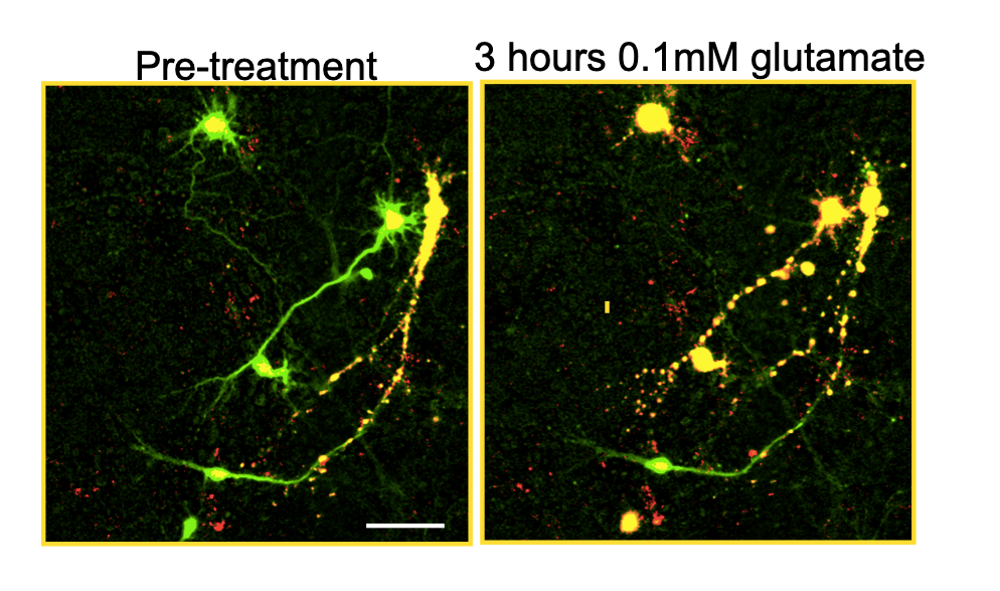
The researchers built a biomarker-optimised algorithm based on a convolutional neural network BO-CNN, trained to distinguish dead from living cells. For this, they used a Petri dish with mouse neurons expressing the non-toxic GEDI protein that colours living neurons green and dead ones yellow.
They then presented the AI with cells without staining. It could distinguish living from dead neurons faster and more accurately than human experts. The algorithm also achieved high accuracy identifying unknown cell types.
They found that BO-CNN partly detects neuronal death by focusing on changes in fluorescence patterns in the cell nucleus. The researchers say this feature was previously unknown and may explain why earlier algorithms performed less well on the model used.
Artist uses AI to create 1970s sci‑fi book covers
British artist Lewis Hackett used AI to imitate covers of 1970s science fiction books.



Hackett used Clip Guided Diffusion models to generate images and OpenAI’s GPT-3 to craft headlines. To improve the quality of low‑resolution images, he employed Waifu2X.
The artist selected typography himself, using popular 1970s fonts.
The week’s most notable AI deals
From 6 to 12 February 2022, AI startups raised over $463m. Here are the most interesting deals.
- Deepdub, an AI developer for dubbing films and games, raised $20m.
- Micropsi raised $30m to retrain industrial robots using human demonstrations.
- Leaf Logistics raised $37m to support software for transportation planning.
- Wallaroo raised $25m.
- Scandit raised $150m to improve warehouse-scan automation.
- Cerebra raised $15m to expand its marketing-data analytics software team.
- ApertureData raised $3m to support an image-focused cloud database.
- Celestial AI raised $56m.
- Morai raised $20.8m to scale its automotive-simulation service for validating autonomous-driving systems.
- Taichi Graphics raised $50m for a 3D-graphics infrastructure.
Also on ForkLog:
- American senators urged the IRS not to use facial recognition ID.me.
- Nvidia called off its purchase of ARM for $40 billion.
- US federal agencies stopped using the facial-recognition system ID.me.
- In the State Duma they will introduce a bill regulating recommendation algorithms in social networks.
- Sony unveiled AI that defeats top Gran Turismo players.
- U.S. senators drafted a bill to regulate recommendation algorithms.
Subscribe to ForkLog AI on Telegram: ForkLog AI — all the latest AI news!
Рассылки ForkLog: держите руку на пульсе биткоин-индустрии!