


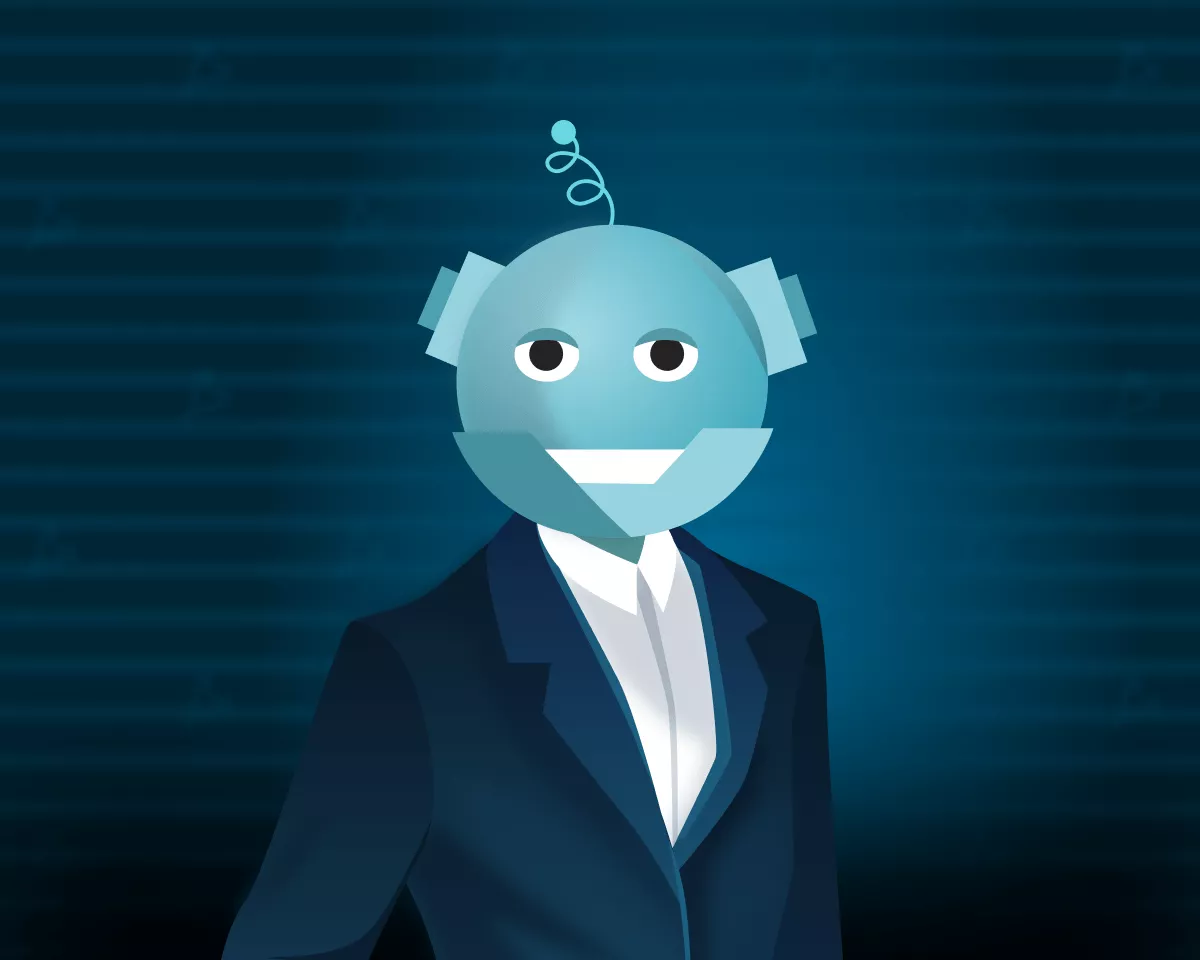
What will the ideal business of the future look like? Robonomics explains.
The history of humanity encompasses several technological leaps: the invention of tools, the mastery of fire, the domestication of animals, the transition to agriculture, and the automation of labour. At each stage, people devised ways to produce more with less effort.
The 21st century marks the move toward the robotisation of the economy. According to IoT solution developers Robonomics Network, fully automated enterprises and even companies run by artificial intelligence could emerge in the near future. Here is how and when this will happen.
From the steam hammer to the robot manipulator
From the eighteenth to the twentieth centuries, society transformed several times under the influence of innovations. Historians label these processes as industrial revolutions. There were three in total, and each subsequent one occurred faster than the previous.
The first industrial revolution was associated with the shift from manual labour to machines. It began in the late eighteenth century, when European factories began to use steam engines. The result of these changes was higher quality goods at lower service costs.
The second industrial revolution is dated to 1952—the time of Richard Kegg‘s invention of the numerically controlled milling machine (CNC), which significantly reduced the cost of producing small parts.
The third industrial revolution occurred in the 1980s, when computers and robotic manipulators began to be used ubiquitously.
We stand on the cusp of the fourth industrial revolution, but for now can only guess what future enterprises will look like.
Robonomics believe that large-scale business will adopt cyber-physical systems (CPS). They will consist of a convergence of many devices and robots that analyse their surroundings, exchange data, make certain decisions, and ideally—operate without human involvement.
Why another industrial revolution is needed
Economist Ronald Coase in his book “The Nature of the Firm” explains that the structure and size of a company depend on non-production processes—transaction costs. They include the time and resources spent on finding contractors, negotiating, making decisions and checking quality of work.
The hierarchical structure of a company is formed depending on transaction costs. While a company is small, organising workflows costs little. But as the business grows, the costs of internal hierarchy exceed the costs of market negotiations and hiring contractors.
Automobile manufacturers benefit from assembling cars in their own factories. But building a mine to extract ore, opening a metallurgical plant and securing raw materials for spare-parts production would be more expensive than agreeing with a middleman on steel supplies.
But even with full automation of production, people continue to handle negotiations, contracting, procurement, logistics and distribution of goods. These transaction costs can also be reduced if tasks are handed to computers.
For example, Uber and similar taxi services operate without dispatchers: the app accepts orders and directs them to the nearest drivers. If you create a trusted system with truthful information about business processes, computers could search for ideal contractors and negotiate with each other efficiently.
Robonomics are confident that the fourth industrial revolution will lead to the creation of such robotised companies and will minimise transaction costs.
First steps toward Industry 4.0
The term “Industry 4.0” emerged in 2011, when the German government proposed an initiative for computerisation and automation of production. Later, it became a synonym for the fourth industrial revolution.
In essence, it is happening right now: large companies are gradually implementing Industry 4.0 principles. For example, in 2012 Philips installed 50 manipulators at the Drachten factory, adapted to assemble different models of electric razors.
Previously, workers had to stop the conveyors daily and reconfigure the robots. The new manipulators recognised parts using cameras and assembled the required razor models, and engineers could update their firmware without stopping equipment.
Philips tested the new assembly line for a month. Employees hardly interfered with processes at the plant: they simply loaded parts into feeders and monitored product quality.
Downtime on the Drachten factory floor fell to zero. Employees could instantly start production of new razor models.
Other companies followed Philips’ example. For instance, in 2015 Siemens united the Amber factory’s robots into an IoT network for remote monitoring and process control. Staff began configuring lines for producing new products in a minute, and defects fell to 0.1%.
In 2015, Japanese manufacturer of industrial manipulators Fanuc launched robots that assemble other robots—round the clock, seven days a week. Since then, Fanuc has designed and set up automated assembly lines for 270 companies, including Apple and Tesla.
In 2017, the Ocado grocery-delivery service automated warehouse operations with freight manipulators that collected orders and handed containers to the packing line. The machines handled an order of 50 products in five minutes. It previously took people several hours for the same task.
In 2018, auto-parts maker Hirotec created an IoT platform for analyzing robot productivity. It gathered data on operation speed and equipment errors to identify bottlenecks in exhaust-pipe production. With the information obtained, Hirotec stopped manual equipment checks and cut downtime by 20%.
Widespread robotisation is not far off. Does that mean we will all lose our jobs? Most likely, no.
Experts from the World Economic Forum believe that the technological revolution will create 97 million jobs and eliminate 85 million. In their view, robots and humans will share the work equally, with machines performing the majority of heavy lifting.
People will be able to devote themselves to creativity, supervise robots, or perhaps simply receive a universal basic income. In any case, society is unlikely to change as much as bloggers and the media would have us believe.
The best employees of 2077 are robots
An example of the ideal company of the future is the Delamain Corporation taxi service from the game Cyberpunk 2077. It was run by an artificial intelligence named Delamain: it gave orders to cars, bought new machines, resolved conflicts with customers and expanded the company’s list of services.
Such an advanced cyber-physical system is unlikely to appear at the current level of technology. Yet researchers and enthusiasts are already creating cases of economic interaction between robots and humans.
A potentially important component of this process is blockchain. Robots cannot open bank accounts or interact with fiat money without human involvement.
Blockchain allows robots to become economic agents: negotiating better prices for services, accepting and sending payments for work, spending funds on maintenance and repairs.
A platform for such interactions is being developed by Robonomics Network. Using it, developers will run applications, IoT services and robots in a decentralised cloud, and users will find contractors and pay them in cryptocurrency.
To date, the project team has implemented 17 use cases for Robonomics, including the Delamain prototype. Among them:
- Production quality-control system — built on the Feecc platform. It includes an IP camera, a single-board computer and networking gear for internet access. The system records how, for example, a barista makes coffee and stores a QR code linking to the video;
- Gaka-Chu, a robot-artist. It is a KUKA industrial manipulator with a brush and paints. It studies trends, draws Japanese characters, and lists paintings for sale. It can also mint NFTs, receive cryptocurrency into its wallet and use its earnings to buy canvases, paints and brushes. Gaka-Chu is a real robot-entrepreneur who funds itself;
- Spot Leasing — Boston Dynamics robodogs. Users remotely rent the robot and give it commands via SSH. Through this project, developers gain experience with modern robotics, test their theories and software, and also download a blockchain certificate of Spot’s action logs;
- Unmanned Traffic Management (UTM) — autonomous-transport management system. Cars coordinate actions and bid for the right to go first. A “fast” car can pay a “slow” one for the right of way. UTM will help avoid traffic jams caused by drivers’ errors.
Developers continually improve Robonomics. The project’s ultimate goal is to scale the platform so that smart factories and cities can operate on it.
Conclusions
In 1962, Gianni Rodari published the novel The Planet of the New Year Trees. In the story, a boy named Marco lands on a planet where robots cook food, build houses, fight space dogs and even control the weather. Sixty years on, we have nearly realised this fairy tale.
For now, robots handle routine tasks and collect data under human supervision. Yet in the near future, the first autonomous cyber-physical systems may appear, followed by smart factories that will produce, deliver and sell goods autonomously.
Widespread robotisation will affect the economy: product quality will improve and prices will fall. Production will become more environmentally friendly: robots will better gauge supply and demand to avoid producing excess goods.
Subscribe to ForkLog’s news in Telegram: ForkLog Feed — all the news feed, ForkLog — the most important news, infographics and opinions.
Рассылки ForkLog: держите руку на пульсе биткоин-индустрии!