


Tech Giants Rally Against Deepfakes as Zoom Gains Gesture Recognition, and Other AI News
We strive to inform readers not only about events in the bitcoin industry, but also to report on developments in related technology spheres — cybersecurity and the world of artificial intelligence.
ForkLog AI has gathered the most important AI news from the past week.
- GitHub began blocking accounts of Russian developers.
- Tech giants formed an alliance to combat deepfakes.
- Google Lens learned to recognise text in the desktop version of Chrome.
- Instagram’s algorithms were trained to value original content more.
- DeepMind unveiled a new language model with 70 billion parameters.
- South Korea will build an underground city with its own data center.
- The week’s most significant AI deals.
GitHub began blocking accounts of Russian developers
GitHub began blocking accounts of Russian developers and companies.
According to reports, since 13 April 2022 the platform has been suspending accounts of programmers who currently or previously worked for organisations sanctioned by the United States.
As of 15 April GitHub blocked dozens of Russian accounts, including Sberbank AI Lab, Sberbank, Alfa-Bank and individual developers.
“When blocking a corporate account, access to data in repositories may be retained for two hours, while for a personal account it is restricted immediately,” — said in Habr.
Tech giants form alliance to combat deepfakes
The C2PA alliance of IT companies will develop a standard for authenticating images and videos on the internet. Among the participants are Adobe, Microsoft, Intel, Twitter, Sony, Nikon, BBC and ARM.
According to the alliance, implementing the open standard will prevent the spread of deepfakes. Many of the authenticity-verification mechanisms will appear in 2022, and within a couple of years an ecosystem for verifying the veracity of photos and videos at all stages of their lifecycle will take shape, Adobe said.
The technical standard will guarantee the absence of manipulation of content using distributed ledger technology. Adobe says the alliance has a long way to go before all platforms can implement effective authenticity-verification mechanisms.
TSMC to release 2nm chips in 2026
In 2026 the company TSMC will release the first chips based on the 2nm process.
The company’s CEO C.C. Wei said that the N2 nodes will rely on Gate-All-Around (GAA) transistors. However, he did not provide any specifics about the architecture or the technology’s name.
It is also known that fabrication of the chips will rely on existing EUV lithography with a numerical aperture of 0.33.
TSMC plans to develop test chips by the end of 2024 and begin mass production by the end of 2025. This means customers will receive the first N2-based chips in 2026.
Meta Quest gains gesture recognition
The Meta Quest headset has been trained to recognise complex gestures such as “high five” and hand-claps.
The company updated its hand-tracking system in mixed reality, adding support for a larger set of movements. The new Presence Platform API will become public after early testing by several developers. The technology promises more sophisticated and reliable interactions on the Meta Quest headset.
Presence Platform update aims to improve gesture-tracking using the headset’s cameras rather than the default hardware controllers. The system focuses on recognising movements when part of the user’s hand is out of view of the tracking device, including claps, “give five” and crossed arms.
According to The Verge, in the future the company plans to improve the identification of raised fingers, pinches, grabs and taps.
Google Lens adds desktop text recognition in Chrome
The Google Lens visual search service has been taught to work with text in images in the desktop version of Chrome.
Users should hover over an image, right-click, click “Find via Google Lens” and select an action in the panel that opens.

The tool can highlight text in images, copy it, read it aloud and translate. It also allows users to find the source of the image.
The feature is available in Chrome version 100 for Windows, macOS and Chrome OS.
Instagram activates algorithms to promote original content
Instagram’s algorithms were trained to value original content more.
According to head of the social network Adam Mosseri, creators building something from scratch should receive more recognition than users who repost from other platforms like TikTok. The company is adjusting content-ranking tools to highlight authentic photos and videos.
Mosseri said the company is already doing all it can to ‘predict’ the originality of content with algorithms, but there are no guarantees about the accuracy of decisions made by the models yet.
Zoom adds gesture recognition for sending emojis
In the desktop version of Zoom added gesture recognition.
Users simply need to raise a hand or a thumbs up to send the corresponding reaction to participants in a video conference.
The feature is available in the Zoom app version 5.10.3 for Mac and Windows. The option is off by default, but those who wish can enable it for individual users, accounts or the entire group.
DeepMind unveils new language model with 70 billion parameters
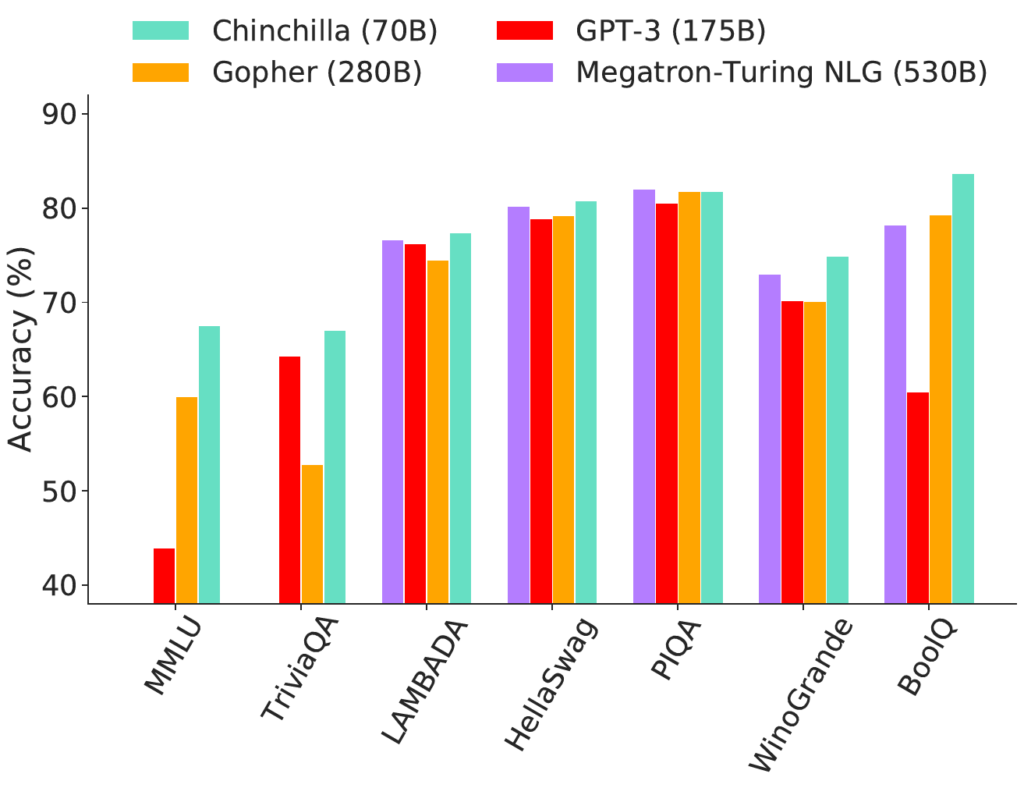
British AI lab DeepMind unveiled the compute-optimal language model Chinchilla with 70 billion parameters. According to the company, the model outperforms GPT-3, Gopher, Jurassic-1 and Megatron-Turing NLG across a broad range of tasks.
The developers said that Chinchilla has the same compute budget as the previously created DeepMind language model Gopher with 280 billion parameters, but has four times more data. The algorithm requires significantly fewer computations for fine-tuning and reasoning, which greatly simplifies further use, they added.
In MMLU testing, Chinchilla achieves 67.5% average accuracy in predictive tasks, which is 7% higher than Gopher.
South Korea to host underwater city with its own data center
South Korean scientists proposed to build an experimental underwater city with its own data center. The project, costing $30 million and designed for five years, will have 80% of its costs covered by the state.
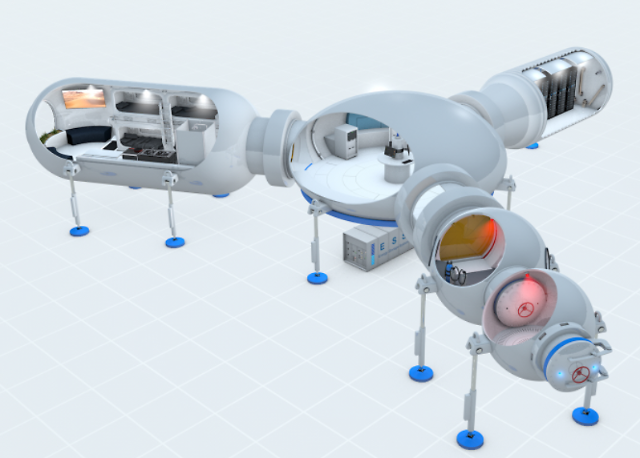
Realisation of the underwater settlement is being undertaken by the Korea Institute of Ocean Science and Technology (KIOST) with support from the Ministry of Oceans and Fisheries, as well as 23 additional agencies and private companies. The project plans to locate near the urban agglomeration of Ulsan.
The project envisages technologies and equipment for analysing the marine environment, construction with drones, the creation of underwater energy and communications sources, and monitoring residents’ health and safety.
The data centre will aid the development of future underwater energy-efficient and sustainable data centres. Researchers will also test an early-warning system for natural disasters and use the complex for underwater tourism. In the long term, a separate hotel is being considered.
Engineer builds drone interceptor to intercept other drones
A Lithuanian engineer has developed a drone with a Drone Interceptor network to intercept other unmanned aerial vehicles.
The system is a quadcopter with a high power-to-weight ratio. The device can approach a suspicious drone and conduct reconnaissance, transmitting video to a ground operator in real time.
If a potentially dangerous object needs to be shot down, Drone Interceptor is positioned under the target and, on the pilot’s command, detaches all four rotors from the frame. As it moves upward, the propellers deploy a Kevlar net that entangles and disables the “enemy” drone.
The remaining fuselage descends to the ground by parachute, emitting an audible signal to aid operators in locating it.
The week’s most significant AI deals
From 17 to 23 April 2022, AI startups attracted more than $550 million. Here are the most notable deals.
- Jarvis ML получила $16 million to develop a platform that helps brands personalise products, services and experiences.
- The creators of Convoy, a marketplace that connects shippers with drivers, собрали $260 million.
- AlphaMountain.ai привлекла $2.7 million to enhance threat-analysis for cybersecurity platforms.
- Mutiny собрала $50 million to expand a marketing service for website personalization.
- Prezent.ai получила $20 million to grow the team building a presentation tool.
- Laiye собрала $160 million to advance a platform for automating office tasks of varying complexity.
- Creators of digital twins for clinical trials Unlearn.AI привлекли $50 million.
Also on ForkLog:
- Intel разработала ИИ-инструмент для анализа эмоций учащихся.
- Nvidia задействовала ИИ для разработки графических процессоров.
- Илон Маск: робобизнес Tesla станет прибыльнее автомобильного.
- Британские актеры выступили против использования ИИ в киноиндустрии.
Подписывайтесь на новости ForkLog в Telegram: ForkLog AI — все новости из мира ИИ!
Рассылки ForkLog: держите руку на пульсе биткоин-индустрии!