


Outsourcing Imagination: Artem Konevskikh on the Essence of Neuro-art
Artem Konevskikh — one of the few programmers who can boast participation in the work of the Large Hadron Collider. Beginning his career in fundamental science, he hardly imagined that he would eventually enter modern art — an area that seems far removed from the search for the Higgs boson. ForkLog spoke with Artem in person to learn how this happened, what the art community can teach programmers (and vice versa), and which prejudices about humanities knowledge are worth overcoming even for the most hardcore technologist.
ForkLog: You have a programming education, you worked in fundamental science, and you worked at ЦЕРН. How did you with such a strict technical background come to contemporary art?
Aртем: Yes, my path is not the most standard. I worked in a laboratory that built a detector for the Large Hadron Collider. Mostly I did data analysis — this is not so much fundamental science as an auxiliary tool for physicists studying the universe. This experience had a strong influence on me.
Even now, when I am engaged only in art, I remember experimental physics and strive to work on projects following the same principle scientists use to approach research: run experiments that can be replicated and share the knowledge gained. In art there are two kinds of people. Some share their experience, others keep their knowledge secret. Working at CERN taught me to relate to the first group. By contributing to the development of a shared environment, I not only help others but also enrich my own knowledge.
I teach a lot because I see: artists have a keen interest in neural networks, but not everyone understands how they really work. It is a quite complex topic — to understand it well, one needs to brush up on mathematics and programming. It takes time, and someone without a technical background will have trouble. Therefore, if there is an opportunity to share knowledge, one should take advantage of it.
ForkLog: Teaching linear algebra to practitioners of contemporary art?
Aртем: We don’t go that far with students, but they do learn, for example, to train neural networks on their own. I structure the course so that we refer to different mediums — we work with images, video, text, 3D graphics, that is, with everything that may be needed in practice.
As a child I attended art school and learned to draw. It didn’t go very well, but I liked it. I still draw, but for me it is more of a hobby than artistic practice.
Science, technology and art can always enrich each other. And this works not only in one direction. Art for science is also a useful instrument. It can critique technology, serve as an illustration of scientific processes. I began meeting artists at the festival Ускоритель Новой Москвы, which took place in 2015 at the Acceleration Complex ФИАН. Through these interactions I realised that many artists want to talk about science, but lack the appropriate knowledge.
Generative art became popular among artists when the neural network DeepDream appeared, which could be run on a home computer. It offered a rich visual range. DeepDream became the first neural network that sparked conversations about whether artificial intelligence could replace an artist.
ForkLog: And you decided to test it yourself?
Artem: I began experimenting with DeepDream and data-driven art — art based on data analysis or visualization. One day, seeing in the news how Lenin statues were being torn down, I recalled the famous sketch by Sergei Kuryokhin that the leader of world revolution was a mushroom and at the same time a radio wave. I drew a map of Lenin’s broadcasting, with the mausoleum at the center and Lenin monuments as antennas. Then I aggregated a lot of data on statue locations and visualised the trajectories of Lenin’s thought propagation. The humour is that I implemented this project at a geodata hackathon where I was expected to do something entirely different. It turned into something like an art intervention.

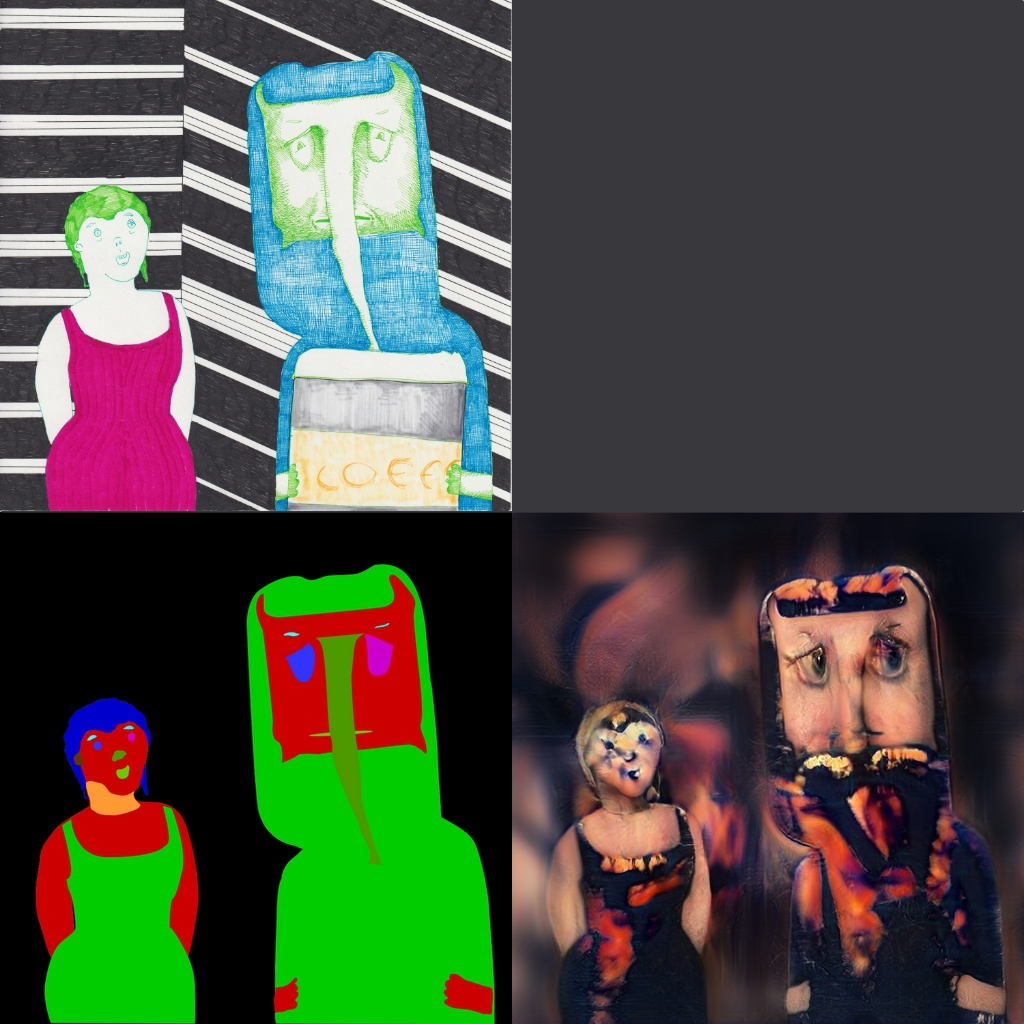
After those initial steps I realised that staying in science, detached from real life, bored me. I applied to participate in the Strlka Institute program The New Normal, which was curated by the American technology philosopher Benjamin H. Bratton. I was accepted, and that is how I pivoted toward art. It stopped being a pastime and became serious work with artists — firstly with Egor Kraft, whom I helped with the project Content Aware Studies, where neural networks restored time-damaged antiquities and generated video based on them.
In parallel, the collaboration that continues to this day is the project Current, devoted to the future of cinema and volumetric cinema in particular.
ForkLog: How difficult was it for you, as someone with a technical background, to master the specialized language of contemporary art?
Aртем: I would say I’m still learning. Contemporary art is a profession just like any other. I studied programming for six years at the institute, and I think becoming an artist requires a similar amount of time. One needs to master quite a large amount of theoretical material — this matters for a contemporary artist.
ForkLog: So you didn’t have a suspicion about this language? Many people are very skeptical of it.
Aртем: At first, of course. The suspicion is understandable: you walk into a gallery, and you have to read kilometers of descriptions of some piece. Sometimes it’s really nonsense, but more often behind this complexity lies a lot of meanings and references. Contemporary art borrows a lot of concepts from philosophy, media theory. To evaluate it, you need to spend time.
ForkLog: In the early 2000s people traded disks containing works демосцены — this is a peculiar phenomenon where art meets hardcore programming. Do you remember that?
Aртем: Yes, of course, some of my friends were into that and even won awards for their work. I was just learning to program at the time, looking at code and not understanding what was happening. Such things were always inspiring to me.
ForkLog: This reminded me of eighteenth-century craftsman competitions: who can come up with a cooler mechanism for a clock.
Aртем: Exactly. The entire demoscene revolved around strict technical constraints posed by computers of earlier generations. Today this culture has faded because technology became too powerful.
ForkLog: It seems the same is happening with art — it’s no longer just about the artist’s craft. So what is it about?
Aртем: It’s about ideas. Technologies here serve to illustrate them. A modern artist is first and foremost expected to find an interesting idea. We are seeing a boom in text-to-image generators. It’s a revolution of the same order as the invention of the camera. Then there was no longer a need for artists to draw as realistically as possible, and they had to reinvent art.
Today the same is happening. The entire 20th century saw artists retreat further into the world of ideas, using imagination as their primary instrument. And now it turns out that imagination itself can be outsourced to neural networks. Not completely, of course, but the process of idea generation has clearly become easier.
ForkLog: What would you take from the coder community and bring into the art world — and vice versa? What do you see as the fundamental difference between the two communities?
Aртем: Artists think more freely, whereas programmers usually operate within constraints: if there is a task, you must complete it in a specific way. With artists, the task does not have to be completed; what matters is to capture it, and later you can refine it. As a programmer, it was hard for me to understand such an approach.
At Strelka we worked on the Atoll project — about smart cities of the future. We pondered, for example, how one could take data from one city and blend it with data from another to obtain a third city that would live by the rules of both. From an artist’s point of view, this is simple: take maps of two territories, cut them into squares and mix them. But for a programmer it’s obvious that this does not work — the squares are not that easy to mix to create a mash. For me, it was incomprehensible: we set one task but end up doing something entirely different. Later I realised that the true goal of an artistic project was not to implement something concrete, but to illustrate the idea in an accessible way.
That is the essence of art. It works with ideas, while programming is more practical: if you set out to do something, you must deliver a working product first. Only then do you think about the aesthetic component.
That is the basis of the tension between techies and artists. But I think from time to time we should step beyond rationality, look to the future and consider what we will do when next technical constraints are lifted.
Recall five years ago at a summer school at МФТИ a neural networks expert Michael Burtsev said: “I think in the future we will abandon the familiar OS interface. Instead there will be a chat!” Some see the future, and some prefer to stay within what can be done here and now. Sometimes it helps to remove boundaries, and art helps a lot with that.
ForkLog: But humanities have one serious drawback. If we speak about academic science, it is very slow: when an important text appears somewhere, it will be translated and distributed after about five years. The speed of spreading ideas is minimal compared with the technical community.
Artem: In the exact sciences, it’s usually the same: between writing an article, its review, and publication, years can pass. It seems to me that when the neural network boom happened, the requirements for materials about it were noticeably relaxed: the technology looks so important that it is better to disseminate information about it quickly, and only then, if necessary, refute false data.
Exchange of information greatly simplified arXiv.org. With its appearance, the principle of digital first spread — you write a paper, publish it digitally, and only then, perhaps, in journals. You discovered something new and you can immediately share knowledge with others. This greatly accelerates progress.
ForkLog: And the speed of community formation. As soon as something mildly significant arises, a community immediately forms around it.
Aртем: Yes, it is very hard to resist when a new development appears. I follow all AI projects and try to test every interesting neural network, in my view. It is getting more and more difficult — something new appears every day.
ForkLog: What do you think about the mass distribution of neural networks and that now almost everyone can use them?
Aртем: I am a technophile, so I view this very positively — as a new wave of progress. The only thing is that when the simplest-to-use Text to Image appeared, many began calling themselves digital artists. Yet by art they often mean simply pretty pictures without any concept; and in my view that is what separates an artist from a craftsman. An artist raises fundamental questions that make people think.
Once I traveled to Shenzhen, China. There is a village where artists live. They earn a living by creating copies of famous works. You walk along a street and there sits a person re-drawing a Jackson Pollock painting — he looks at his phone at the randomly scattered spots and reproduces them to the millimeter. In the end, the painting exists, it is beautiful, but what does it convey? It simply occupies space in an interior. In my view, that is not quite art.
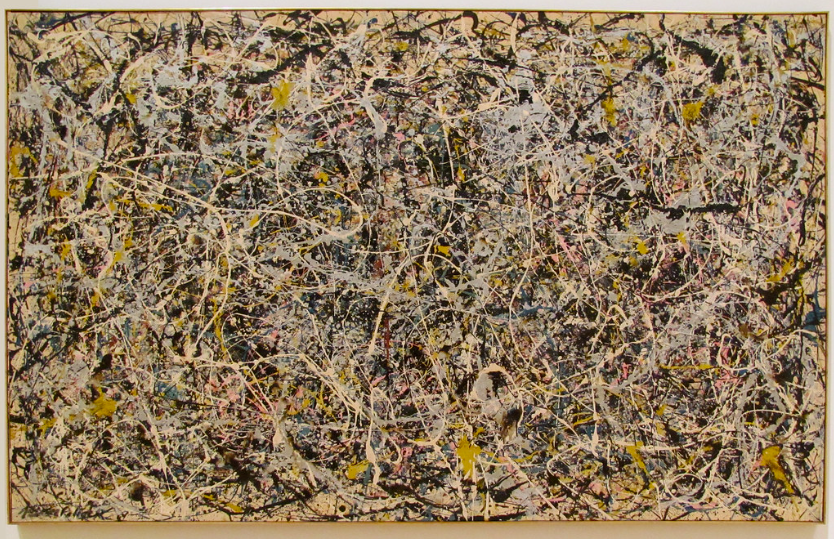
Most people who call themselves digital artists produce something beautiful that simply occupies space. Those who truly try learn to craft prompts properly and take a fundamental approach to tools; for me, they raise no questions.
ForkLog: But AI tools that create beautiful images are trained on beautiful images themselves, like those artists in the Chinese village. So the eventual result is still mainly the responsibility of those who created and trained the neural network.
Aртем: This debate raises many questions. Datasets for large projects are assembled from all images available online and that conform to moral and ethical standards. Indeed, there is a noticeable tilt toward Western art. But the neural network can always be retrained and adjusted in its operation.
Of course, one can criticise endlessly those who trained the neural network on a particular dataset. Or one can thank them for the work and improve the tool by addressing its flaws. The second approach seems more reasonable to me. Fortunately, this is now much easier than before.
ForkLog: If desired, one could assemble a dataset consisting entirely of paintings drawn by women or by members of socially vulnerable groups.
Aртем: Of course. Perhaps the reverse as well. Someone jokingly has already compiled a dataset for large language models entirely from content that developers have banned. Such a reaction to ChatGPT failing on provocative questions—asking questions that miss the mark, apologising, and so on.
I believe that nothing should be banned in this area; rather clusters should be created: here we have a club of moralists, and here a group generating jokes for goons. The neural network itself is a tool, not a final product.
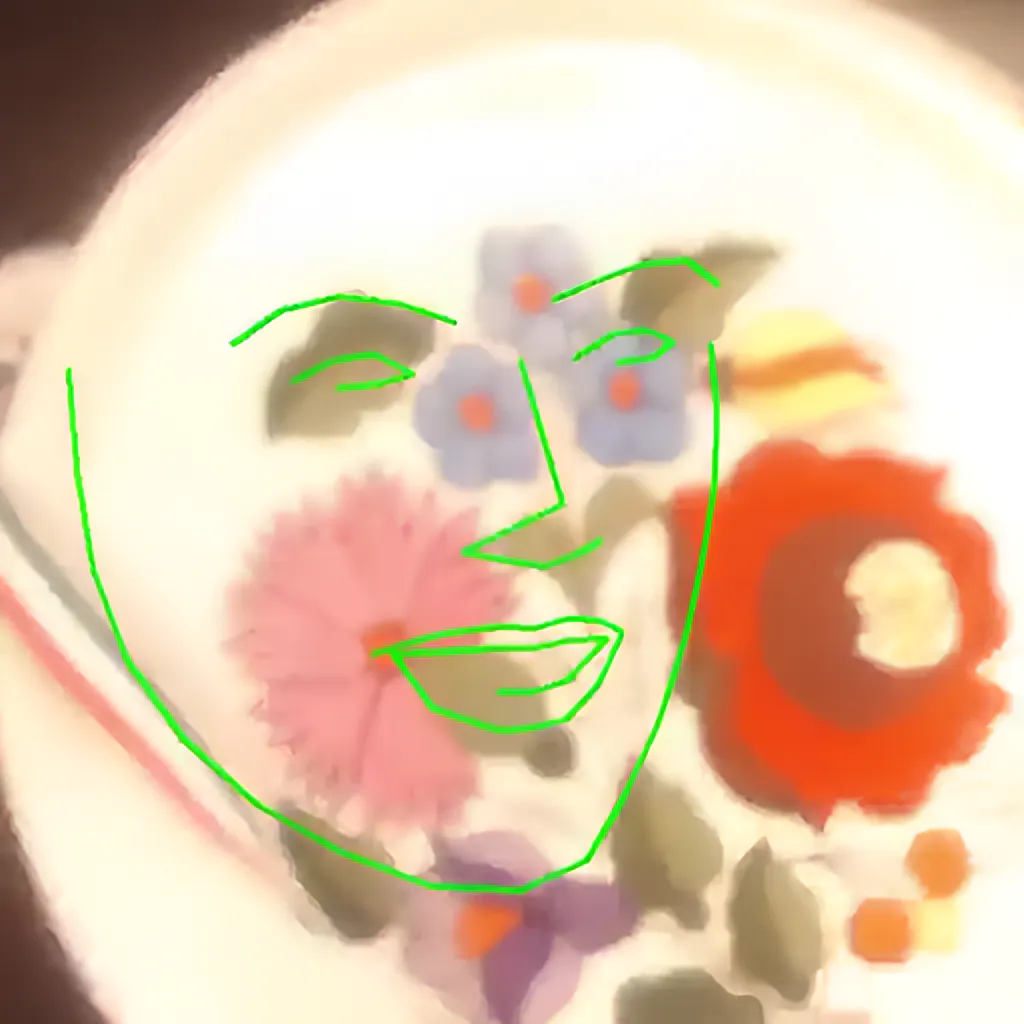
ForkLog: And yet it is not hard to imagine people choosing something average. The result would be average “beautiful pictures” from Midjourney, on which future generations of neural networks would be trained.
Aртем: Egor Kraft and I are now working on a project that plays with this feedback loop. It is already clear that if you train a neural network on its own outputs, it will degrades. The developers are adjusting for this, but Midjourney, of course, continues to be retrained on its own “best results.” A common example is female faces generated by it that clearly resemble each other; it’s the same person. Sooner or later this will need correction.
Рассылки ForkLog: держите руку на пульсе биткоин-индустрии!