The Evolution of Copyright: From Progressive Idea to Control Mechanism
Why copyleft has become particularly important today.
Once upon a time, copyright was a progressive concept that transformed the creation and consumption of creative works: an author of a book or music became equivalent to their work and received corresponding income. However, the humanitarian foundation of this legal concept began to crumble when it became fertile ground for abuse and unjustified super-profits.
ForkLog revisits how copyright mutated into a tool of control and why many creatives are opting for a radical alternative — copyleft.
The “Walled Gardens” of Corporations
The technological world increasingly resembles a dystopia in the spirit of cyberpunk or even Kafka. Users are forced to interact with a reality whose rules they often do not know. A phone refuses to work with a non-original battery, demanding repairs only at an authorized center at an inflated price. A car offers heated seats via a paid subscription, otherwise, this feature will be remotely disabled. A cloud service for designers can change its license terms at any moment, making thousands of work projects inaccessible without an expensive renewal.
This is not a series of system failures but its new architecture. A model where the user has transformed from an owner into a renter of personal data and devices. Corporations create “walled gardens” — closed ecosystems that are difficult and costly to exit. At the core of this model is vendor lock-in, which makes the client dependent.
The foundation of these unequal relationships is closed source code. Programs and operating systems are delivered as a “black box”: the user cannot check for vulnerabilities in the code, whether it leaks data to third parties, or artificially limits device functionality. A striking example is Apple’s “component binding” policy: the company programmatically blocks the operation of non-original parts, attempting to monopolize the repair market.
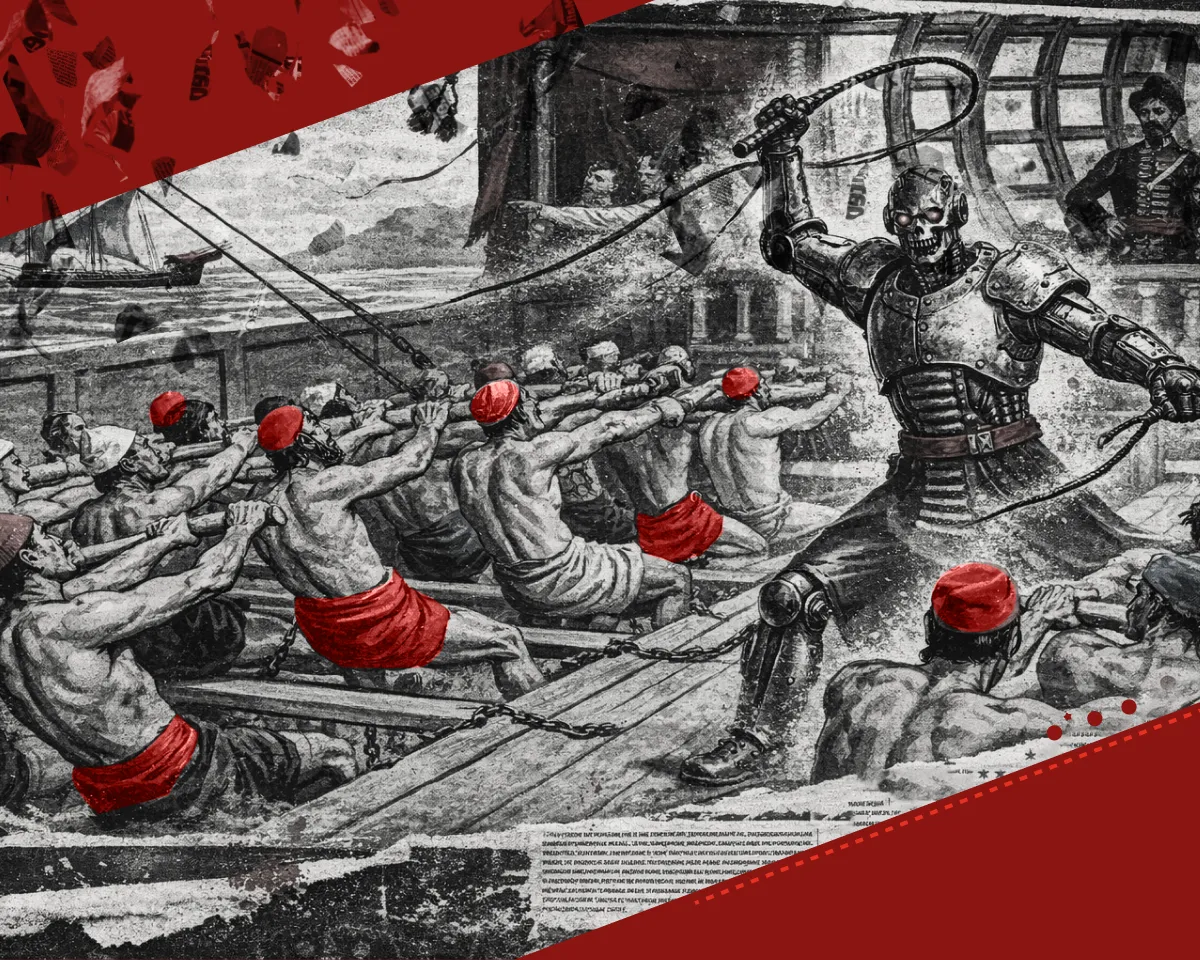
Originally, copyright was created to protect authors from unauthorized copying of their works. But in the hands of corporations, it has mutated into a tool of control. By closing code with license agreements, they prohibit not only its copying but also any study, modification, and improvement. The source code has become accessible only to a caste of “initiated” corporate developers.
The End User License Agreement (EULA), which most accept without reading, legally enshrines this powerlessness. Any attempt to “look under the hood” of a program or bypass artificial restrictions is declared illegal. Thus, the legal mechanism for protecting creativity has become a tool for building digital monopolies based on enforced ignorance.
The Gnosis of Code
The mechanism of copyleft delves deeper than legal nuances. At its core lies a philosophical principle that true freedom is impossible without knowledge of the source of true reality. The proprietary world is one where the “source code of being” is hidden. Users see only the consequences, not understanding the causes, and are forced to trust the dogmas outlined in the EULA.
Copyleft asserts the right of everyone to direct knowledge. The source code becomes a publicly accessible text that can be studied, interpreted, and altered. This principle requires not only knowledge of the source (access to the code) but also its recognition — acknowledging its nature and carrying it forward. The idea of copyleft was formulated by Richard Stallman. Its essence, embedded in licenses like the GNU General Public License (GPL), provides four freedoms:
- The freedom to run the program for any purpose.
- The freedom to study how the program works (know the source) and change it.
- The freedom to distribute copies.
- The freedom to improve the program and publish changes, keeping access to the source for others (recognize and acknowledge the source).
The key condition is “inheritance.” Anyone who modifies a program with a GPL license and distributes it must provide the source code of their version under the same license. One cannot gain knowledge and conceal it — code that has once become free remains so forever.
The strength of copyleft lies not in theory but in practice. This principle has enabled projects that not only compete with products from multibillion-dollar corporations but also surpass them.
Linux: the operating system kernel created by Linus Torvalds and released under the GPL license. It has become the heart of the planet’s digital infrastructure. Most web servers, supercomputers, billions of Android smartphones, and numerous Internet of Things devices run on Linux. This success would have been impossible without copyleft, which compelled giants like Google, IBM, and Oracle to contribute improvements back to the common, well-known source.
The AI Conflict: new challenges are posed by artificial intelligence. Systems like GitHub Copilot are trained on billions of lines from open repositories, including code under the GPL license. This has sparked a legal conflict: should a program generated by AI based on an open source also carry its “gene” of freedom?
Corporations vs. Community: the conflict can be illustrated by a telling example. A developer company created a popular open-source system. Initially, its code was distributed under a free license that did not impose strict obligations on users. A major cloud provider took advantage of these developments, created its own commercial service based on it, and began to compete directly with the original developer. Meanwhile, it did not contribute to the development of the original project. In response, the creator company was forced to switch to a stricter license. This was done to protect the project from those who use others’ work for commercial purposes but refuse to support its authors and community.
Choice Matters
The choice of software is not just a technical decision. It is a political and economic act. Installing proprietary software is akin to voting with money and personal data for a model of “digital dictatorship.”
Using free software under copyleft licenses supports an ecosystem based on transparency, collaboration, and control over digital tools. For a developer, publishing code under the GPL license is a direct contribution to creating “digital commons,” a space free from corporate control.
Copyleft is a working mechanism that returns technology to the control of users. It is the foundation for building a future where knowledge of the digital source is an inalienable right, not a paid privilege.
Рассылки ForkLog: держите руку на пульсе биткоин-индустрии!