Glassnode Calls Bitcoin’s Current Drawdown ‘Moderate’
Glassnode likens the market to 2015–17, with ‘moderate drawdowns’.
Glassnode analysts say the current crypto market structure resembles the 2015–17 cycle, marked by “moderate drawdowns”.
The October peak may have ended the bull phase, they add. In that case, the ensuing pullbacks look modest and echo the pattern seen seven years ago.
At $69,000, unrealised losses amounted to roughly 17% of market capitalisation.
Researchers stressed that current investor positioning mirrors the structure of early May 2022.
At the time of writing, bitcoin trades at $67,154, down 3.1% over the past 24 hours.

Wintermute’s view
Market maker Wintermute said bitcoin has erased all gains accrued after Donald Trump’s victory in the November 2024 US presidential election.
— Wintermute (@wintermute_t) February 10, 2026
According to its analysts, the sell-off was driven by pressure from US capital, heavy outflows from spot ETFs and a shift of liquidity into artificial intelligence.
Over the weekend, liquidations topped $2.7 billion. Bitcoin fell through $80,000 for the first time since April 2025, then plunged to $60,000 before later rebounding towards $70,000.
The asset is down 50% from its all-time high — the deepest drawdown since 2022.
Wintermute highlighted three triggers for the rout:
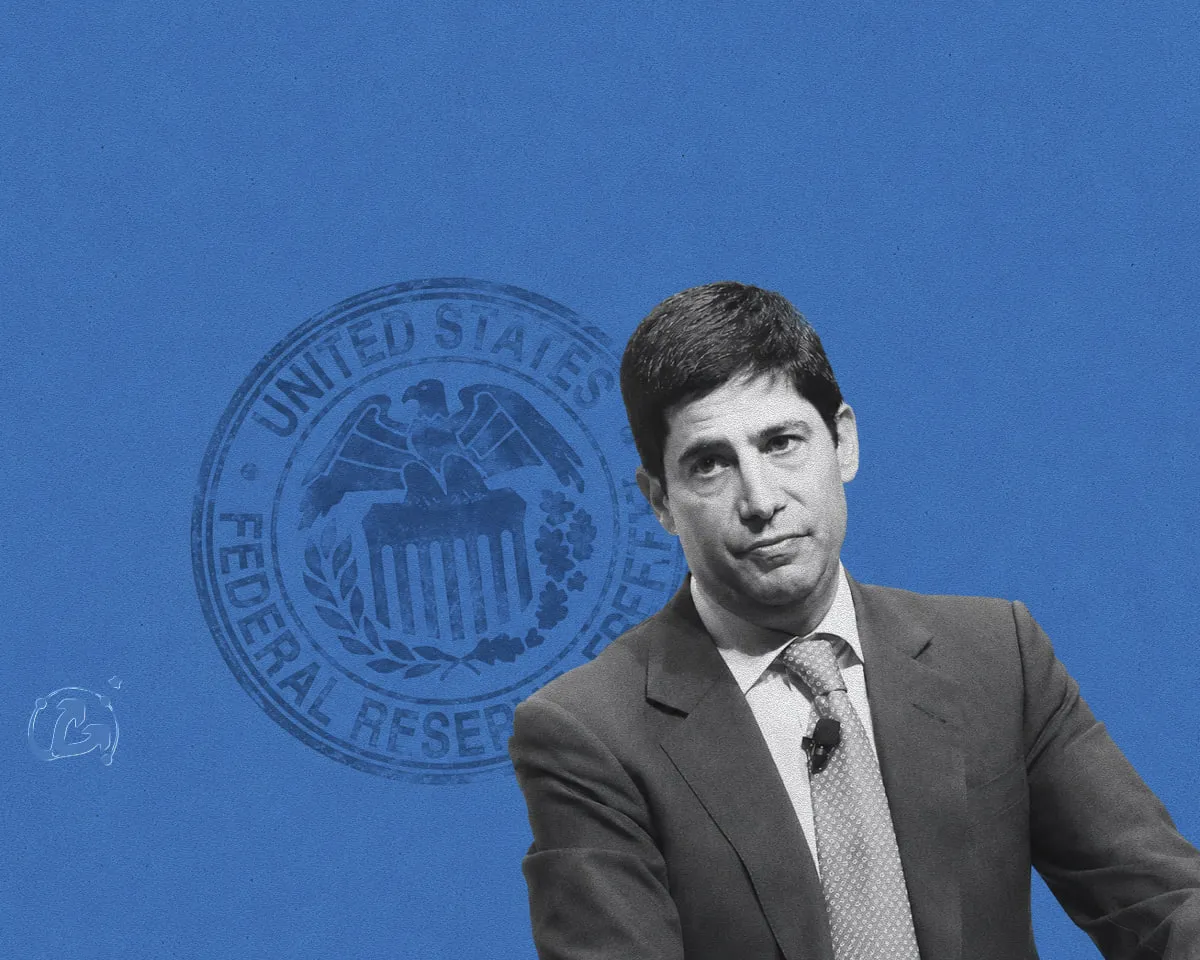
- The nomination of Kevin Warsh as head of the Fed.
- Disappointing reports from tech giants (the ‘Magnificent Seven’).
- A correction in precious metals.
Seller pressure
Capital flows point to structural selling by US investors. The Coinbase Premium (the price gap between Coinbase and the global market) has been negative since December, underscoring persistent selling pressure in the United States.
Institutional support — once a key driver of gains — has dried up. Since November, net outflows from spot bitcoin ETFs have reached $6.2 billion, the longest stretch of redemptions since launch.
BlackRock’s IBIT fund has been a key source of pressure. When investors redeem, issuers must sell coins into a falling market, feeding a downward spiral.
Capital shifts to AI
Wintermute ties crypto’s weakness to the boom in artificial intelligence. AI projects are absorbing spare capital at the expense of other risk assets.
Bitcoin’s performance now correlates with software developers’ shares. Strip AI from the Nasdaq, and crypto’s negative correlation largely disappears. A cooling of AI mania may be needed to rekindle interest in digital assets.
Outlook and what could turn the tide
The market has undergone a capitulation: volatility spiked and excess leverage was flushed out. A swift V-shaped recovery, however, is unlikely. Unrealised losses across digital-asset treasuries have reached $25 billion.
Wintermute sees a durable rebound as unlikely until three conditions are met:
- Coinbase Premium turns positive;
- ETF inflows resume;
- basis rates stabilise.
In the near term, expect elevated volatility as the market searches for equilibrium. Institutional flows via ETFs and derivatives will continue to set the tone.
Saylor: bitcoin will beat the S&P 500
Strategy founder Michael Saylor said bitcoin will retain its edge over traditional assets in the coming years. The current drawdown does not alter the firm’s strategy of accumulating coins.
In an interview with CNBC, he predicted that over the long run the digital gold will outperform the main stock indices by a wide margin.
“I think that over the next four to eight years, bitcoin will outperform the S&P by two or three times,” he said.
Despite the downturn, the firm continues to add to its treasury. On 9 February, Strategy reported buying another 1,142 BTC for about $90m.
That brings its total holdings to 714,644 BTC — more than 3.4% of bitcoin’s supply.
Saylor dismissed fears that price pressure could force the company to sell.
“We are not going to sell. We will be buying bitcoin. I expect we will buy bitcoin every quarter forever,” he stressed.
Volatility, he added, is part of the asset’s appeal. Investors with multi-year horizons should focus on long-term efficiency rather than short-term swings.
What about ether?
Large Ethereum holders keep adding despite prices falling below their average entry. That is according to on-chain analyst CW8900.
Ethereum has Fallen Below the Realized Price of the Accumulation Addresses
“The current price is below the price at which they began accumulating. Furthermore, their accumulation is proceeding even more aggressively.” – By @CW8900
Link ⤵️https://t.co/CXLpY9rKzC pic.twitter.com/JbBlwSzKHT
— CryptoQuant.com (@cryptoquant_com) February 11, 2026
Per the analyst, the market value of the second-largest cryptocurrency has dropped below the realised price of accumulation addresses — meaning it trades beneath the levels where big players built core positions.
Retail traders often panic when going “underwater”. Whales react differently: rather than halting purchases, they step them up.
The large-scale accumulation phase in ether began in June 2025 and has continued since, CW8900 noted, highlighting two points:
- The current price is below the starting point of accumulation.
- Buying is now faster than at the outset.
In his view, big capital sees the correction as a chance to buy size at favourable prices and average in.
Ether trades at $1,947 (−3% over 24 hours).

Earlier, Amberdata noted no signs of capitulation among bitcoin investors.
Рассылки ForkLog: держите руку на пульсе биткоин-индустрии!