



A listing boom: why quantity has not meant quality
The number of new coins on exchanges is soaring. In the first half of 2024, listings on CEX already surpassed the tally for all of 2023. According to Bloomberg’s estimates, the trading rosters at leading venues added 240 coins and tokens over the past six months.
Experts attribute the frenzy to bitcoin’s rally after the approval of spot ETFs in the United States based on “digital gold” and to moves by American politicians on crypto regulation. But what is happening to prices of the newly listed coins? Oleg CashCoin looked into it.
Signs of listing contracts
To gauge the real profitability of new assets, examine 23 cryptoassets from recent listings over the 30 days from first trading on Bybit, Binance, KuCoin and OKX. In aggregate, only four coins were higher after a month.
That implies the overall share of successful assets in the 30-day window after trading begins is about 17%. Looking at each exchange separately improves the picture — around 30–40% of tokens rose.
The steepest post-listing slumps occurred on KuCoin: of 13 coins reviewed, three fell by more than 80% a month after listing. The rest lost 10% to 40% over the same period. Only four listings showed gains or at least avoided declines.
Drawdowns were smallest on Binance — up to 40%. Yet the proportion of risers was roughly the same as elsewhere — around 40%. The venue’s chief distinction: during the period under review, token declines after trading began did not exceed 50% at any point.
On Bybit, the maximum drop in new tokens 30 days after trading began was 80%; five of ten listings fell by more than 40%, and only four of 12 coins recorded gains.
At OKX, only three of 11 tokens rose. The maximum decline came to 60%; the other losers were down 20–30%.
The limited falls on Binance and OKX may be linked to contracts setting listing conditions. At the end of 2022, Binance’s former CEO, Changpeng Zhao (CZ), revealed one such agreement with the team behind Mithril.
It specified that if the token traded below a certain price for 15 days, the exchange had the right to remove it from the trading roster. CZ responded to Mithril’s complaints about the delisting of MITH:
“I checked after seeing your post. Here is the clause from the contract for your and the community’s reference. Normally we keep confidentiality unless you break it. The security deposit is intended to encourage creators to continue working.”
If such arrangements exist, OKX and Binance are likely using them. The exchange and the project probably set a lower band for the asset’s price, with potential penalties for the latter.
The trend is worsening
As early as the start of 2023, analysts pointed to a so-called Binance effect, whereby tokens posted an average gain of 73% in the first 30 days after listing. They noted that, in most cases, a placement on this exchange buoyed prices thanks to its huge trading volumes.
That year-old assumption no longer holds. Even though Bybit has markedly increased its share of trading relative to the rest of the market, becoming the second-largest venue by volume after Binance, its listing statistics now rank among the worst.
The broader picture has shifted as well. According to data from November 2023, the ratio of successful to failed listings looked far more attractive. Exchanges showed positive dynamics, where Binance had six successful listings versus four unsuccessful, and OKX — four versus two, respectively. On Bybit, 12 projects “soared” against eight that flopped. KuCoin had 12 successful coins versus 18 that fell.
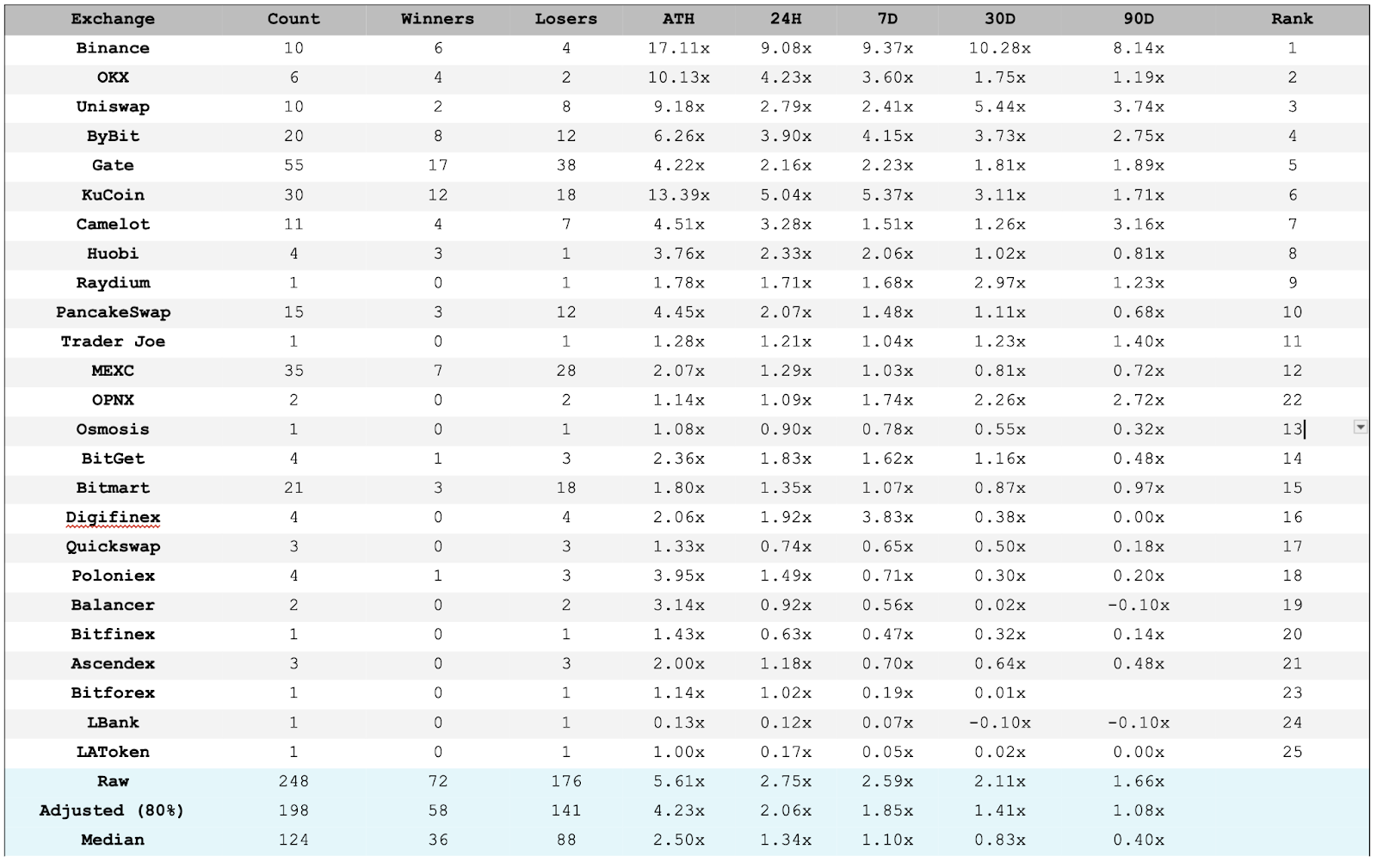
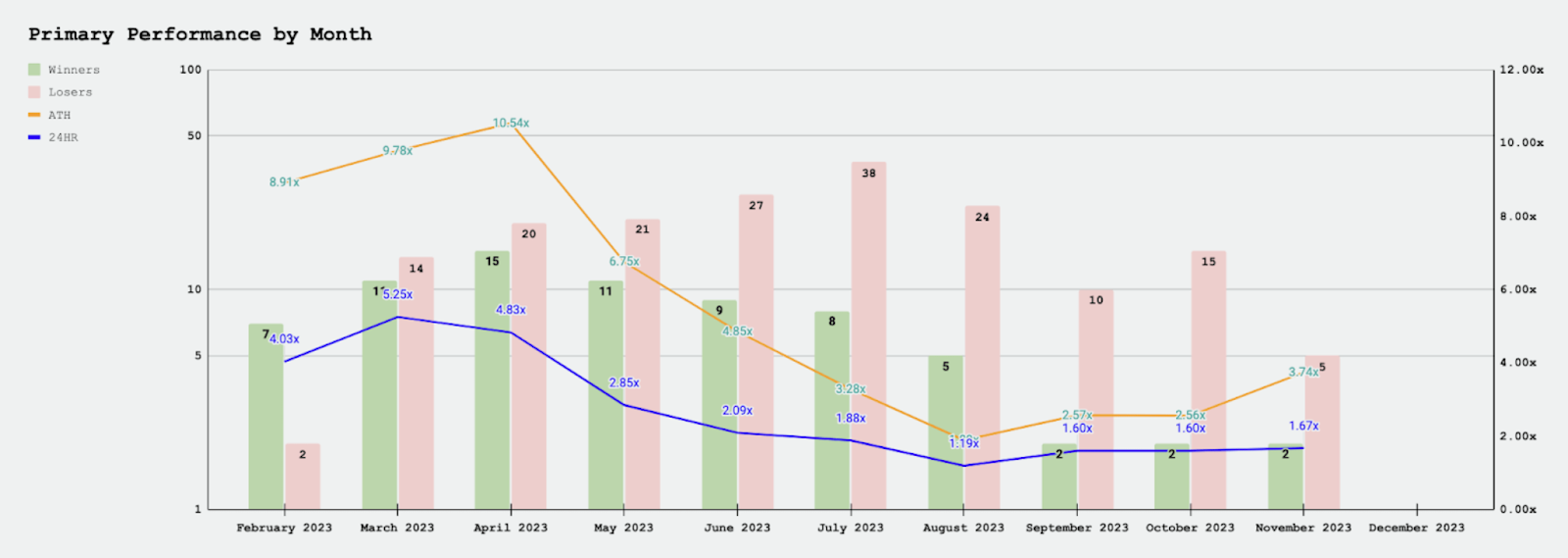
The deterioration became noticeable around mid-2023, when bitcoin traded near $26,000 and the active phase of the ETF debate in the United States was only just beginning. Over the rally that followed, total crypto capitalisation rose two-and-a-half times.
That yields an unexpected conclusion: successful listings may be more numerous when the crypto market is calm or declining. When markets are rising, listings become a less safe instrument for investment.
From August 2023, the averages settled into the shape still observed today. Yet last year’s cumulative tally of “winners” came to 29%, which is twice the observation for new listings on Bybit, Binance, KuCoin and OKX, with an overall success rate of about 15%.
One could, of course, choose other windows — for example, 90 days after listing — but that would only broaden the statistics without answering what to do once a coin hits an exchange.
The overarching market trend showed that, at least until mid-July 2024, the statistically best course was to sell immediately and not to buy new listings. The most contained declines were on Binance and OKX.
Another point: tokens that delivered positive dynamics are distinctive in that they trade on at least three large exchanges. Launching on only one or two venues typically has a negative impact on price.
Tokens with positive dynamics include Notcoin (NOT), LayerZero (ZRO) and Aethir (ATH). That does not speak to prospects overall, only to a higher probability that a token will not plunge by 80% or 90% in the first weeks of listing on major exchanges.
Рассылки ForkLog: держите руку на пульсе биткоин-индустрии!