


A neural network will study the universe, Britain will test algorithms, and other AI news
Weekly AI news roundup.
We aim to inform readers not only about events in the Bitcoin industry, but also about developments in adjacent tech spheres — cybersecurity and the world of artificial intelligence.
ForkLog AI has gathered the most important AI news of the past week.
- Russia’s Ministry of Digital Development proposed not anonymising citizens’ data.
- Greek authorities fined Clearview AI €20 million.
- Researchers, with the aid of AI, plan to study fresh images from the James Webb Space Telescope.
- A group of researchers created a 176-billion-parameter language model.
- In Switzerland, an underground network for autonomous freight delivery will be built.
- The week’s most important AI deals.
Russia will process de-identified data
Russia’s Ministry of Digital Development proposed not anonymising citizens’ personal data. The ministry presented a new version of the bill regulating the circulation of confidential information.
The document would oblige businesses to pass to the state customers’ data without prior depersonalisation. Citizens’ consent will not be required.
After the anonymisation of the obtained data, the authorised body within the Ministry of Digital Development will provide access to the data to other agencies and Russian AI developers, the document says.
Greece fines Clearview AI for GDPR violation
The Greek authorities fined the face recognition startup Clearview AI €20 million.
The data protection authority found that the startup violated the principles of legality and transparency under GDPR.
The regulator barred the company from collecting and processing personal data of residents. It also ordered Clearview AI to delete all data relating to Greek citizens.
UK to examine AI algorithms for bias
The UK Information Commissioner’s Office (ICO) will study whether AI systems used for hiring decisions show racial bias.
According to the agency, algorithmically driven discrimination could lead to rejection of job applications and to the denial of loans or social security benefits.
The ICO is investigating the use of such systems and whether AI decisions affect employment opportunities for members of ethnic minorities.
Researchers will apply AI to study space images
Artificial intelligence will be used to study the first full-colour images from the James Webb Space Telescope (JWST).


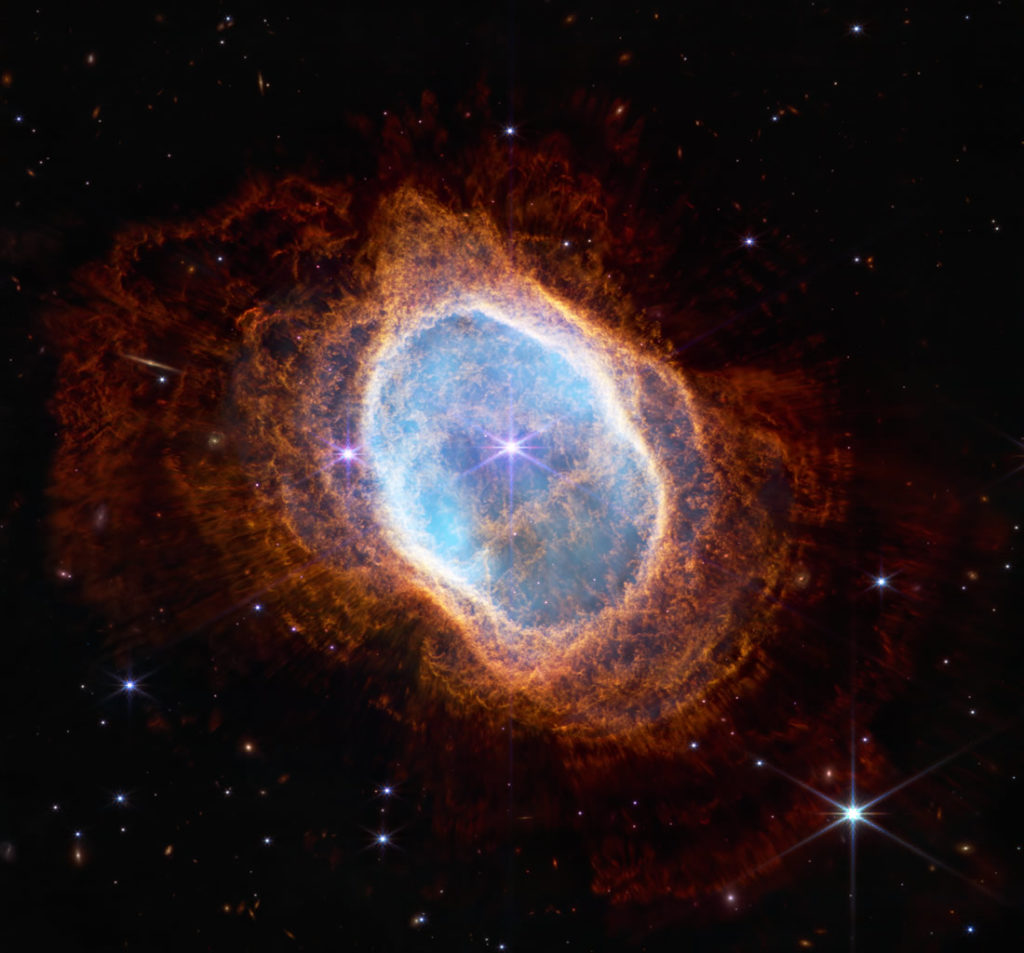

Researchers from the University of California, Santa Cruz are using the Morpheus AI algorithm, trained to classify astronomical objects such as galaxies based on pixel analysis of unprocessed data. In the future, the model will help identify habitable planets beyond the Solar System, the scientists said.
Initially, engineers will use JWST images to train Morpheus. They say the algorithm was trained on images from the Hubble Space Telescope, and JWST’s optics are unique.
Study: users cannot tell AI-generated images from human-made ones
73% of people labelled a DALL-E 2-generated image as a painting created by a human. The study was conducted by developers of the online chat app Tidio.
68% of respondents consider the surreal work by Zdzisław Beksiński to have been created by human hands. Only 9% of respondents could easily distinguish artists’ works from AI-generated images, according to the report.


According to Tidio, around 67% of respondents consider images generated by AI algorithms to be a form of art.
Participants cited the ease of conceptualising ideas and sources of inspiration as advantages of generative AI. However, some respondents expressed concerns about the improper use of AI to create deepfakes, the authors noted.
Researchers present a 176-billion-parameter transformer neural network
A team of 100,000 researchers developed the BLOOM language model with 176 billion parameters. The algorithm is open source.
Researchers trained the neural network on the Jean Zay supercomputer in Paris. The model can generate text in 13 programming languages and 46 natural languages, including dialects.
According to the authors, BLOOM will allow scientists and developers to explore the risks and benefits of large language models. The algorithm is freely available to any person or institution willing to agree to the Responsible AI license, they added.
In Switzerland, an underground tunnel network will be built for autonomous freight delivery
Swiss authorities approved the construction of an underground tunnel network for autonomous freight delivery. The Cargo Sous Terrain project, valued at $30-35 billion, will begin on 1 August 2022.
Drones will pick up and deliver parcels to dedicated ramps within the underground network. Robomules will operate round the clock at 30 km/h. Engineers will also integrate monorails into tunnel ceilings for express delivery of smaller loads.
The network will stretch 500 km. The first 70-km section with ten hubs will connect Zurich with the Härkingen-Niederbipp logistics hub in the country’s west.
Japanese startup uses AR glasses for shopping
In Japan, AR glasses were used for remote shopping. The technology enables elderly citizens to shop from home.
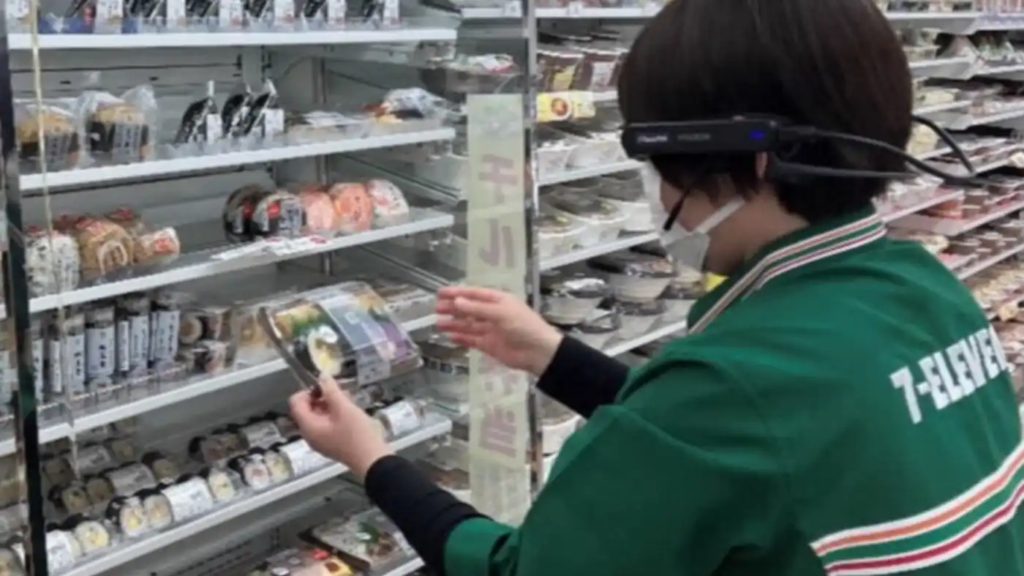
A shop employee scans shelf contents using the RemoPick headset and selects items marked by the customer in a dedicated app on a smartphone or tablet. The technology remembers product positions and shows staff the location of the items.
The pilots launched in June 2022 in one of 7-Eleven’s Japanese supermarkets. In the first two weeks, 13 customers aged over 60 used the service.
Lime teaches scooters to detect sidewalk riding
The Lime company has trained its electric scooters to warn users when they ride on the sidewalk. In August 2022, the company will test the technology on 400 devices in San Francisco and Chicago (USA).
The company equipped the scooters with cameras and a computer-vision platform. When entering the sidewalk, the system notifies users of the breach with an audible alert or by forcing a reduction in speed.
By the end of 2022, Lime plans to roll out testing of the technology in six cities.
Scientists create AI tattoo that tracks arterial pressure
American scientists have developed an AI tattoo for monitoring arterial pressure.
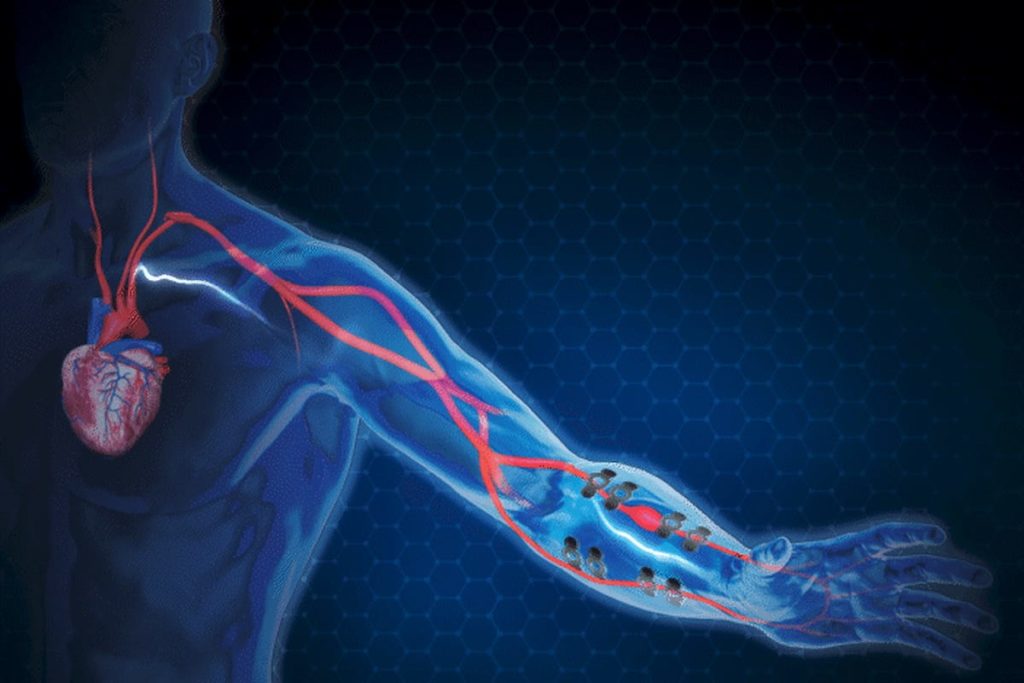
A flexible electronic sticker based on graphene sensors applies a small electric current to the skin and analyses the body’s response. The spread of the signal along the path of least resistance allows identifying changes in bioimpedance that correlate with arterial pressure dynamics.
Researchers also taught the device to measure pulse-wave velocity. They used these data together with bioimpedance data to train the AI to forecast diastolic and systolic blood-pressure points.
The scientists recruited seven volunteers to collect 18,667 records. Of them, 89% were used to train the algorithm, and 11% for testing.
According to the researchers, the device’s accuracy was 0.2±4.5 mmHg for diastolic pressure and 0.2±5.8 mmHg for systolic pressure, equivalent to IEEE Class A for arterial-blood-pressure monitoring devices.
The week’s most important AI deals
From 10 to 16 July 2022, AI startups raised more than $536 million. Here are the most notable deals.
- May Mobility received $111 million to deploy autonomous vehicles in the US and Japan.
- Autonomous-flight startup Merlin Labs raised $105 million.
- XPeng Robotics raised $100 million to gear up for mass production of household robots.
- Creators of the MLOps platform Tecton raised $100 million.
- AI21 Labs received $64 million to develop large and advanced language models.
- You.com raised $25 million to build premium features for an AI-powered search engine.
- Deci raised $25 million to optimise machine-learning models.
- Syrup Tech received $6.3 million to develop software for predictive inventory recommendations.
Also on ForkLog:
- The Wimbledon organizers have used AI to analyse tennis matches.
- Meta created an algorithm for fact-checking on Wikipedia.
- AI learned to discover drugs 1,200 times faster than current systems.
- Andrej Karpathy, Tesla’s head of AI, has stepped down.
- In the United States, an AI algorithm has been certified that detects heart defects.
Subscribe to ForkLog AI on Telegram: ForkLog AI — all the news from the AI world!
Рассылки ForkLog: держите руку на пульсе биткоин-индустрии!