




A number of Ethereum liquid staking services have implemented or are integrating a self-imposed cap that obliges platforms to hold no more than 22% of the market. Support for the initiative was announced by Rocket Pool, StakeWise, Stader Labs, Puffer Finance, The Swell and Diva Stting.
The proposal is viewed as a step toward preserving what many say is a shaken decentralisation of the network. However, not all players welcomed it with enthusiasm. We explain where this specific figure came from and whether such limits make sense.
Limit to prevent collusion
The idea was proposed by an Ethereum developer under the pseudonym Superphiz in May 2022.


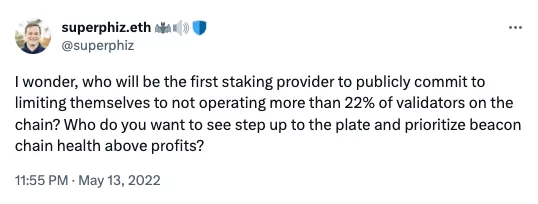
To finalise a block in the network, 66% of validators must agree, he explained. Therefore, the 22% cap on staking services means that for a coordinated attack on the protocol to be launched, at least four major platforms would need to collude.
“Are the pools prepared to put the health of the ecosystem above their own profits?” asked the programmer.
According to the HashKey report, in 2023 the total market size of liquid derivatives (LSD) grew to $22 billion, and the market capitalisation of staking platforms reached $18 billion.


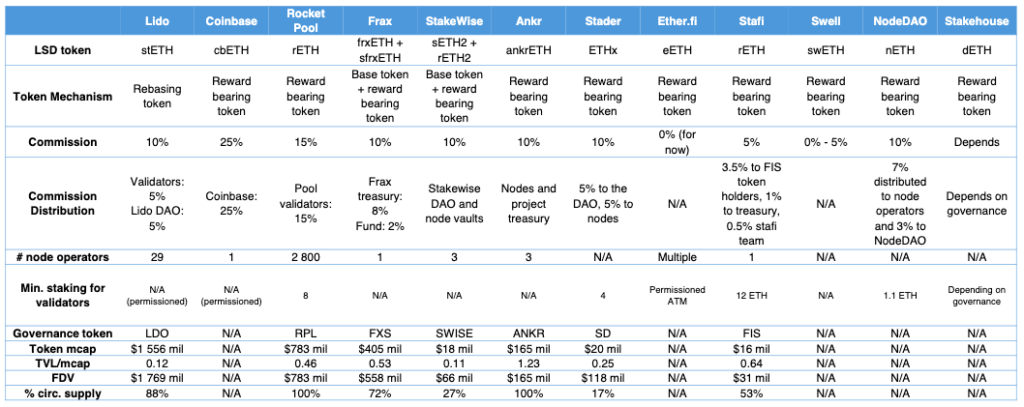
Experts say the growth of LSD protocols is clearly beneficial for affiliated communities and token holders, but it also harms the Ethereum blockchain itself.
Typically, staking services rely on a small number of node operators who host a large share of validators. This arrangement poses significant risks to decentralisation, experts explained.
“There is an elevated likelihood of censorship by centralised staking participants, as they can be incentivised or subjected to regulatory pressure aimed at restricting transactions. This could potentially undermine trust within the network,” HashKey emphasised.
Moreover, analysts highlighted a probable security threat, as large players could facilitate a 51% attack.
Despite the ominous projections, HashKey acknowledged that most protocols are relatively new and have laid out plans for decentralisation and distribution of validators.
Caution or paranoia?
Superphiz has been promoting his idea of limits for more than a year, and it seems not without reason. He has given particular attention to the largest Ethereum liquid staking service — Lido Finance.
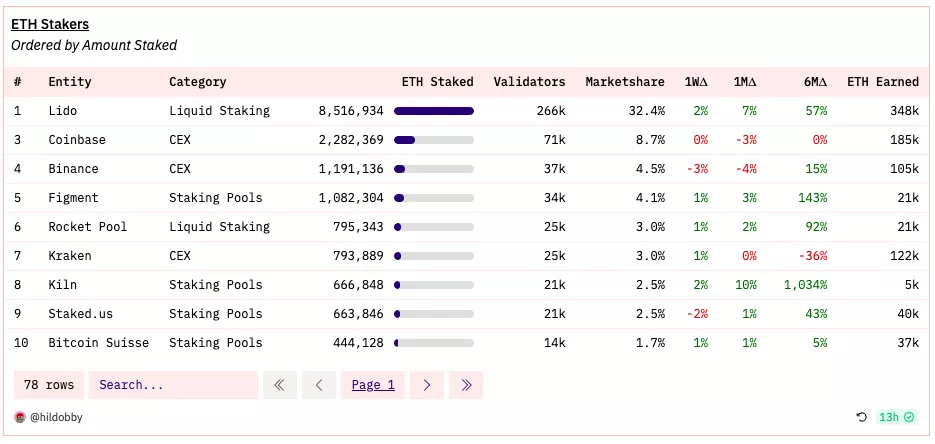
According to the Dune dashboard, at the time of writing, 32.4% of all locked ETH resides on the platform. Its nearest competitor — Coinbase — accounts for only 8.7% of the market.

In July 2022 the Lido community almost единогласно проголосовало against self-imposed limits. However, when the protocol recorded a daily inflow of 150,000 ETH, the developers activated a daily cap on the rate of lockups.
There are already fears that the protocol could reach the 66% threshold needed for an attack.
“I think the first step is not to let them reach 33%. I would call for sanctions at the protocol level. If this is not done, who knows what might follow?” said Superphiz.
Earlier in August, Lido reported a rise in TVL above $15 billion. According to the developers, in July the service recorded inflow of more than 10,000 new users.
Earlier Glassnode analysts reported that after the activation of the Shanghai upgrade in the network of the second-largest cryptocurrency, inflows to liquid staking protocols led by Lido Finance intensified.