



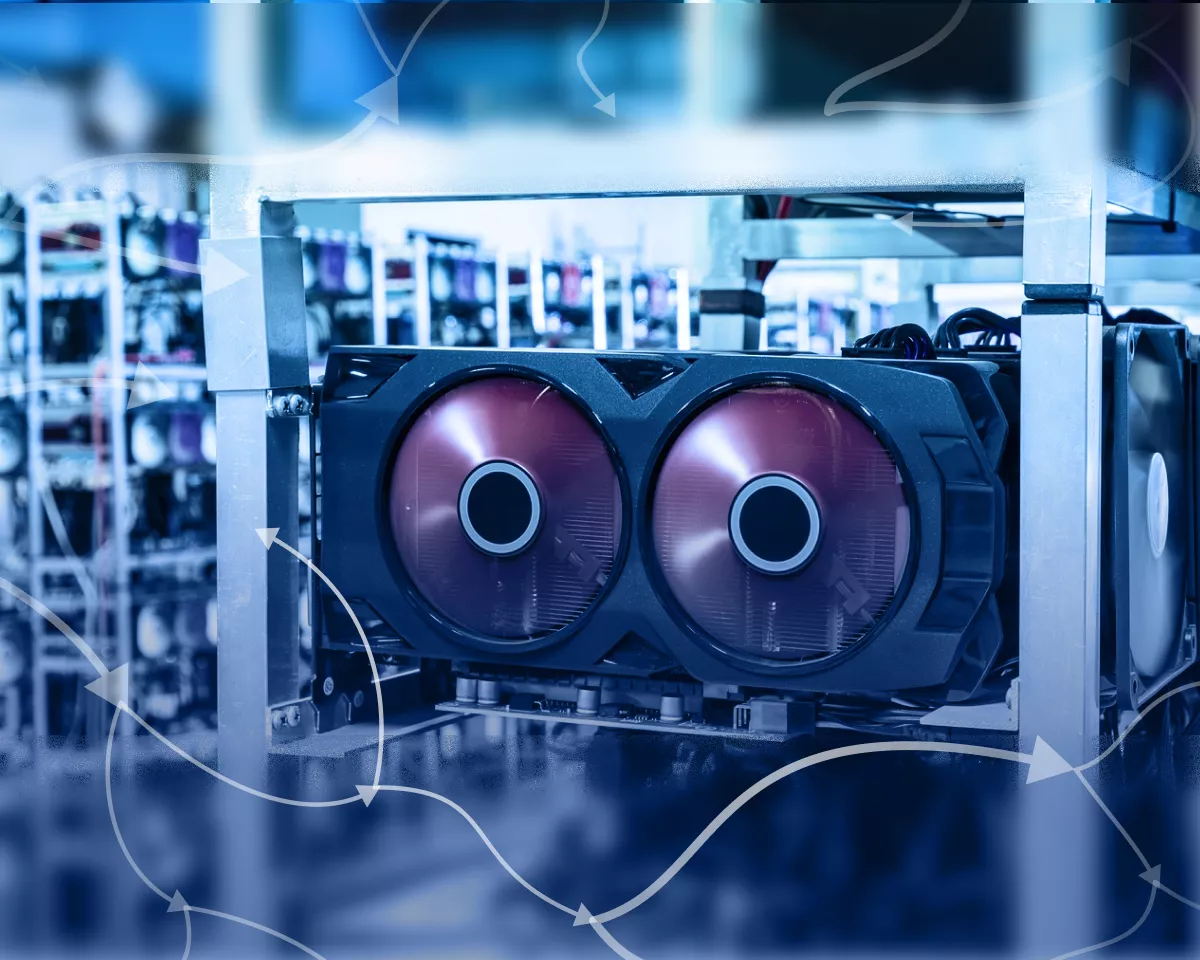
The energy consumption of AI likely already exceeds that of Bitcoin mining, according to a study by the Bitcoin Policy Institute (BPI).
The report states that annual energy consumption at mining facilities is approximately 121.13 TWh. In 2023, AI consumed between 20 and 125 TWh. A more precise estimate is challenging, as data centers supporting AI also handle other tasks.
Projections suggest AI will require 169 TWh in 2024 and 240 TWh by 2027, compared to 160 TWh for cryptocurrency mining. Besides energy, data centers demand significant water for cooling equipment—every 5-50 queries to ChatGPT consume 500 milliliters.
Generating a single AI image uses as much electricity as fully charging a smartphone.
Artificial intelligence offers 17-25 times more revenue per kWh compared to Bitcoin mining—$0.17-0.2 versus $3-5. Consequently, some miners are incorporating neural network operations into their data centers or fully transitioning to the AI industry.
“We will observe this trend as long as the revenue per MWh from AI remains higher than that from Bitcoin,” noted BPI researcher Margot Paez.
Miner Anibal Garrido pointed out that transitioning to AI is not straightforward, as ASICs are designed exclusively for PoW hash computations and cannot be repurposed for artificial intelligence. However, facilities are adapting to accommodate GPU.
Earlier, Bernstein experts predicted that 20% of mining capacity would shift to AI. Companies mining digital assets are attractive partners for creating data centers for neural networks due to their access to power sources and operational capabilities.
Analysts from the company also suggested the potential for an electricity shortage in the US within two years if the growth rate of AI data centers continues. They estimate that queries to ChatGPT require about 10 times more computational power compared to a Google search.