




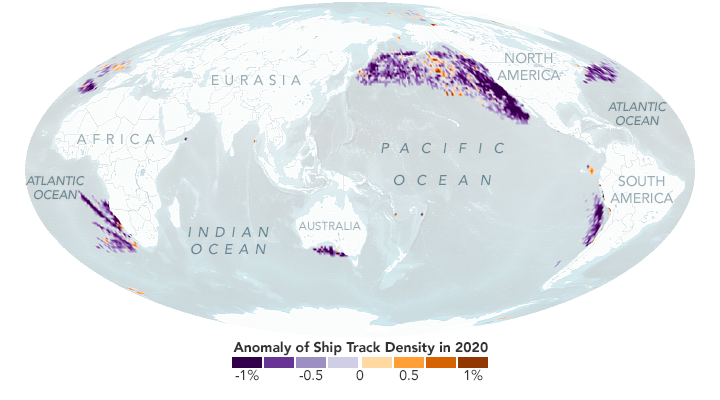
Reducing sulfur content in ship fuels has lowered air pollution over the sea to a record low in the last century. The finding is reported in a NASA study.
In 2020, the global standard enacted by the International Maritime Organization (IMO) regulating sulfur content in bunker fuel for ships came into force. It was expected that the limit would cut sulfur oxide emissions by 77%, equivalent to 8.5 million metric tons.
The poisonous gas increases the risk of acid rain and can cause respiratory, cardiovascular, and pulmonary diseases.
NASA researchers found that the IMO 2020 policy and reduced shipping due to the coronavirus pandemic led to a record decline in pollution levels since monitoring began nearly 20 years ago.
Scientists created an AI model to identify emissions based on ships’ trajectory from images taken from 2003 to 2020 by the MODIS spectroradiometer on board the Aqua satellite.
“Without such a comprehensive and large-scale sampling of shipping routes, we would not be able to fully understand the problem [pollution],” said the atmospheric scientist from NASA’s Goddard Space Flight Center and the University of Maryland Tianle Yuan.


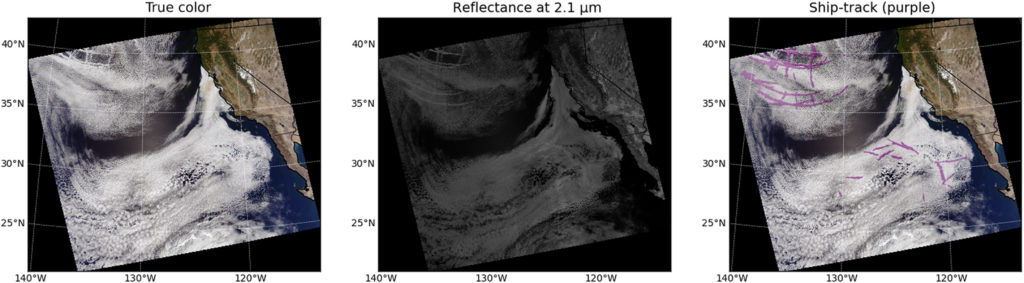
The images showed that the algorithm initially identified as “anomalous cloud lines”. They form as a result of the mixing of fine pollution particles emitted by ships and water vapour.
Concentrated droplets scatter more light and appear brighter than other types of clouds at sea containing larger objects such as salt crystals.


AI helped researchers discover that in 2020, when the IMO restricted sulfur content in fuel to 0.5% from 3.5%, ships polluted the air less.
“Emissions density has fallen sharply on every detected major shipping route with climatological data and has reached a record low over nearly two decades,” the paper says.


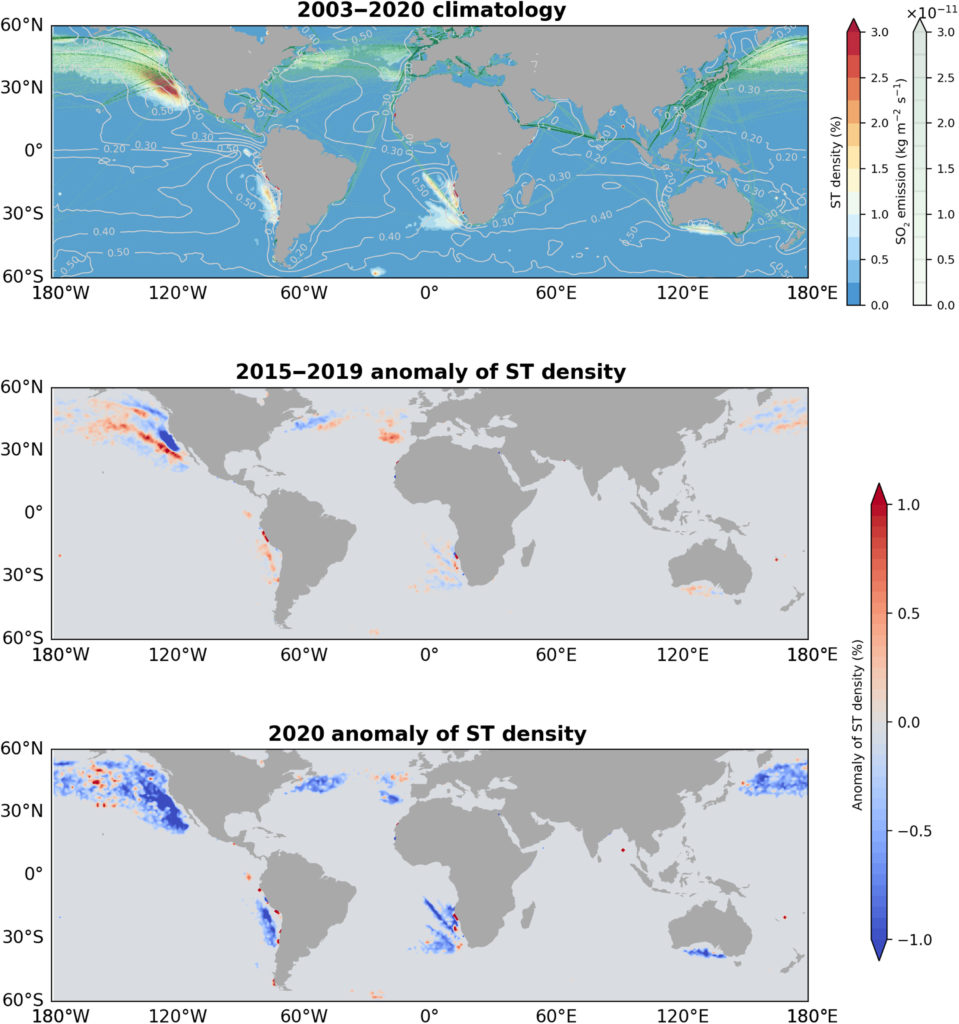
During the coronavirus pandemic, global ship traffic fell by 1.4% and remained subdued in 2021. Researchers believe that the IMO 2020 fuel regulation had a greater impact on reducing air pollution.
Earlier in May, scientists with artificial intelligence developed a synthetic enzyme that breaks down plastic waste in 24 hours.
In January, it emerged that American researchers are employing AI to forecast floods in the Gulf of Mexico.
In November 2021, the startup Neu.ro and the company atNorth unveiled a zero-emission cloud solution for machine-learning tasks.
Subscribe to ForkLog’s news on Telegram: ForkLog AI — all the news from the world of AI!