


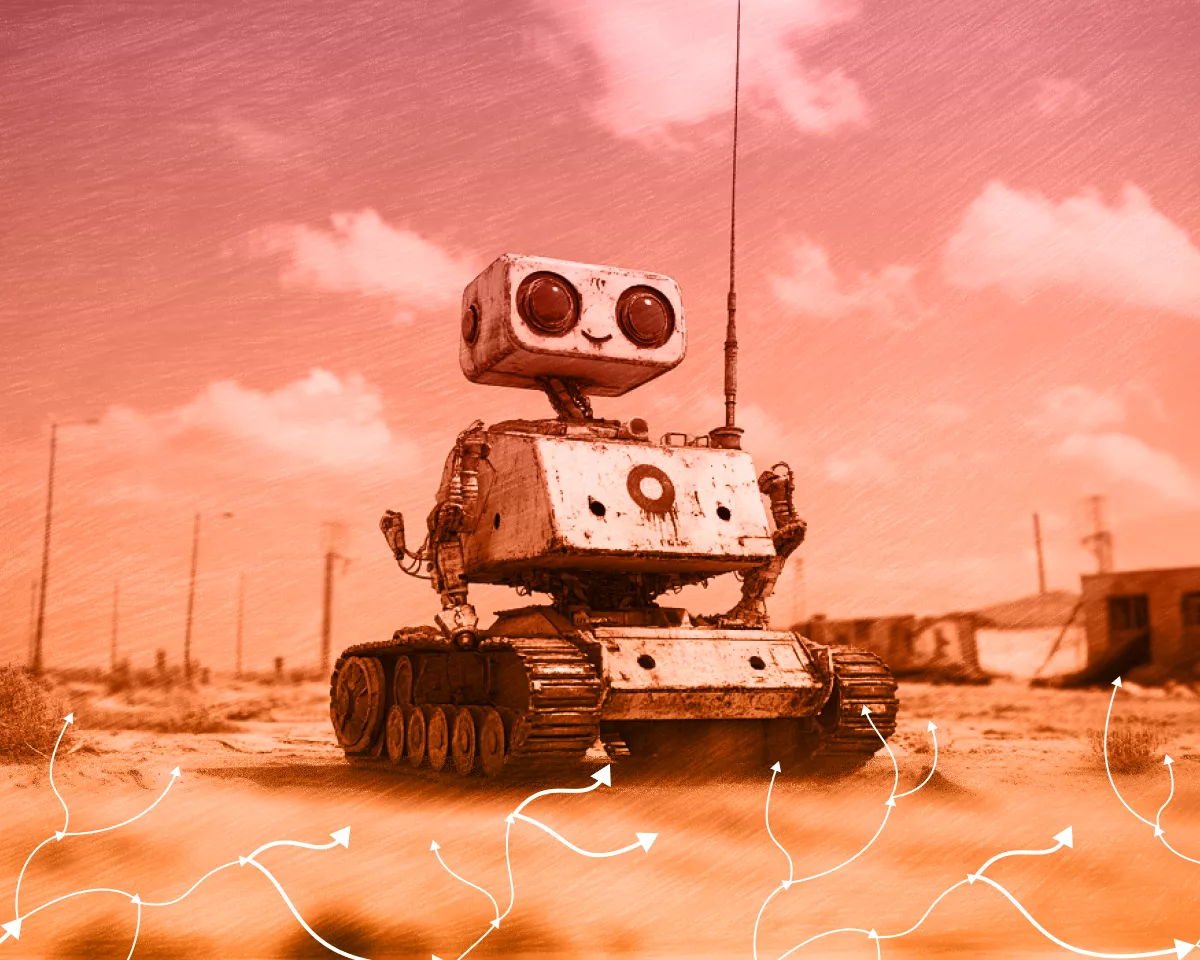
AI in Warfare: Experts Weigh In on Military Applications
The U.S. Department of Defense is swiftly integrating advanced AI technologies without the need for in-house development, thanks to partnerships with the private sector. This is reported by Decrypt, citing expert opinions.
“As with many other technologies, the commercial market always moves and integrates faster than the government,” commented retired Rear Admiral Chris Becker of the U.S. Navy.
He cited SpaceX as an example, which quickly progressed from concept to the execution of launching and recovering a carrier rocket at sea, while the government remains at the initial stage.
The former head of the Naval Information Warfare Systems Command noted that the integration of advanced technologies into society, initially developed for governmental and military needs, is not new.
“The internet began as a defense department research initiative and then became available to the public, and now its use is a basic requirement,” he emphasized.
In October, Meta opened its AI technologies to U.S. government agencies and defense contractors, as well as allies. In November, Anthropic took a similar step.
AI Startups Benefit from Government Partnerships
CEO of AI Squared, Benjamin Harvey, noted that partnerships with governments are beneficial for AI companies, as they provide stable income and serve as a source of information for neural networks.
“AI developers want to use the federal government as a learning opportunity to understand sector-specific problems. This experience gives them an advantage in anticipating issues that may arise in the private sector in the next five to ten years,” he noted.
Prospects of AI in the Military Sphere
In July, at the Axios Future of Defense event, retired Army General Mark Milley stated that advancements in robotics and AI will make AI-powered robots a part of future military operations.
“I think that in ten years, 25-33% of the U.S. military will be robotic,” predicted the expert.
The Department of Defense requested $1.8 billion for 2025 to develop AI and machine learning projects.
President of the Unmanned Systems Division at Kratos Defense, Steve Finley, noted that the application of neural networks may be concentrated around data.
“In a military context, we primarily see highly developed autonomy and elements of classical machine learning, where they assist in decision-making, typically not related to weapon deployment. AI significantly accelerates data collection and analysis for decision-making and conclusions,” he clarified.
According to him, leaving the choice to humans is a crucial factor in preventing a “Terminator” scenario.
“If a weapon is deployed or a maneuver threatens human life, the decision-making individual is always kept informed,” Finley noted.
AI’s Reliability Questioned
Despite the rapid development of artificial intelligence since the launch of ChatGPT, experts question the real effectiveness of the technology.
“Businesses have found that large language models are not particularly reliable. They hallucinate, they make silly mistakes. This limits real-world application. You wouldn’t want something hallucinatory developing your military strategy,” noted scientist Gary Marcus.
He believes that using neural networks without humans in warfare would be a foolish decision. He also pointed out the current slowdown in technology development.
“Therefore, I don’t think the military should realistically expect these problems to be solved. Such systems are unlikely to be reliable, and you wouldn’t want to use unreliable systems in warfare,” the expert concluded.
Back in June, China developed an AI commander for military simulations.
Рассылки ForkLog: держите руку на пульсе биткоин-индустрии!