




We aim to inform readers not only about developments in the bitcoin industry, but also about what is happening in adjacent technology spheres — cybersecurity, and now in the world of artificial intelligence (AI).
ForkLog has gathered the week’s most important AI news.
- In Russia, named six grant recipients for AI research funding.
- The U.S. Navy will deploy AI in the Middle East. (source)
- Natalia Kasperksaya urged not to share biometric data. (source)
- Alphabet launches drone-delivery of goods in Australia.
- The U.S. military plans to ‘clear’ brains using AI.
- A robot capable of walking a tightrope and riding a skateboard was demonstrated in the United States.
- Google AI restored Gustav Klimt paintings lost during World War II.
In Russia, AI research centres selected for grant funding
Russia named six grant recipients for AI research funding. They will receive up to 1 billion rubles by 2024.
The winners were the Skolkovo Institute of Science and Technology, Moscow Institute of Physics and Technology (MIPT), the V.P. Ivanov Institute of System Programming, Innopolis University, ITMO University and the Higher School of Economics.
Total support, including off-budget funding, will amount to 7 billion rubles.
The U.S. Navy to deploy AI in the Middle East
The Fifth Fleet begins using AI-enabled hardware to enhance situational awareness in the Middle East.
According to Captain Michael Brasseur, the military is currently strengthening trust between humans and machines. The next step will involve maritime and aerial unmanned systems for real-world missions.
On 9 September the Navy established an operational group to recruit military experts and external organisations for AI developments.
Natalia Kasperksaya urged not to share biometric data with companies
Co-founder of Kaspersky Lab Natalia Kasperskaya recommended not sharing her biometric data, as it would be “almost guaranteed to be stolen, sold, or leaked.”
She noted that it is unclear how companies will protect customer data, including from their own employees. She also added that she does not understand the rationale for biometric data use:
“Why simplify user identification? Because it’s ‘convenient’ and ‘cool’? Why swap security for the appeasement of laziness? Isn’t it hard to just type a password?”
Media: AI creates problems for CIA informants in Russia and China
AI has hindered the CIA’s communications with informants in Russia and China.
Last week, CIA leadership notified staff worldwide of rising arrests, killings, compromises and defections of foreign sources. The greatest concerns were in Russia, China, Iran and Pakistan.
The memo’s authors believe rival intelligence services are using AI, biometric scanning, facial-recognition systems and other technologies to track CIA personnel movements to identify informants.
DeepMind reports its first profit
In 2020, the British AI lab DeepMind, part of Alphabet, earned $59.6m. Previously it operated at a loss — for example, in 2019 it stood at $649m.
According to filings with the UK Companies House, annual turnover rose from $361.9m to $1.2bn.
DeepMind did not specify the reason for the rise in profits. The jump may be related to higher sales of its own products to other Alphabet units, including Google, YouTube and X.
Alphabet launches drone-delivery of goods in Australia
Alphabet subsidiary Wing began testing drone deliveries of groceries and other goods from mall rooftops.

In Logan, the drones fly from Logan’s Grand Plaza and deliver sushi, tea, smoothies, over-the-counter medicines, toiletries and other goods.
In the first six weeks, the drones carried out more than 50,000 deliveries. Going forward, Alphabet plans to expand its retail-partner base in the city centre and its coverage area.
General Motors launches Ultra Cruise driver-assist system
General Motors announced the Ultra Cruise driver-assist system, which would allow driving “without human involvement in 95% of scenarios on any paved road in the United States and Canada.”
ADAS is built on the Ultifi software and uses 360-degree cameras, as well as radar and lidars to create three-dimensional representations of the surrounding environment. Ultra Cruise includes an additional sensor behind the windshield with an integrated 5-nm scalable compute architecture.
The system can automatically change lanes, maintain distance and comply with speed limits, steer, respond to traffic signals, avoid obstacles and park in residential areas.
However, the group delayed the rollout of Super Cruise in Cadillac Escalade vehicles due to a semiconductor shortage until 2022.
Google applies AI to traffic-light control in Israel
Google applied artificial intelligence to optimise traffic-light operation, reducing fuel consumption and traffic delays by 10-20% in two Israeli cities.
The AI system is in an early stage and is part of the tech giant’s climate-change initiative. Google’s management supported calls by employees and environmental groups to use its influence to counter global warming, despite close ties with oil companies.
The company now plans to test the software in Rio de Janeiro.
The U.S. military plans to ‘clear’ brains with AI
The U.S. Army has allocated $2.8m to develop a ‘sleeping cap’ to remove metabolic wastes from soldiers’ brains during sleep.


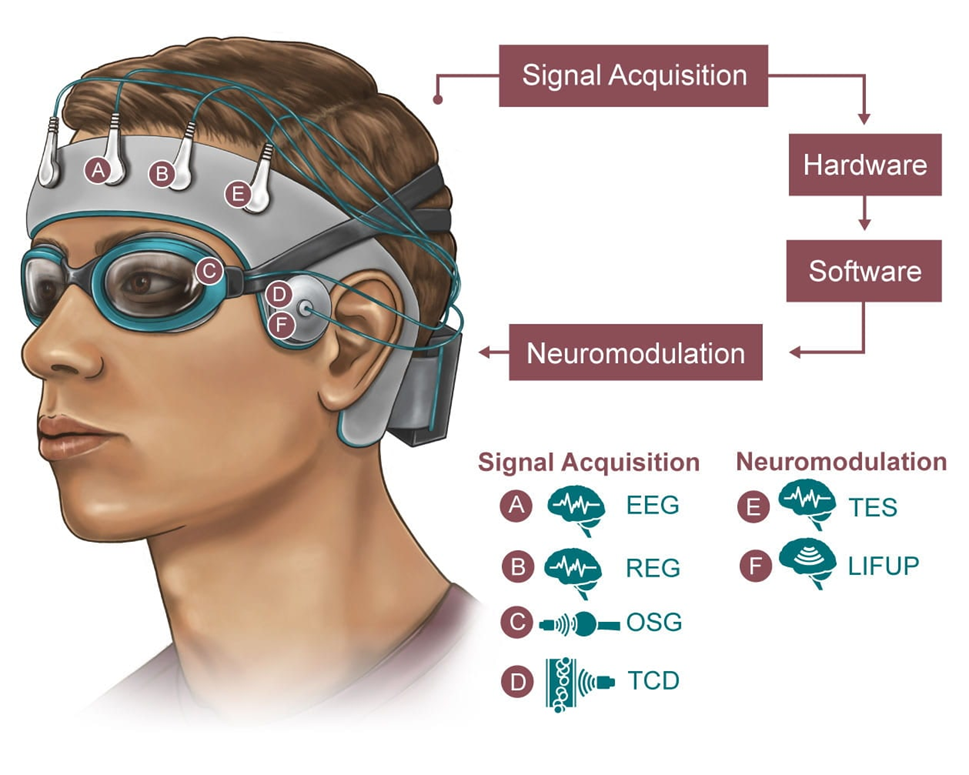
In the early stages, the device will analyse and regulate cerebrospinal fluid flow. Researchers will then fuse the data using machine learning to relay information to doctors in real time and treat sleep disorders.
Preliminary results are due in 2022.
A robot capable of walking a tightrope and riding a skateboard unveiled
Researchers at the California Institute of Technology have built a bipedal robot, LEONARDO (LEO), able to fly, walk a tightrope and ride a skateboard.

It uses multi-joint supports and propeller units to maintain balance on unstable structures. It can also smoothly switch between walking, flying or a combination of both, depending on the environment and obstacles.
In the future, researchers plan to equip the robot with an AI landing-control algorithm and build a stiffer frame so LEO can be deployed for complex and dangerous tasks.
Google AI restored Gustav Klimt paintings destroyed during World War II
Google AI specialists reconstructed Gustav Klimt paintings with the help of artificial intelligence.



Engineers trained the model on more than 90,000 artworks and ran Klimt’s canvases through it to reproduce his palette. The developers then studied surviving records of the destroyed Klimt paintings to align the AI with the Austrian modernist’s style.
Using the gathered information and the developed algorithm, the team coloured the black-and-white photographs of ‘Medicine’, ‘Jurisprudence’ and ‘Philosophy’, supposedly destroyed in a fire during World War II.
Also on ForkLog:
- China introduced ethical principles for AI governance.
- Insider: Facebook uses algorithms to incite hatred for profit.
- In Skolkovo, proposed unified AI ethics standards.
- Clearview AI announced a feature face recognition in masks.
- Former Uber drivers filed a lawsuit against the company over a ‘racist’ facial recognition system.
- The European Parliament called for a ban on the use of facial recognition systems in public spaces.
- Boston Dynamics’ robots will be deployed in clean-up of nuclear waste at Chernobyl.
Subscribe to ForkLog AI on Telegram: ForkLog AI — all the AI news!