


AI replicas of the dead are gaining popularity in China
The availability of large language models and image generators has spurred a rise in the popularity of digital doubles of the deceased in China. This is reported by Business Insider.
Yu Jialin, a 29-year-old software engineer, told the story of how he created the so-called grief bot of his late grandfather. For this, he used old letters from the relative, archival photographs, and fragments of text messages.
Training the algorithm took several weeks. As a result, the bot proved to be limited: it took about 10 minutes to respond to a single message.
In a feat of technological wizardry even Yu Jialin initially struggled to grasp, he had just successfully tested an AI-powered chatbot that even simulated his grandfather’s conversational style. 1/9 pic.twitter.com/61CWDRLwPT
— Sixth Tone (@SixthTone) April 6, 2023
However, as the AI was fed with new information, the bot began to show a more accurate picture of the deceased’s habits and preferences. For example, Yu recalled his grandfather’s favourite show and told the algorithm that Happy Teahouse had been taken off the air.
‘This is a disgrace. My favourite show is no longer available. I would love to watch a few more episodes,’ replied the grandfather-bot.
The programmer shared the results with his grandmother. According to him, she watched the ‘messages’ from the deceased husband in silence, then thanked her grandson and left the room.
Chinese blogger U Ulu also used ChatGPT to create a grief bot of his late grandmother. According to him, the chat bot generated messages slowly, but they matched the style of the deceased relative.
‘I feel good being able to look at my grandmother and talk to her more,’ he said.
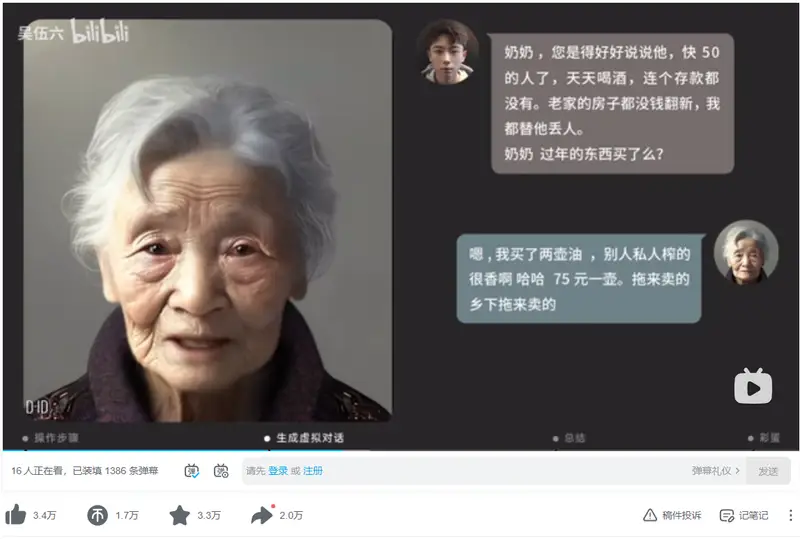
During the annual memorial festival, the administration of one of the cemeteries in China used GPT models and artificial intelligence to clone voices for the recreation of people. The management said thousands of visitors used the platform, even though digital cloning of a dead person costs about $7,300.
Psychologists’ views
According to Sue Morris, a researcher at the Dana-Farber Cancer Institute in Boston, adjusting the way one grieves as technology advances is natural. If previously people recorded stories about their loved ones, they now store memories in the form of photos and videos.
‘Such grief bots are a technological step forward,’ said Morris.
Yet digital copies deprive users of substantial control over how they grieve. Many people cope with their loss by deciding how and when they process their emotions.
‘You decide for yourself when to look at photos and videos, and how long you will do it,’ she said.
An unexpected trigger like a numb message from a chatbot could worsen the sense of grief, Morris says.
‘Perhaps in 98% of cases the program will say something appropriate, but what if it isn’t? Could it push someone into a downward spiral?’ she wondered.
The ethical dimension of grief bots
Ethical considerations also raise questions. However Mary Frances O’Connor, a researcher at the University of Arizona, reminded that social norms change over time.
As an example, she cited the spread of photography in the 19th century. It was normal to take pictures beside deceased relatives and display them in living rooms, O’Connor noted.
‘Today we might think this display in the living room was morbid, but at the time it was common practice,’ she said.
According to Haibin Lu, a professor at Santa Clara University, the personality of the deceased could end up in the hands of scammers posing as mediums.
There is also the issue of obtaining consent, Lu said.
‘In the future, when everyone learns about this technology, perhaps you will be able to sign a document granting or prohibiting the use of your knowledge by descendants,’ the professor said.
However, at present, few consent to such actions. Therefore, it will be difficult for children or grandchildren to use their relatives’ personal information, Lu believes.
In January 2023, an Amazon engineer taught a chatbot to conduct ‘spiritual séances’.
In March 2022, MyHeritage and D-ID created a tool that makes photographs of deceased relatives ‘talk’.
Рассылки ForkLog: держите руку на пульсе биткоин-индустрии!