



Alibaba Unveils AI Glasses Priced at $537
Alibaba launches AI-powered smart glasses, Quark S1, priced at $537.
The Chinese corporation Alibaba has launched its first smart glasses featuring in-house developed artificial intelligence—Qwen.
The Quark S1 model is equipped with semi-transparent displays that overlay contextual information on real-world images. The device also includes cameras, microphones, and replaceable batteries designed for 24-hour operation.
The glasses support functions such as simultaneous translation, note-taking during meetings, and interaction with a chatbot. For instance, users can photograph a product, and the device will display its price on Taobao.
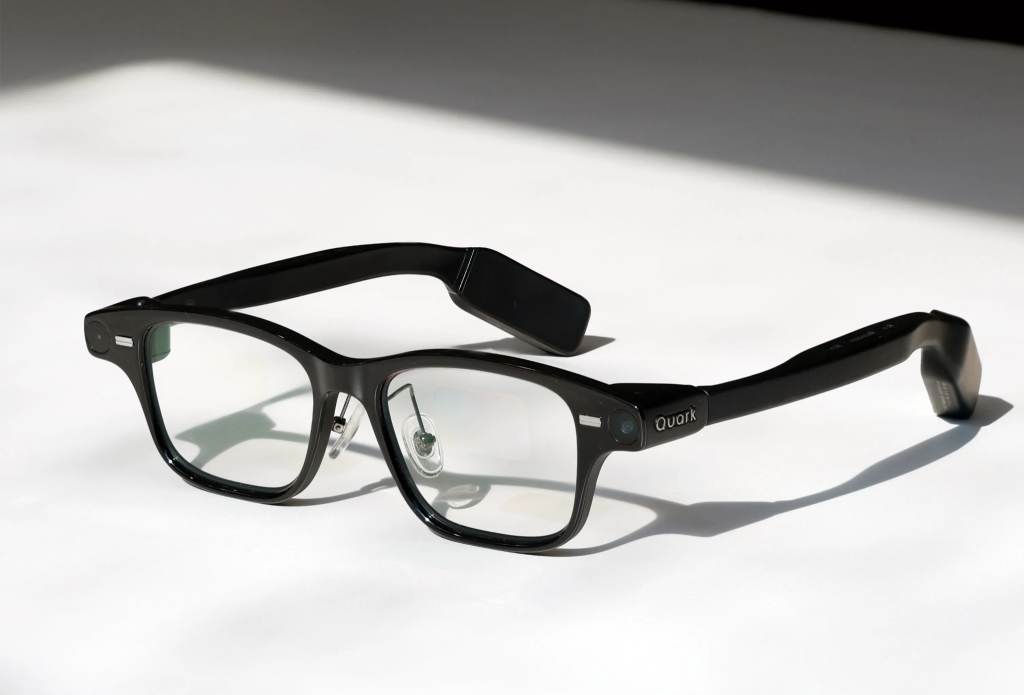
The S1 is available on Alibaba’s Tmall, JD.com, ByteDance’s Douyin, and in over 600 stores across 82 cities in China. International versions are expected next year, with some available on platforms like AliExpress.
Alibaba’s AI Strategy
The launch of this new product marks another step in Alibaba’s strategic focus on artificial intelligence technologies. In November, the company rebranded its mobile app Tongyi, renaming it Qwen and making it similar to ChatGPT.
The updated app attracted over 10 million users within days.
Alibaba’s CEO stated that users are showing “exceptional loyalty” to the new version of the product.
The tech giant has also integrated the Qwen suite into the Quark browser, expanding its reach with a range of similarly named wearable devices.
Image Generator and Investments
On November 27, Alibaba released Z-Image—an open model for generating “photorealistic” images “on par” with Flux 2.
1/ 10 We are pleased to introduce Z-Image, an efficient 6-billion-parameter foundation model for image generation. Through systematic optimization, it proves that top-tier performance is achievable without relying on enormous model sizes, delivering strong results in… pic.twitter.com/OhUDL3PfSH
— Tongyi Lab (@Ali_TongyiLab) November 27, 2025
“Through systematic optimization, it proves that top-tier performance is achievable without relying on enormous model sizes. The neural network delivers high results in photorealistic generation and bilingual text rendering, comparable to leading commercial models,” the company announced.
Z-Image boasts 6 billion parameters and can operate “seamlessly” on graphics cards with at least 16 GB of video memory.
Z-IMAGE TURBO is a *serious* competitor to FLUX.2
A hyper-realistic, close-up portrait of a age 40 rugged warrior mixed heritage norwegian bearded axe warrior wearing a ragged cloak and cobbled armor, standing by a dragon . Natural Light. Shot on a Leica M6 with Kodak Portra… pic.twitter.com/2KvjmKRNkz
— Brent Lynch (@BrentLynch) November 26, 2025
“This makes advanced image generation technologies accessible to a wide audience,” the firm emphasized.
The neural network can recreate landmarks and cityscapes from textual descriptions, according to developers.
The model supports text rendering in English and Chinese. It has also been trained in Russian, German, French, and Spanish, though it currently makes errors in these languages.
The e-commerce giant plans to maintain its leadership among Chinese tech firms in AI investment volumes. The division responsible for AI and cloud services has shown double-digit revenue growth for the fourth consecutive quarter.
Alibaba Cloud reported a 34% year-on-year increase in revenue to $5.6 billion.
The growth rate of the AI division’s revenue is comparable to that of American competitors—Microsoft Azure and Google Cloud. Their figures rose by 40% and 33.5%, respectively.
AI Glasses Boom in China
Over the past year, interest in smart glasses, particularly those with AI features, has grown significantly in China. Many are developed by startups like Even Realities, which aim to rethink traditional devices.
From January to September 2025, 1.6 million such gadgets were sold, a third of which were by Xiaomi. Including glasses with built-in displays, the figure exceeds 2 million units.
“Alibaba’s entry into this market will bring new dynamics to the competitive landscape of China’s smart glasses market,” commented IDC Research Director Sophie Pan.
Back in September, Meta CEO Mark Zuckerberg introduced the Meta Ray-Ban Display—the first smart glasses with an integrated display, controllable via hand gestures through a bracelet.
Рассылки ForkLog: держите руку на пульсе биткоин-индустрии!