




We strive to inform readers not only about events in the bitcoin industry, but also to report on developments in related technological spheres—cybersecurity, and now in the world of artificial intelligence (AI).
In this digest we have gathered the most significant AI news from the last two weeks.
- Alibaba Cloud services were used to identify minorities in China.
- The U.S. Air Force piloted an AI assistant in a training flight for the first time.
- The U.S. Customs and Border Protection plans to expand facial recognition technologies. Civil rights groups are already calling for its abandonment.
- New York banned the use of facial recognition systems in schools for a year and a half.
- Microsoft launched anti-corruption initiatives based on AI technologies.
- Trump vetoed the 2021 defense budget, which envisaged increased investments in AI.
Alibaba Group admitted that its cloud business developed a facial-recognition technology that includes ethnicity as an attribute for tagging video images.
Alibaba Group admitted that its cloud business had developed a facial-recognition technology that includes ethnicity as an attribute of the algorithm to tag video footage.
The catalyst for this was a revealing article in The New York Times, written by independent analysts and IPVM (a video-surveillance consultancy) together with Times reporters.
In the article it is stated that Alibaba Cloud’s website openly offered the ability to detect faces of “Uyghurs/ethnic minorities” in video streams, as well as real-time alerts when Uyghurs appeared in view.
It is noted that shortly after journalists asked Alibaba Cloud about the service, links to it disappeared from the company’s website.
For many years the Chinese authorities have persecuted the Uyghur people and, it is reported, have forcibly relocated more than a million of them to camps to suppress their culture and faith. China justifies this campaign as an anti-extremism measure.
Alibaba Group pledged that it would no longer provide such services to users of its cloud products.
AI piloted a U.S. Air Force reconnaissance aircraft for the first time in history
On December 15, the ARTUµ AI algorithm assisted the pilot of the U.S. Air Force spy plane, the U-2 “Dragon Lady,” in piloting the flight. It is reported that while a human was directly piloting the aircraft, the algorithm took over the management of the sensor suite and onboard tactical navigation.


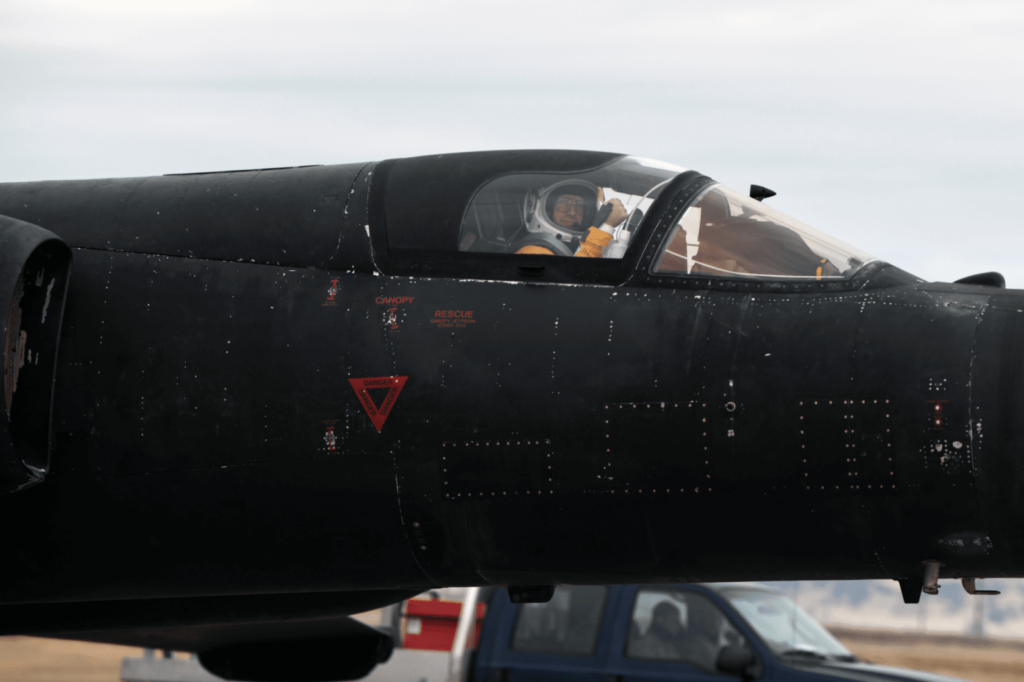
«The primary role of ARTUµ was to detect enemy launchers, while the pilot scanned for threatening aircraft; both used the U-2 radar», according to the Air Force.
Prior to this flight the Air Force had used more than half a million simulated training iterations to allow the algorithm to control the aircraft’s sensors. After takeoff it determined whether to aim the radar at missile detection or at protecting the aircraft.
Google wrote off $1.5 billion of debt to its AI unit, DeepMind
In 2019 Google wrote off debt of £1.1 billion ($1.5 billion) to its AI unit DeepMind, which conducts AI research and development.
Although DeepMind’s 2019 revenue rose 158%, the company still posted losses: with revenue of £265.5m ($358.93m) the losses amounted to £476.6m ($644.31m).
However, Google agreed to continue funding the company for at least a year after the report. Google’s Irish arm waived repayments and interest on the loan to cover DeepMind’s losses. Sundar Pichai, the CEO of the group, said that the pace of work by the engineering and research teams at Google and DeepMind impressed him.
Microsoft launched AI-based anti-corruption technologies and solutions (ACTS)
Microsoft announced the launch of anti-corruption technologies and solutions (ACTS), which will use cloud computing, data visualization, artificial intelligence and machine learning to “increase transparency, detect and deter” corrupt schemes.
Microsoft says that in the last six months it has invested in supporting ACTS, including a partnership with the Inter-American Development Bank (IDB) to fight corruption, promote transparency and integrity in Latin America and the Caribbean.
The company has also partnered with the IDB’s Transparency Fund to improve the transparency of COVID-19 economic-stimulus fund use.
Dev Stahlkopf, corporate vice president and general counsel at Microsoft, says AI will help better identify individuals, uncover the use of shell companies, identify offshore jurisdictions and banking information to mitigate potential risks before contracting.
There are no details yet on which concrete solutions will emerge from ACTS in the near future. However, Microsoft itself has also been criticised for enabling corruption.
In August 2018 the U.S. Department of Justice and the Securities and Exchange Commission investigated the company’s activities for possible bribery in Hungary. Microsoft paid agencies $25m to settle the matter out of court.
The U.S. plans to significantly expand facial recognition capabilities at airports
The U.S. Customs and Border Protection plans to expand the use of facial-recognition systems at airports.
Face recognition was piloted for the first time in 2017, initially at a handful of airports. Now border officials will have full authority to collect facial photographs from non-citizens. Under the rule, anyone passing through customs should expect their face to be photographed and to undergo a facial-recognition process. The system may also be used to identify U.S. citizens, though they retain the option to opt out.
Meanwhile, American civil rights groups are calling on CBP to abandon the facial-recognition system, calling it unfair, involuntary and dangerous.
«Unlike fingerprints and other biometric data, facial pictures can be collected covertly, at a distance, and without our knowledge», said Ashley Gorsky, senior counsel at the American Civil Liberties Union.
New York bans facial-recognition systems in schools
The New York state authorities temporarily banned the use of facial recognition and other biometric technologies in schools until July 1, 2022, becoming the first state to ban their use.
The New York State Office of Information Technology will work with the Department of Education to assess how the technologies affect student privacy and civil liberties. Officials are concerned about both data use and the potential misidentification of women, children and people of color.
The ban was enacted after the Lockport City School District came under criticism for using facial recognition in all the district’s schools. The system was intended to quickly detect potential threats to students, but opponents of biometric data collection saw it as a threat to privacy and civil liberties, with children used as test subjects. It could be used, for example, to discipline students for minor infractions.
Deepfake of Queen Elizabeth congratulated Britons on Christmas
UK broadcaster Channel 4 presented a deepfake video of Queen Elizabeth as an alternative Christmas greeting, traditionally broadcast at Christmas.
In the five-minute clip, the digital version of the Queen shares reflections on the year that has passed, including Prince Harry and Meghan Markle’s departure from the royal family, and the Duke of York’s ties with American billionaire Jeffrey Epstein, who has been accused of trafficking people.
Channel 4 explained that the aim of the broadcast was to illustrate the threat of fake news in the digital age, and the channel’s programming director, Yan Katz, described the video as “a powerful reminder that we can no longer trust our eyes.”
Lyft plans to roll out fully driverless cars in many US cities in 2023
The ride-hailing company Lyft announced plans to deploy autonomous vehicles in many U.S. cities, starting in 2023. In recent years the service has tested autonomous vehicles in Las Vegas, completing more than 100,000 trips in the city.
The autonomous-vehicle technology provider for Lyft is Motional—the joint venture of Aptiv and Hyundai. Lyft says this is “the first deployment partnership between a transportation company and an autonomous-vehicle technology provider.”
No cities have been announced yet; regulatory approvals in each jurisdiction will be required beforehand.
Microsoft will bring AI-based noise suppression to Teams on Mac and mobile platforms
Microsoft announced that it is working on bringing AI-based noise suppression to Microsoft Teams for Mac and mobile platforms. This feature was previously rolled out for Windows desktop users.
The feature can suppress unwanted noise such as paper shuffling, doors slamming and dog barking during a Teams call. AI-based noise suppression works by analyzing the speaker’s audio stream and using specially trained deep neural networks to filter out noise and preserve only the voice signal.
Microsoft says it developed the noise-suppression model without using real customer data.
Trump vetoed the defense AI funding bill
U.S. President Donald Trump vetoed the defense budget bill, which the Senate had approved on December 11. As a result, funding for AI initiatives across the defense departments for the coming years is at risk.
The president called the bill a “gift” to China and Russia, and said he planned to veto the bill in a tweet on December 13.
THE BIGGEST WINNER OF OUR NEW DEFENSE BILL IS CHINA!. I WILL VETO!
— Donald J. Trump (@realDonaldTrump) December 13, 2020
The National Defense Act is meant to increase AI investments by $6.4 billion over five years, comprising $4.8 billion for the National Science Foundation, $1.2 billion through the Department of Energy, and $400 million for the National Institute of Standards and Technology.
Congress passed the bill by an overwhelming majority. House Majority Leader Nancy Pelosi said the president’s decision threatens US national security and predicted Congress would override the veto as early as next week.
Subscribe to ForkLog News on Telegram: ForkLog Feed — the full news stream, ForkLog — the most important news and polls.