




On 12 November, US President Donald Trump signed a government funding bill, ending a record 43-day shutdown.
SIGNED & DELIVERED: President Trump signs bill reopening the government. 🇺🇸
For 43 days, Democrats shut down the government, trying to extort billions from taxpayers for illegal aliens. Today’s message: Republicans won’t give in. pic.twitter.com/qesstMpMkR
— The White House (@WhiteHouse) November 13, 2025
Earlier, the Senate and the House approved the bill. It funds government agencies through 30 January 2026 and allows an immediate restart of federal departments, including SEC and CFTC.
Attention now turns to faster reviews of spot altcoin-ETF applications and the passage of crypto bills, including the GENIUS Act. Official economic data, to which the digital-asset market is especially sensitive, will also resume.
During the shutdown, more than 700,000 employees were furloughed without pay, and some were laid off.
The crisis stemmed from a stand-off between Republicans and Democrats. The latter criticised the package and refused to support it because it lacked health-insurance subsidies. The enacted law does not include them, but the issue is promised to be put to a Senate vote in December.
Trump said he is ready to work with Democrats on contentious issues, reports CNN.
Analysts at The Kobeissi Letter noted that over the 43 days of the shutdown, US national debt rose by $619 billion. By their calculation, the figure increased by $14.4 billion a day.
It’s official:
The US government borrowed +$619 BILLION of debt during this 43-day government shutdown.
That’s +$14.4 billion PER DAY while the Federal government was shut down.
There’s only one thing that never stops in the US government:
Deficit spending.
— The Kobeissi Letter (@KobeissiLetter) November 13, 2025
How did cryptocurrencies react?
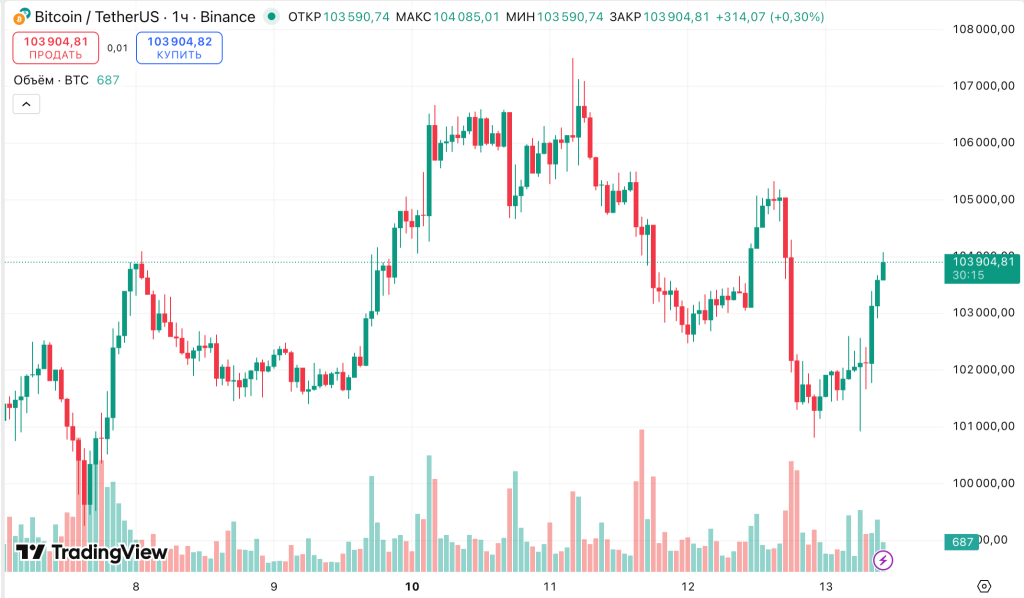
The crypto market’s response was muted. Over the past 24 hours, bitcoin gained 0.6%. At the time of writing, it trades at $103,900.


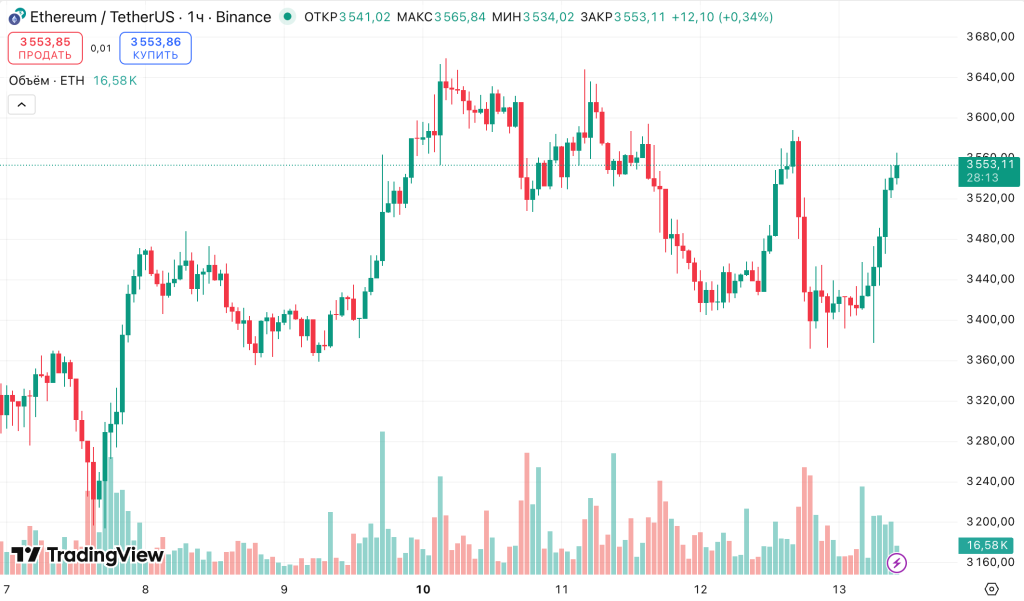
Ethereum rose 3.3% over the same period to about $3,500.


Among the top ten, XRP was the most active, up 5.2%.


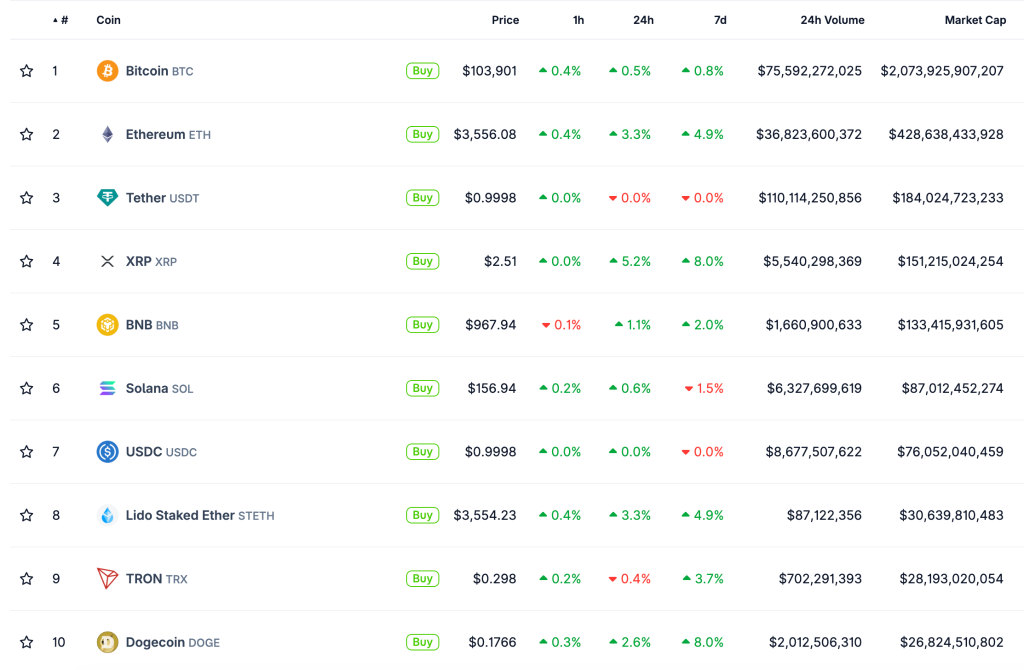
The sector’s capitalisation increased by 1.3% to $3.6 trillion.
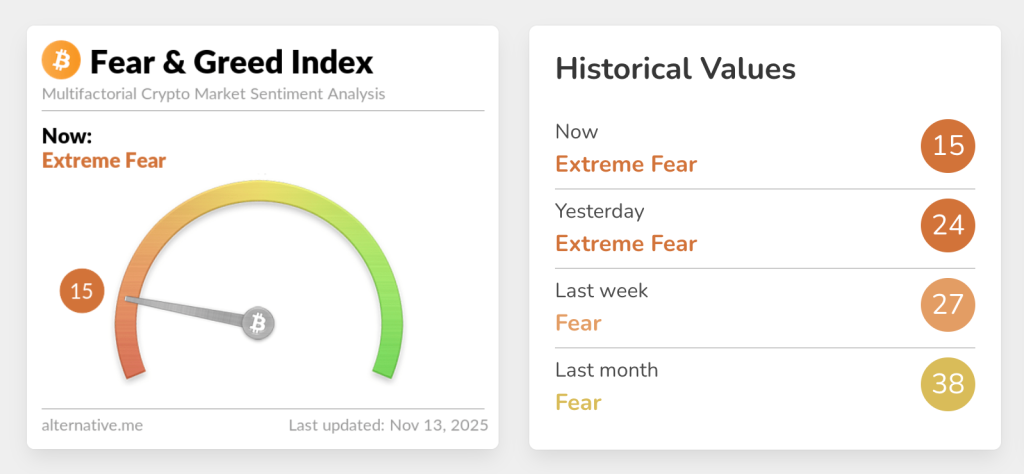
The Market sentiment indicator remains in the “extreme fear” zone.


Earlier, reports of a potential government reopening boosted the market more noticeably, with bitcoin holding above $105,000.
Santiment analysts pointed to worsening trader sentiment, calling it “good news for patient investors”.
😠 Traders’ moods are fading toward crypto, which is welcomed news for the patient.
🟥 Bitcoin $BTC: Even bullish/bearish ratio of social media comments (significantly lower than usual)
🟨 Ethereum $ETH: Just over 50% more bullish vs. bearish comments (less than usual)
🟦 XRP… pic.twitter.com/ZY9RXUxKDK— Santiment (@santimentfeed) November 12, 2025
Bullish and bearish comments on bitcoin are currently comparable in number, though total volume is notably below usual levels. For Ethereum, positive social-media posts are only 50% higher than negative ones, also below normal.
“When market sentiment enters the zone of pessimism, especially toward the leaders by capitalisation, it is a classic signal of an approaching capitulation phase,” the experts commented.
Even so, they say a clear cycle has emerged: after “weak hands” sell, an accumulation phase follows, when large investors buy at lower prices and lay the groundwork for the next rally.
Earlier, QCP Capital analysts outlined the factors supporting bitcoin through year-end.