



On-chain analyst Ali Martinez is convinced that the reduction in Bitcoin mining profitability following the April halving has triggered a “wave of capitulations” among miners.
Since the #halving, #Bitcoin mining costs have soared. On average, it now costs about $77,000 to mine a single $BTC today. This spike in expenses has led to a wave of capitulation among #BTC miners in the past month. pic.twitter.com/kZPShNodP1
— Ali (@ali_charts) June 13, 2024
In his post on X, the expert attached a chart showing the average cost of mining one Bitcoin — on June 12, the figure reached ~$74,600. On the same day, digital gold was trading near $68,000.


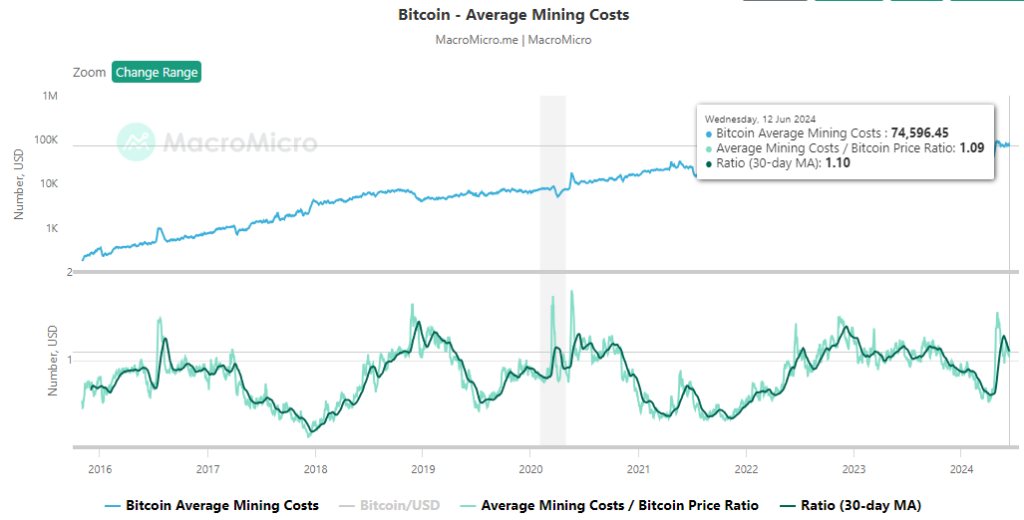
Recently, it has become unprofitable for most miners to mine Bitcoin. It can be assumed that only large companies, with access to “cheap electricity” and/or significant financial “cushions” formed before the reward for a mined block was reduced from 6.25 BTC to 3.125 BTC, remain profitable.
The chart below — the “Difficulty Ribbon” — has indicated miner capitulation since early May.


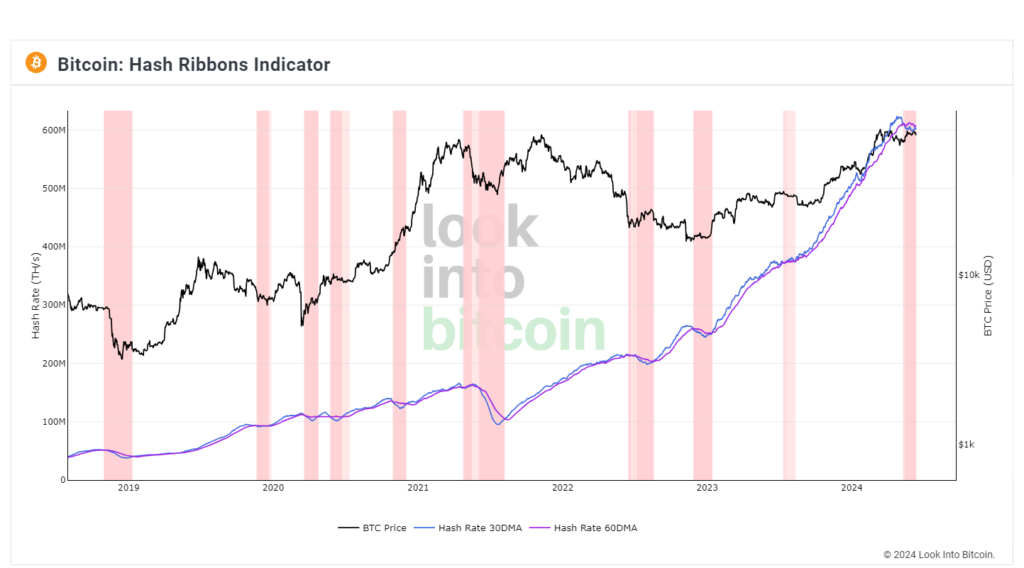
This indicates that the costs of maintaining equipment and electricity expenses have exceeded the price of the mined cryptocurrency for several months. In other words, the indicator points to a significant portion of equipment being disconnected from the network.
The next chart illustrates the cessation of hash rate growth after the halving and the first signs of a reversal of the multi-year trend. This also confirms the thesis of a significant portion of miners exiting the game.


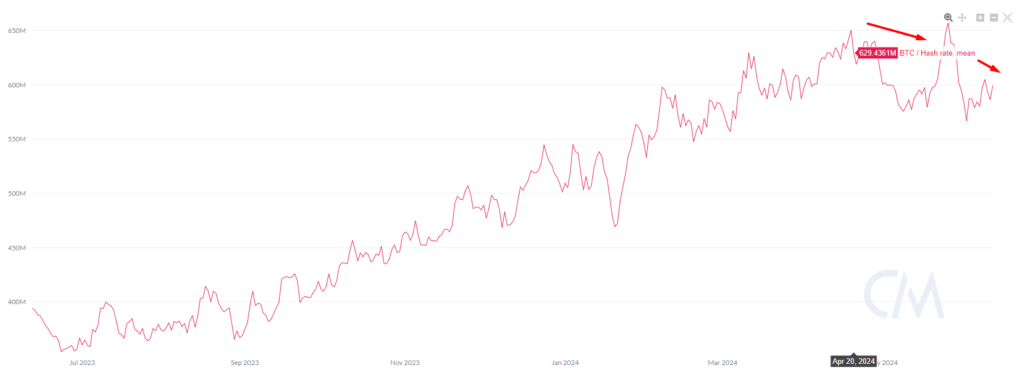
The chart vividly illustrates the decline in hashprice since the halving:


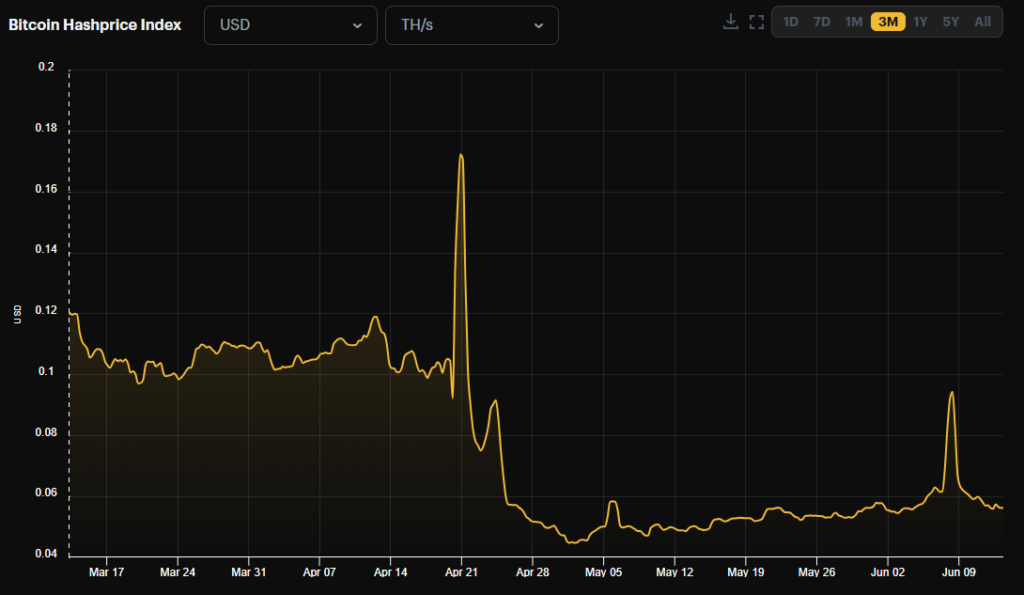
Since the last halving, the daily figure has fallen from ~$0.17 to $0.056 per terahash of power.
Previously, Capriole Investments founder Charles Edwards saw a buying signal for digital gold in the “Difficulty Ribbon.”
The last miner capitulation was observed in 2023, when Bitcoin was trading around $20,000, the expert noted.