



Analysts Warn of Bitcoin’s Potential Drop to $47,000
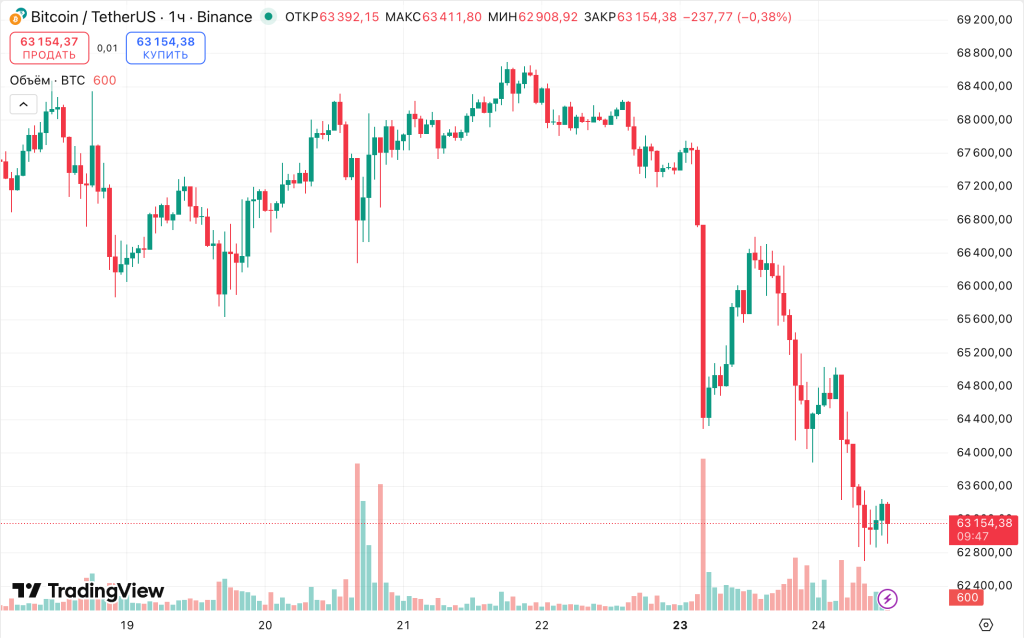
Bitcoin's price hit a low of $62,800, dropping nearly 5% in a day.
On February 24, the price of the leading cryptocurrency hit a local low of around $62,800. The asset depreciated by nearly 5% in a day.
At the time of writing, the rate had recovered to $63,100.
Ethereum’s quotes fell by 4.8% to $1800. The rest of the market followed the two largest cryptocurrencies.
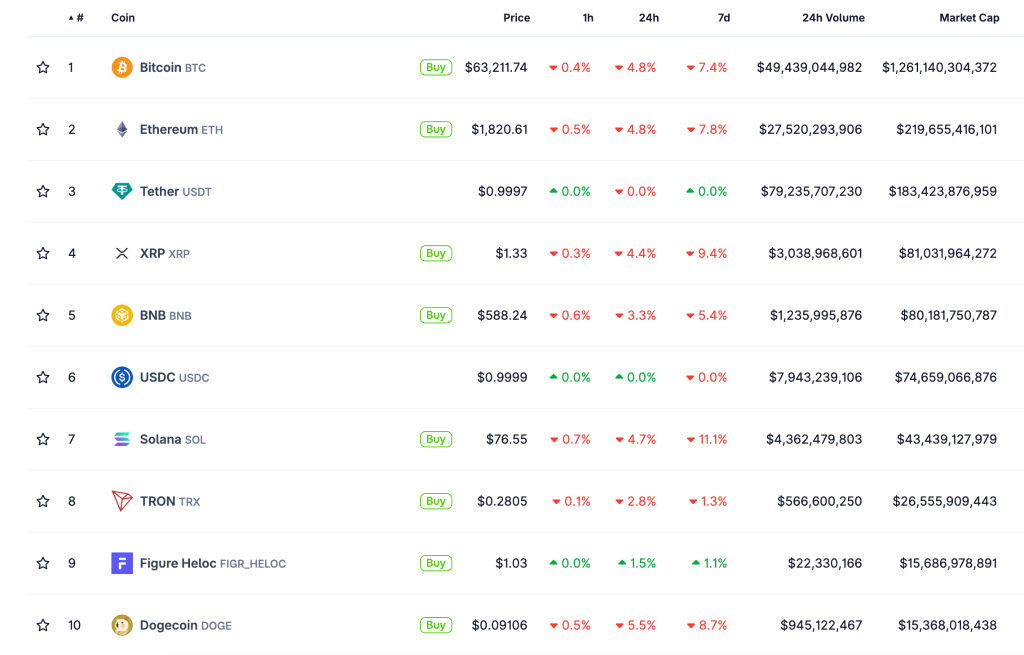
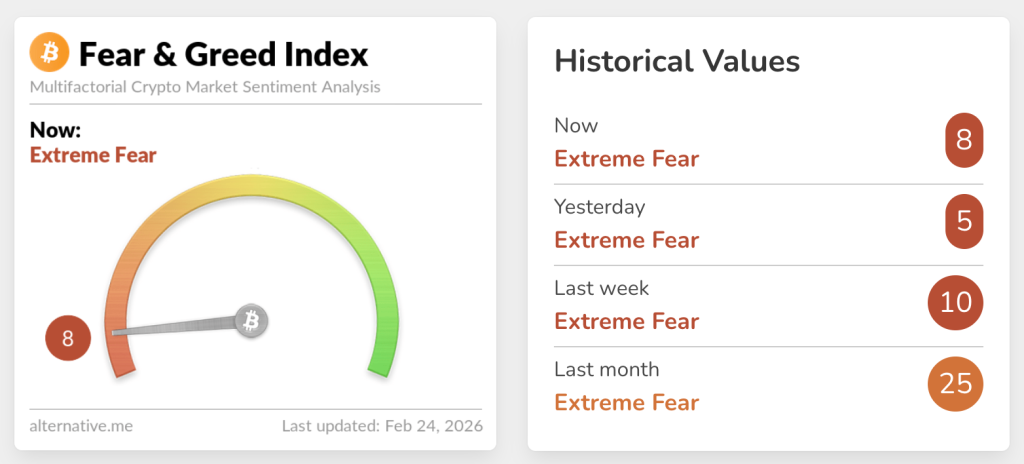
The capitalization of the digital asset sector plummeted by 4% to $2.2 trillion. A popular market sentiment indicator stands at 8, indicating the “extreme fear” zone.
Analysts have linked the correction to geopolitical tensions. In particular, news surrounding the increase in US tariffs continues to impact prices. The macro environment is heightening investors’ risk aversion in digital assets, noted Min Zhong, a research fellow at Presto Research, in a comment to The Block.
Critical Zone
Andri Fauzan Adjiima, head of research at Bitrue, identified the $60,000-$63,000 range as a critical support zone for Bitcoin. If the price holds above or within this corridor, negative rates “will start to play into the market’s hands.” They will create pressure on short sellers and set the stage for a classic squeeze following liquidations.
An improvement in the macroeconomic backdrop or a return of inflows into ETFs could trigger a rebound.
If $60,000 is breached, the asset could move into the $50,000-$55,000 zone or even to $47,000, Adjiima predicted. In a negative scenario, cascading liquidations will accelerate due to worsening external conditions. According to the expert, this will provoke a capitulation of long-term holders, extending the current correction until a true cycle bottom is formed.
Deleveraging
Zhong emphasized that cryptocurrencies are experiencing a deeper decline compared to traditional risky assets, which remain “relatively stable.”
“The divergence indicates that the sell-off is driven not only by macroeconomics but also by weak demand, low liquidity, and ongoing deleveraging in the crypto market,” he added.
The trend is confirmed by ETF data: spot Bitcoin funds recorded their fifth consecutive week of outflows — the longest streak since March 2025.
However, full-scale capitulation has not yet occurred. According to Adjiima, the current sell-off is primarily driven by deleveraging. This is indicated by:
- cascading liquidations of longs amounting to hundreds of millions;
- negative funding rates;
- a sharp drop in open interest.
“Short-term holders are incurring losses, but long-term holders are not yet offloading assets en masse; on-chain HODL signals point to quiet accumulation amid tactical risk reduction,” the expert stated.
Previously, major speculators bet on a Bitcoin rebound, sharply reducing the volume of short positions on the asset.
Рассылки ForkLog: держите руку на пульсе биткоин-индустрии!