



According to a new study by Anthropic, 40% of employees now use AI in their work, a figure that has doubled since 2023.
The analysis aimed to understand the frequency of artificial intelligence usage across more than 150 countries. Other notable statistics include:
- 77% of Anthropic’s corporate clients use neural networks for full task automation;
- programming accounts for 36% of Claude’s usage, education increased from 9% to 12%, and science from 6% to 7%;
- there is more delegation—dialogues involving task delegation to the model rose from 27% to 39%.
Higher adaptation correlates with increased revenues. For instance, Singapore and Canada, with strong economies, use Claude above average, whereas developing countries like Indonesia and Nigeria use AI to a lesser extent.


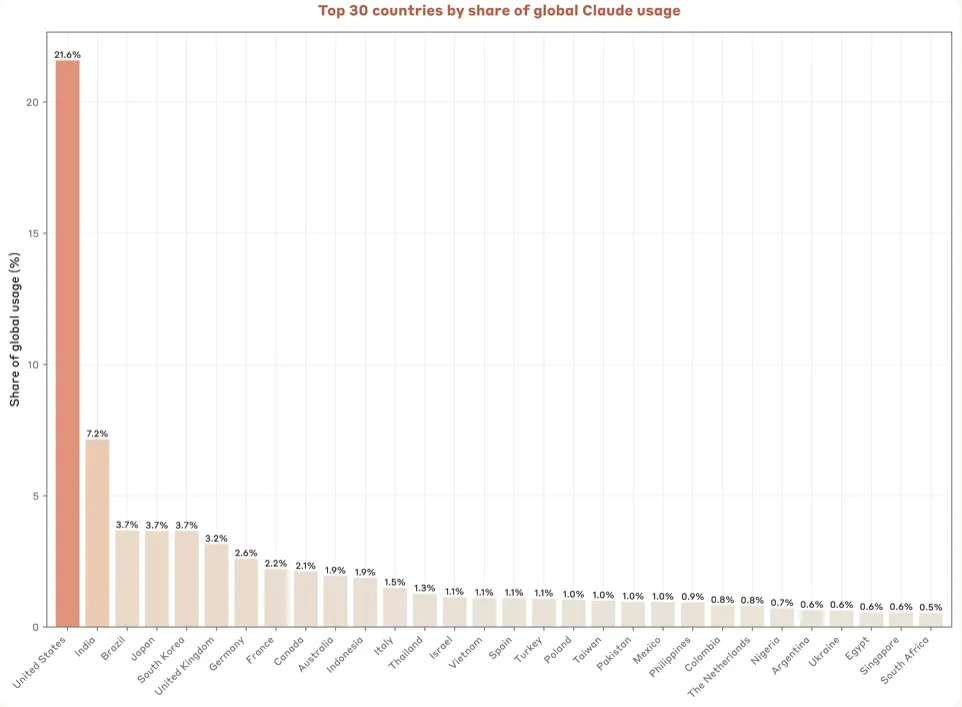
Moreover, countries with high adaptation levels employ the technology for a wider range of tasks. In nations with low AI adoption, it is mainly used for programming.
The company concludes that the concentration of artificial intelligence in wealthy regions and sectors threatens to exacerbate inequality, and automation could impact entry-level tasks.
In August, a study by Reuters and Ipsos revealed that U.S. citizens are deeply concerned about advancements in artificial intelligence and its implications for unemployment.