



Anthropic has introduced its new AI model, Claude Sonnet 4.5, showcasing advanced capabilities in programming. According to the company, it can create “production-ready” applications.
“This is the most consistent frontier model we have ever released, with significant improvements in many aspects compared to previous versions of Claude,” the blog states.
Over the past year, Anthropic’s solutions have become favorites for tackling software development tasks. According to media reports, companies like Apple and Meta are using Claude models internally.
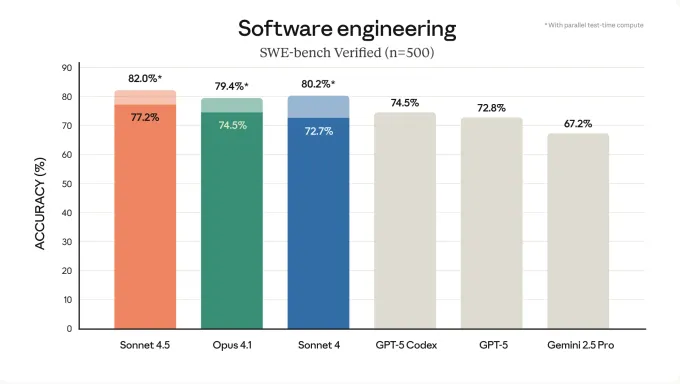
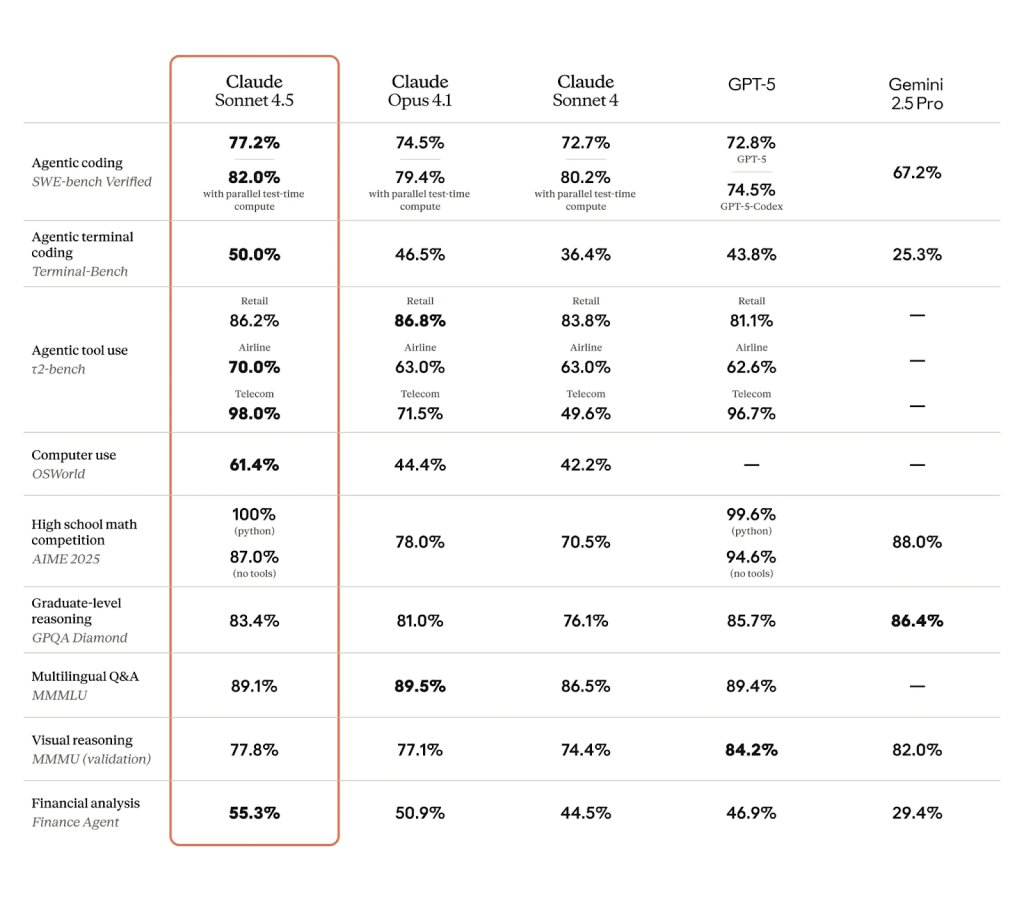
The startup claims that Claude Sonnet 4.5 demonstrates industry-leading performance in several programming benchmarks such as SWE-Bench Verified.


The model can autonomously write code for up to 30 hours straight. During such a test, it not only created an application but also deployed database services, registered domain names, and conducted an audit according to the SOC 2 standard.


Alongside the launch of Claude Sonnet 4.5, Anthropic introduced the Claude Agent SDK, an infrastructure for creating agents.
Other updates include:
- Claude Code now features checkpoints, allowing progress to be saved and reverted to previous states;
- the Claude API now includes tools for contextual editing and memory, enabling agents to work longer and handle greater complexity;
- Claude applications now integrate code execution and file creation directly within dialogues;
- the Claude extension for Chrome is now available to Max users.
The company demonstrated how the extension allows Claude to operate directly in the browser: navigating websites, filling out spreadsheets, and completing tasks.

Anthropic noted significant progress in defending against prompt injection attacks, where an attacker inserts hidden instructions into prompts to make the model behave unsafely or break rules.
The neural network will be available via API and in the Claude chatbot. The cost for developers is $3 per million input tokens and $15 for output tokens.
Back in August, Anthropic programmed the Claude Opus 4 and 4.1 chatbots to end dialogues with users in “rare, extreme cases of systematically harmful or abusive interactions.”