



Anthropic has released an updated mid-level AI model, Sonnet, focusing on programming skills, instruction adherence, and computer operation.
This is Claude Sonnet 4.6: our most capable Sonnet model yet.
It’s a full upgrade across coding, computer use, long-context reasoning, agent planning, knowledge work, and design.
It also features a 1M token context window in beta. pic.twitter.com/TDId3XUSRs
— Claude (@claudeai) February 17, 2026
The neural network is now available by default for users on Free and Pro plans.
In its beta version, the LLM features a context window of 1 million tokens, doubling previous limits. Anthropic noted that the model can “accommodate entire codebases, extensive contracts, and dozens of scientific articles in a single prompt.”
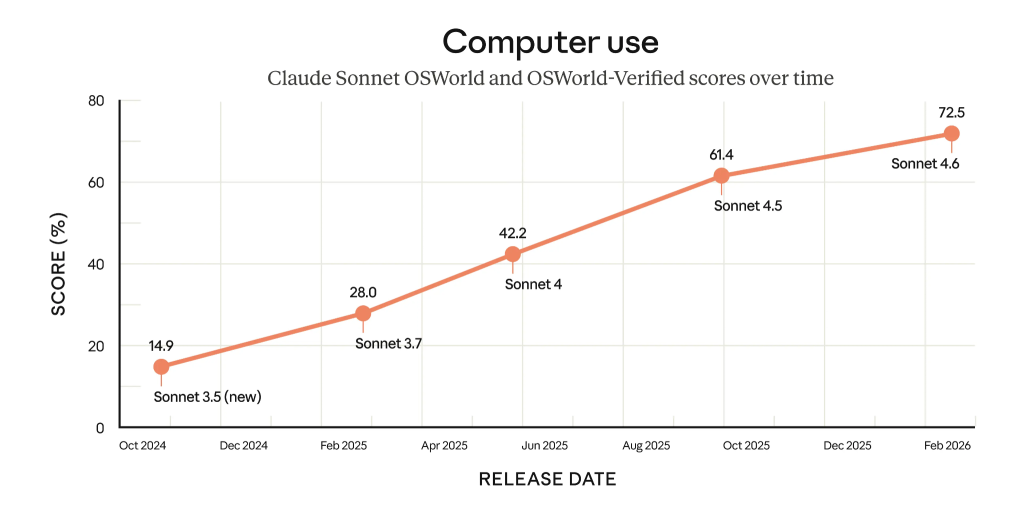
The release is accompanied by new records in benchmarks such as OSWorld (computer operation) and SWE-Bench (programming tasks).


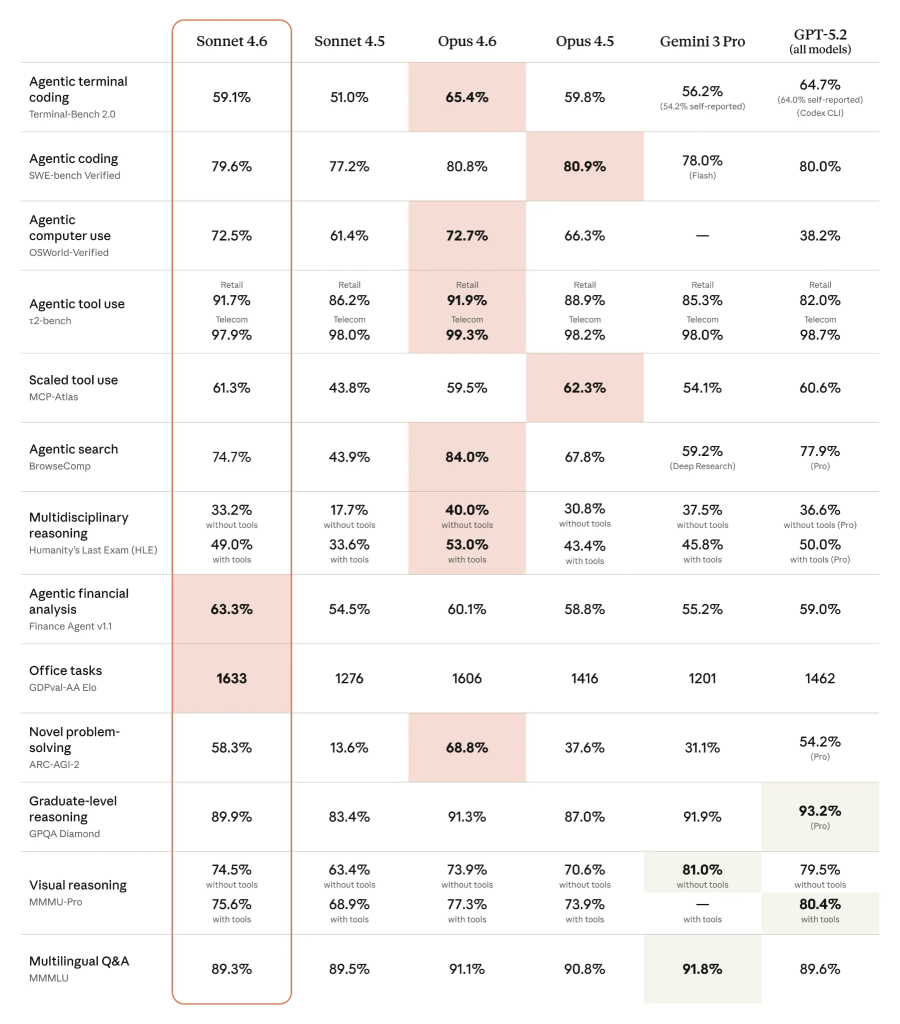
In the ARC-AGI-2 benchmark, which assesses abstract thinking capabilities, Sonnet 4.6 scored 60.4%. This performance surpasses most competitors, trailing only Opus 4.6, Gemini 3 Deep Think, and a refined version of GPT 5.2.


Earlier in February, the startup upgraded its flagship model Claude Opus to version 4.6. The neural network improved in planning actions, handling long tasks, and working more efficiently with large codebases.
“Performance that previously required an Opus-level model—including real office tasks with economic value—is now available in Sonnet 4.6,” the company blog states.
Later, the firm reported raising $30 billion at a valuation of $380 billion. The funds will be directed towards “advanced research, product development, and infrastructure expansion.”
Anthropic announced a comprehensive safety assessment of Sonnet 4.6—the new LLM “significantly outperforms” its predecessor in resistance to prompt injections.
Back in February, media reported the use of the AI tool Claude in a military operation to capture Venezuelan President Nicolás Maduro.