




We aim to inform readers not only about developments in the Bitcoin industry but also about what is happening in related technological fields — cybersecurity and the world of artificial intelligence (AI).
ForkLog AI has compiled the week’s most important AI news.
- Apple unveiled the iPhone 14 Pro and iPhone 14 Pro Max with the A16 Bionic processor.
- Nvidia announces the GeForce RTX 4000-series GPUs.
- Xiaomi unveiled a kitchen robot.
- AI restored Vincent van Gogh’s lost painting.
- Scientists used AI to understand animal language.
- The week’s most notable AI deals.
Apple unveils iPhone 14 Pro with the A16 Bionic processor
Apple представила iPhone 14 Pro and iPhone 14 Pro Max with the new A16 Bionic processor.

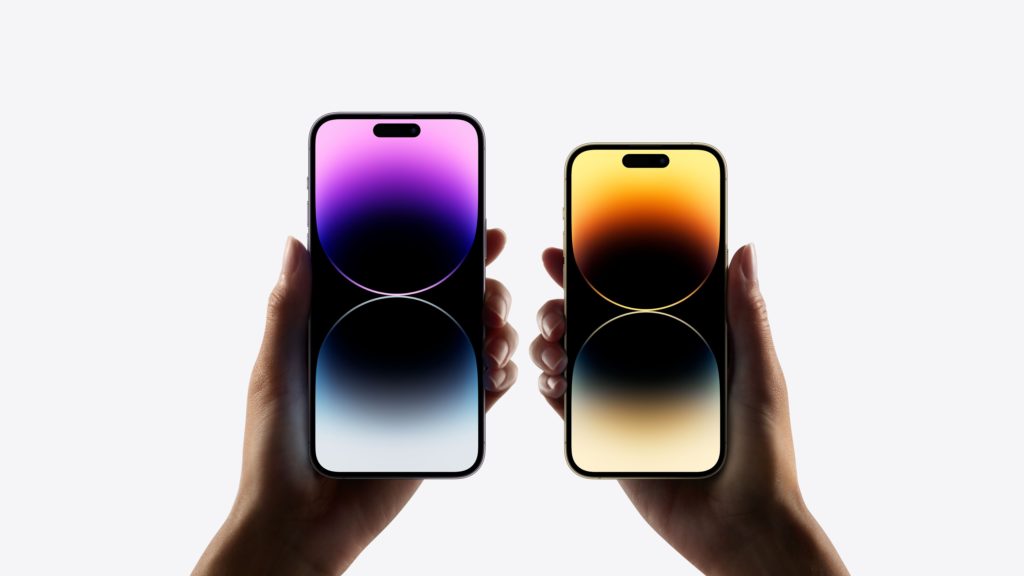

The chip includes a 16-core Neural Engine capable of up to 17 billion operations per second, and a 5-core GPU. According to company representatives, the A16 Bionic is 40% more powerful than rivals.
The smartphones feature new image sensors and a Super Retina XDR display with brightness up to 2000 nits and a 120 Hz refresh rate. The Face ID sensors are housed in the new Dynamic Island cutout.
The iPhone 14 and iPhone 14 Plus are built on the 2021 A15 Bionic chip, but have received new image sensors.
Apple also announced a range of features, including automatic crash detection using the smartphone or Apple Watch.
In addition, the company introduced new Apple Watch models and AirPods Pro 2.
The devices will go on sale within two weeks. Prices for the smartphones range from $799 to $1599, Apple Watch from $249 to $799, and AirPods Pro 2 from $249.
Nvidia teases GeForce RTX 40
On September 20, 2022, Nvidia’s CEO will host a GeForce Beyond keynote at the GPU technology conference GTC 2022.
It is expected the company will unveil GeForce RTX 40 GPUs with a new architecture code-named Lovelace.
Google to unveil Pixel 7 with the next-generation Tensor
On October 6, 2022, Google will hold the Made By Google conference dedicated to gadgets.
At the event the tech giant will present the Pixel 7 and Pixel 7 Pro smartphones, the Pixel Watch, and new Nest smart-home devices. According to the company, all devices shown at the conference will be available for sale immediately.
In the conference announcement Google also confirmed that the Pixel 7 smartphones will be equipped with next-generation Tensor G2 AI chips.
Xiaomi unveiled Mijia Cooking Robot
Xiaomi unveiled the Mijia Cooking Robot with artificial intelligence.


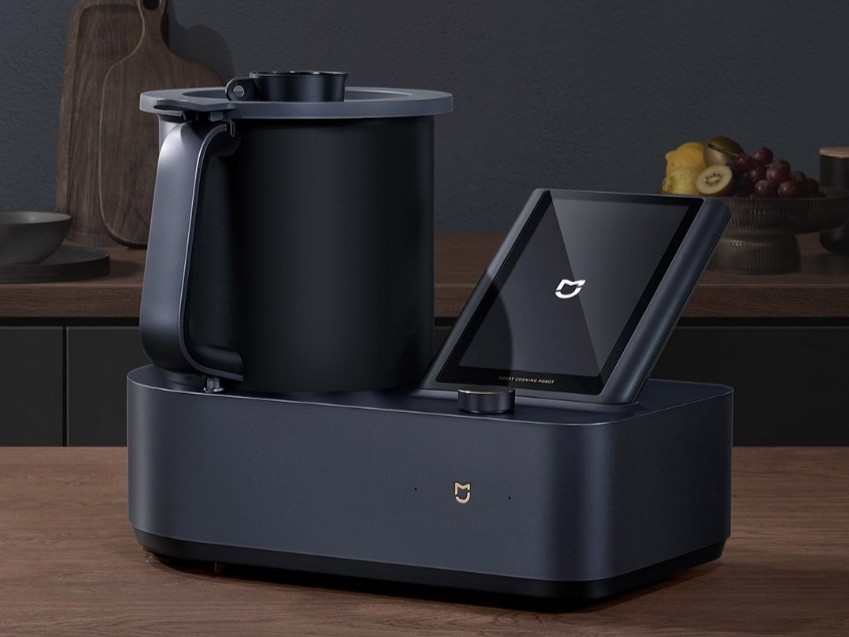
The device has 35 different functions — from grinding spices to frying food. The cooking process is controlled by the AI algorithm CookingIoT, which automatically calculates temperature and required time.
The robot features a touchscreen with access to more than 200 recipes. It can also be controlled by voice commands.
The price of the Mijia Cooking Robot is $869 on preorder. Currently the device is available only in China.
Media: US restrictions will not harm Chinese robot-car makers
The licensing restrictions on exporting AI chips by the US government will not hurt Chinese robot-car makers.
According to CNBC, many EV developers in China use Nvidia Drive Orin and Xavier for driver-assistance systems. However the new restrictions by the US relate to A100 and H100 chips used for supercomputers and AI.
According to sources close to Xavier and Orin, there are no restrictions, and makers like Xpeng or Nio will be able to purchase these processors. However, in the future American chip suppliers for AI and autonomous driving may come under “close scrutiny,” they added.
Opinion: AI threatens humanity with total extinction
The historian and philosopher Emil Torres believes that artificial intelligence threatens humanity with total extinction.
According to him, people should be concerned about the emergence of artificial superintelligence. The power of such a technology would far exceed human cognitive abilities and could become the leading cause of extinction due to the inability to control its actions, the scientist argues.
Torres added that AI research should be slowed or even halted. If scientists do not do this, governments should make the decision, he said.
Startup created a marketplace for text prompts for image generators
The company PromptBase launched a marketplace for text prompts for image generators.
The platform lets engineers sell prompts that help users create images and reproduce a given artistic style or subject with the help of AI algorithms. The marketplace features prompts for Midjourney, DALL-E and other GAN models.
Prompts cost from $2 to $5 per prompt.
Stable Diffusion can now generate video
An enthusiast has created a text-to-video generator using Stable Diffusion Video. The algorithm is based on the code by AI developer Andrej Karpathy.
Users can deploy multiple prompts or different versions of the same prompt. The system will generate a video by interpolating the latent space of the Stable Diffusion neural network.
Anyone can try the tool in the Colab cloud environment.
AI restores Vincent van Gogh’s lost painting
Researchers from the University of California, using AI, X-rays and 3D printing, have restored Vincent van Gogh’s lost painting “Two Wrestlers.”



Engineers discovered the work beneath layers of paint in “Still Life with Meadow Flowers and Roses.” They developed algorithms to restore contour silhouettes from X-ray data and imitate the artist’s style. To print the finished piece, enthusiasts used a 3D printer.
Scientists use AI to understand animal language
Engineers from the Max Planck Society’s Institute for Brain Research used artificial intelligence to understand animal vocalizations.
Researchers analyzed 36,000 recordings of the chattering of naked mole-rats from seven colonies using an AI algorithm. They say this everyday “conversation” hides a huge amount of social information.
They found that all rodents exhibit a unique vocal signature, and each colony has its own dialect, passed down through generations. Also, during social upheaval, including dethroning and replacing the queen, a new speech style emerged.
AI deployed to generate a film
German enthusiast Fabian Steltzer uses neural networks to generate the feature-length film “Salt.” The author published a short trailer.
During the making of the film, Steltzer used systems like DALL-E 2 and Midjourney. The amateur director also used a deepfake to create facial motion and a voice generator.
The plot of “Salt” revolves around a mysterious substance that resembles salt. It turns out to have extraterrestrial origins with sinister plans.
The week’s most significant AI deals
From September 4 to 10, 2022, AI startups attracted over $378 million. Here are the most notable deals.
- Varjo raised $40 million to develop hardware and integrated software for virtual and augmented reality.
- PolyAI raised $40 million to automate customer-service voice assistants in call centers.
- Arize AI raised $38 million to grow an enterprise MLOps platform.
- Hebbia raised $30 million to build an AI-powered document-search tool team.
- Uiflow raised $15 million to design and develop apps platform.
Also on ForkLog:
- Meta developed AI for “reading thoughts”.
- Ukraine joined the EU agreement on financing AI and supercomputers.
- The White House unveiled details of the CHIPS act.
- The U.S. Army received 5000 AR headsets based on HoloLens 2.
- The White House released principles for regulating tech giants.
Subscribe to ForkLog AI news on Telegram: ForkLog AI — all the AI news!