




The non-profit Aptos Foundation has announced a major overhaul of its tokenomics aimed at enhancing the deflationary nature of APT.
— Aptos (@Aptos) February 18, 2026
The foundation will introduce several governance proposals to help the ecosystem transition from the current subsidy-based emission model to “mechanisms tied to network activity.”
Reducing APT Emission
Among the key initiatives is the introduction of a supply cap of 2.1 billion APT (currently, 1.196 billion are in circulation). At present, the coin lacks a maximum emission cap.
New tokens are continuously minted to fund development, grants, and staking rewards.
Large token unlocks often pressure the market. However, the Aptos Foundation noted that the impact of unlocks is diminishing and will continue to decrease after the completion of the current four-year cycle in October. Ultimately, the annual issuance of tokens will be reduced by 60%.
The team emphasized that the ecosystem has already “matured”—giants like BlackRock, Franklin Templeton, and Apollo are deploying “hundreds of millions of dollars on-chain.” This means that APT’s tokenomics should become more sustainable.
“If nothing changes, emission will continue indefinitely—without a hard cap, performance linkage, or any connection to actual network activity,” the foundation concluded.
Other Proposals
Developers have also proposed reducing the annual staking rate from 5.19% to 2.6% and increasing rewards for long-term token locking. This should reduce staking emissions but encourage the most dedicated participants, the foundation noted.
Other changes include:
- Increasing gas fees tenfold. The Aptos Foundation believes that even after the increase, transaction costs will remain low. Given that transaction fees are burned, this will create additional deflationary pressure;
- Permanent token lockup. The foundation proposed permanently locking 210 million APT in staking, which is “functionally equivalent to burning them.” Rewards from this lockup will fund the foundation’s operations;
- Tightening grant policy. Introducing strict KPIs for grant recipients to ensure assets are allocated only for tangible results;
- Buyback program. The Aptos team is exploring the possibility of creating a reserve or launching a buyback program for APT to balance market supply.
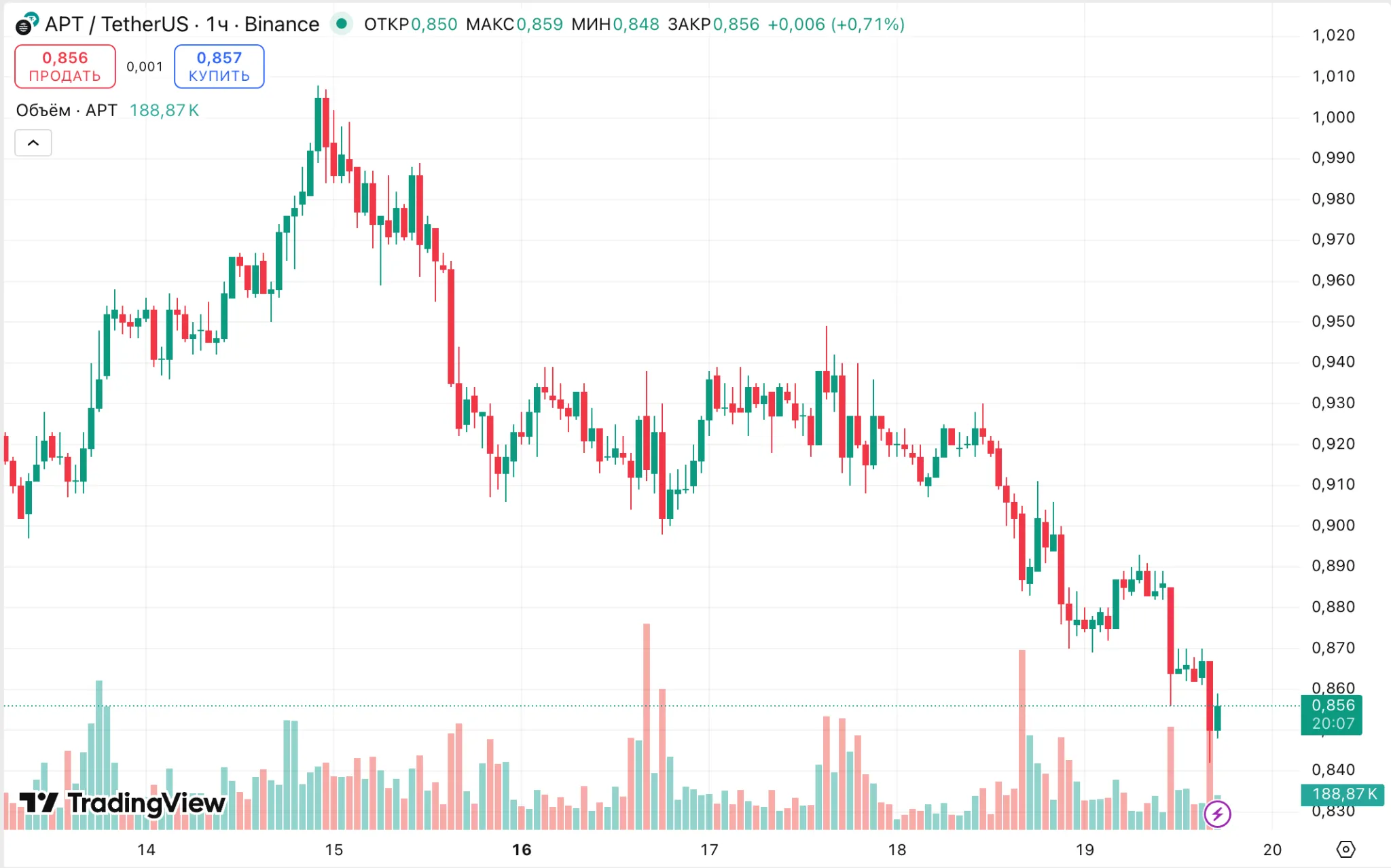
Following the announcement, the project’s token fell by 4.1%. Over the past month, the coin has lost nearly 46% of its value. At the time of writing, the asset is trading around $0.8.


Back in late December, the community of the decentralized exchange Uniswap approved the UNIfication initiative, which involves a “fee switch.” This redirects a portion of trading fees to the protocol instead of liquidity providers.