




Liquidity returning to markets and further monetary easing by the Fed could help bitcoin recover in December, according to ARK Invest analysts.
— ARK Invest (@ARKInvest) November 26, 2025
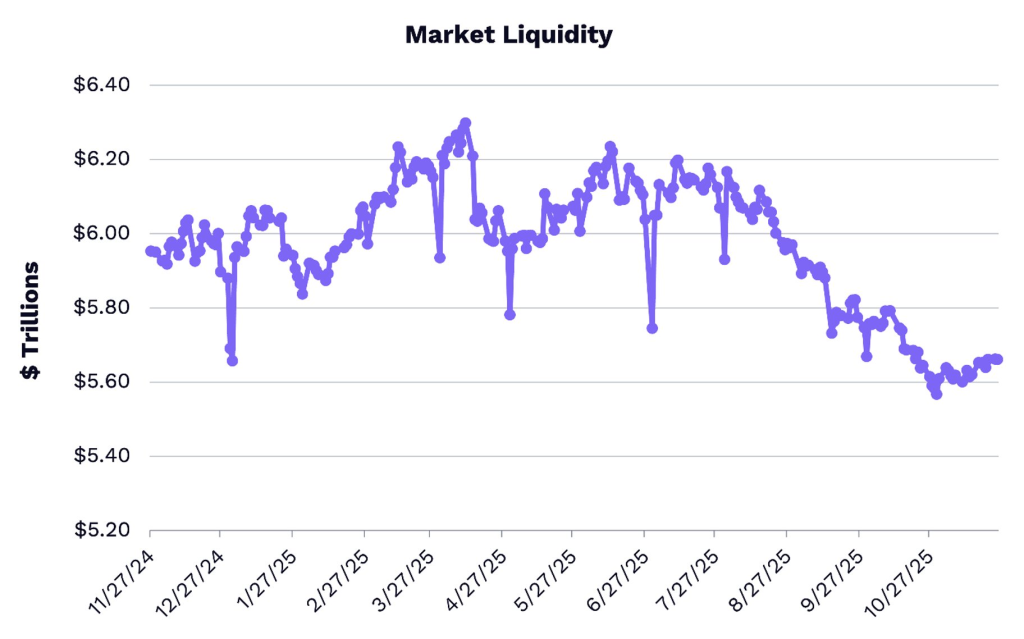
They said that on 30 October liquidity fell to a multi-year low of $5.56 trillion. The record 43-day government shutdown in the US triggered $621 billion of outflows.
However, the government’s reopening has already released about $70 billion — another $300 billion is set to return to markets over the next five to six weeks.


The Treasury’s cash balance remains elevated — $892 billion versus a normalised level of ~$600 billion.


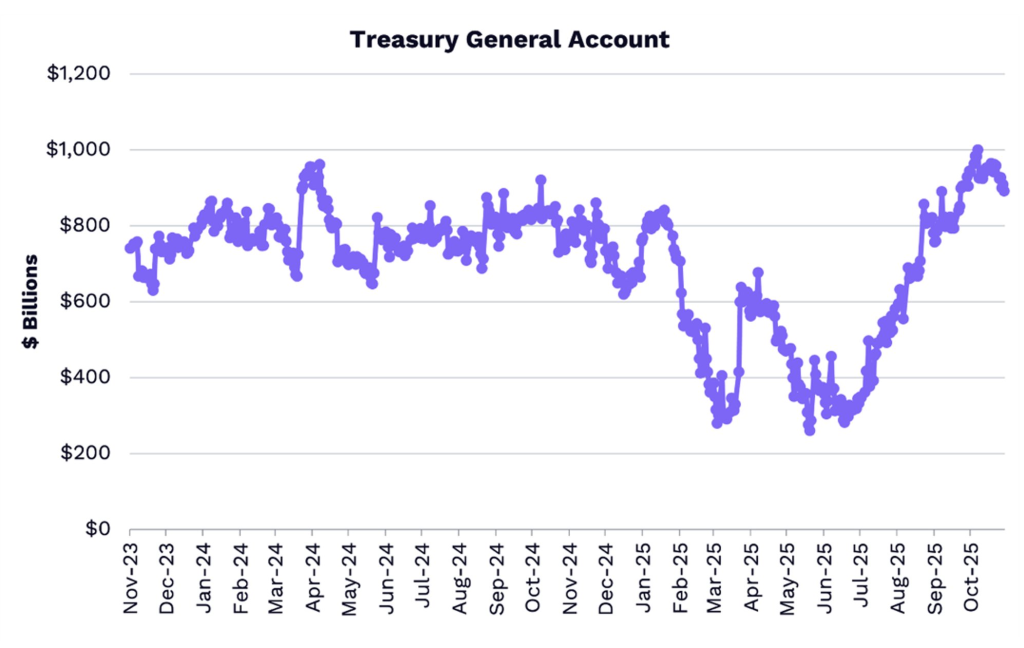
“This means that substantial liquidity is still poised to return,” the experts noted.
Improving conditions have coincided with hints of further interest-rate cuts. Investors put the probability at 84.9%.


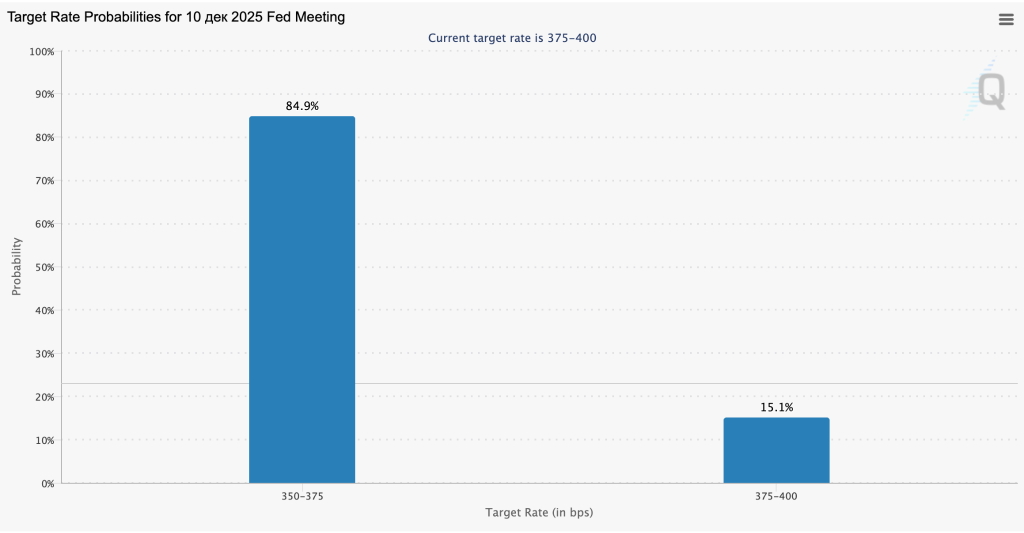
US macro data strengthen the case for monetary easing, the analysts concluded.
ARK Invest chief Cathie Wood also underlined that growth-limiting “liquidity pressure” should “reverse in the next few weeks”. She said she maintains a bullish price outlook despite the correction and the growing popularity of “stablecoins”.
In this recent webinar, I discuss why the liquidity squeeze that has hit #AI and #crypto will reverse in the next few weeks, something the markets seemed to buy, and why AI is not in a bubble. The 123% increase noted below was in Palantir’s US commercial business last qtr.
Watch… https://t.co/GdBZtEQcxM
— Cathie Wood (@CathieDWood) November 26, 2025
In the most optimistic scenario, Wood expects bitcoin at $1 million by 2030. The base case is $650,000.
“Improved risk appetite”
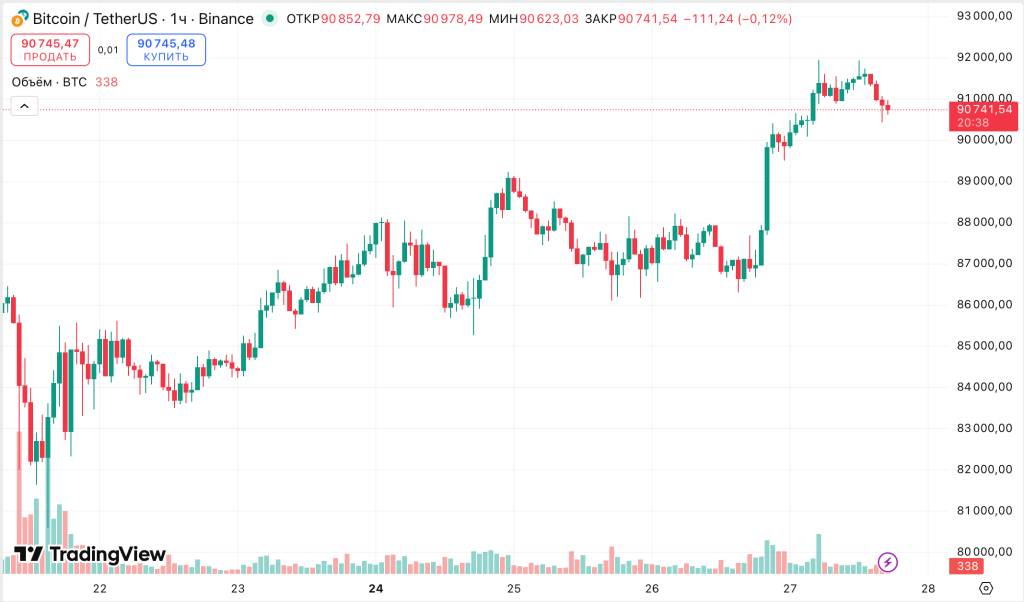
On 27 November bitcoin climbed above $91,000 after a slide to the lowest since April, around $80,000.
Analysts at QCP Capital связали the rebound with better risk appetite, pointing to a rising stock market and the higher likelihood of Fed easing. Risks remain, however: most Federal Reserve members still hold a neutral stance or oppose cutting the policy rate.
“With no other major events, the market’s attention is fixed on jobless claims and the ADP report due later this week,” they added.
Bearish sentiment and selling could also be reignited by a potential removal of Strategy from the S&P 500 index and continued outflows from spot exchange-traded funds.
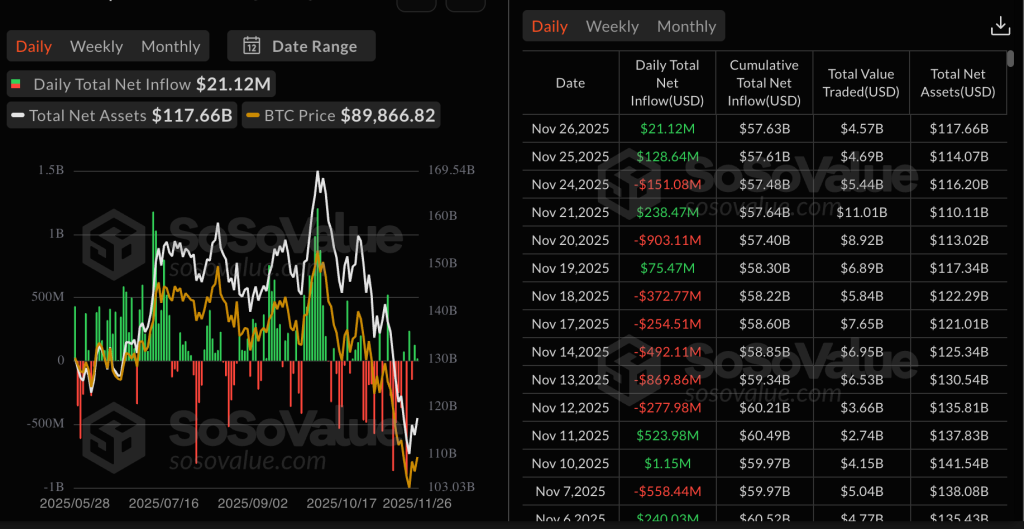
Despite two days of $129 million in inflows, the overall trend remains negative. Since the start of November, ETFs have lost $3.5 billion — the second-worst result since the products launched.


The options market also shows caution. Large investors hold the view that bitcoin will move sideways and is unlikely to rise above $120,000 by year-end.
“A rally to $95,000 will likely face ETF-related selling, reinforcing the sideways trend. On the other hand, the $80,000–82,000 area remains key support after the recent ‘flush’. Cryptocurrencies continue to trade as a reflection of overall market risk appetite, remaining firmly under the control of macro catalysts,” the analysts concluded.
At the time of writing, digital gold is trading around ~$90,700.


Earlier, K33 analysts called the current price of bitcoin suitable for long-term buying.