
Key
- The price of Bitcoin reached a three-month high, testing $50,000.
- Ethereum rose by 35%, Cardano and Solana hit all-time highs.
- Market activity is confirmed by a range of on‑chain metrics.
- Ethereum’s hash rate reached an all-time high, and gas fees rose after the London hard fork.
- Against a backdrop of ETH withdrawals from centralized exchanges, value locked in Ethereum-based DeFi protocols reached a record $120 billion.
- Tether resumed issuing USDT, while Centre halted issuance of USDC.
- GameFi tokens and collectible NFTs set new price records. OpenSea trading volume surpassed $3 billion.
Dynamics of leading assets


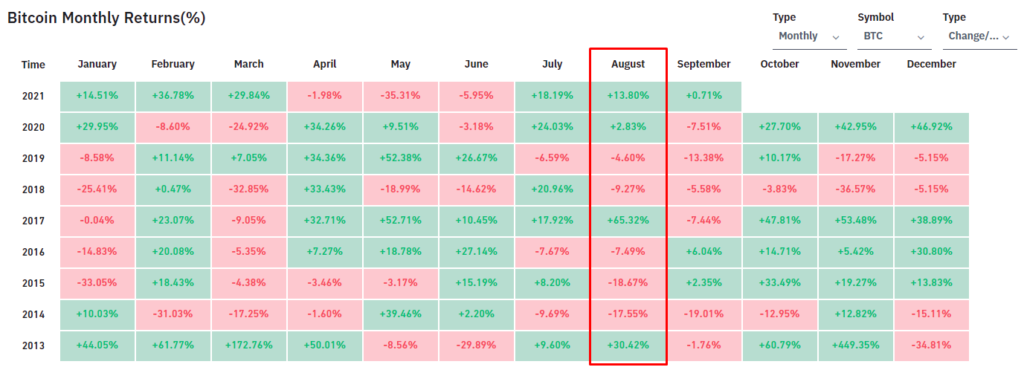


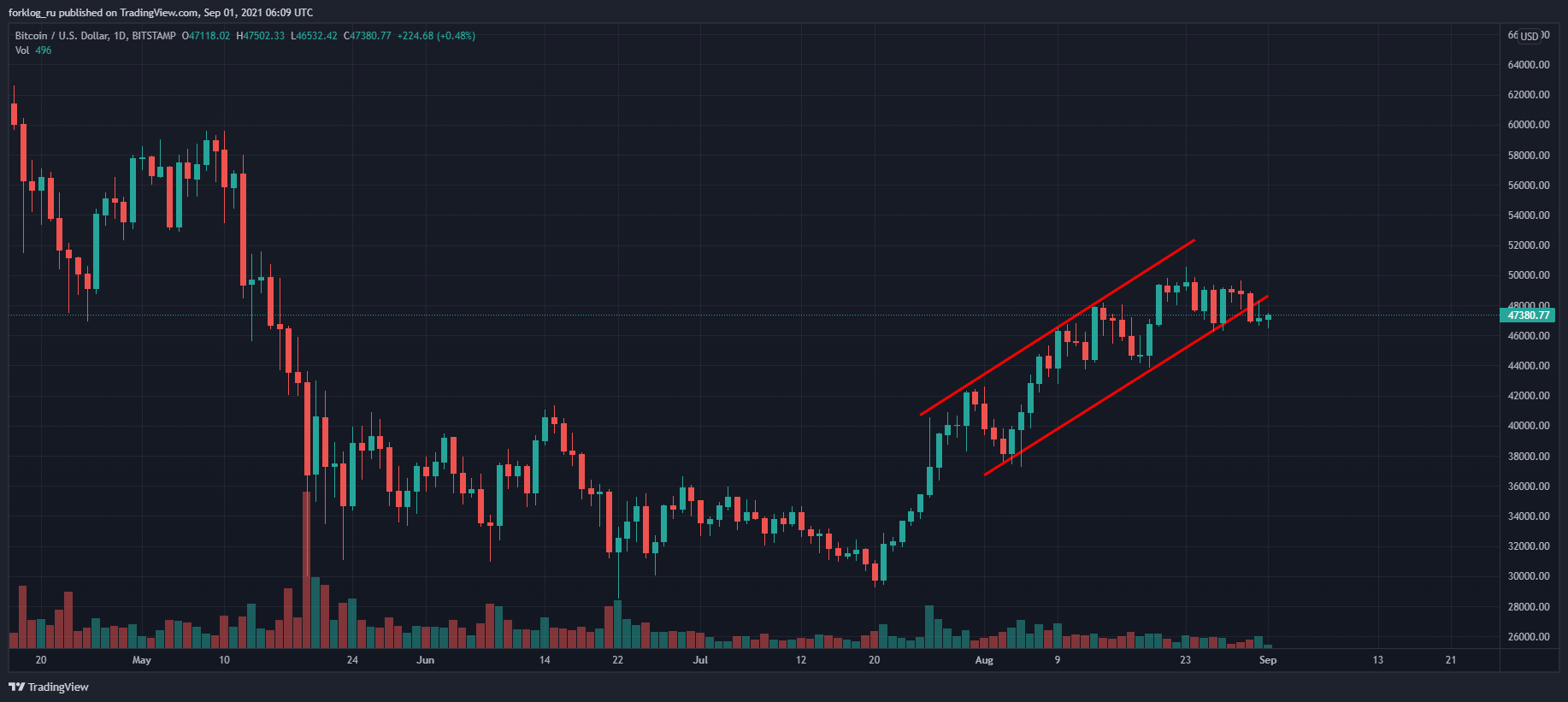
- Bitcoin moved within an ascending channel last month; on August 23 the quotes briefly surpassed the $50,000 level.
- Starting the month at $41,500, Bitcoin rose 13.8% to $47,150. September, historically unfavourable, lies ahead.
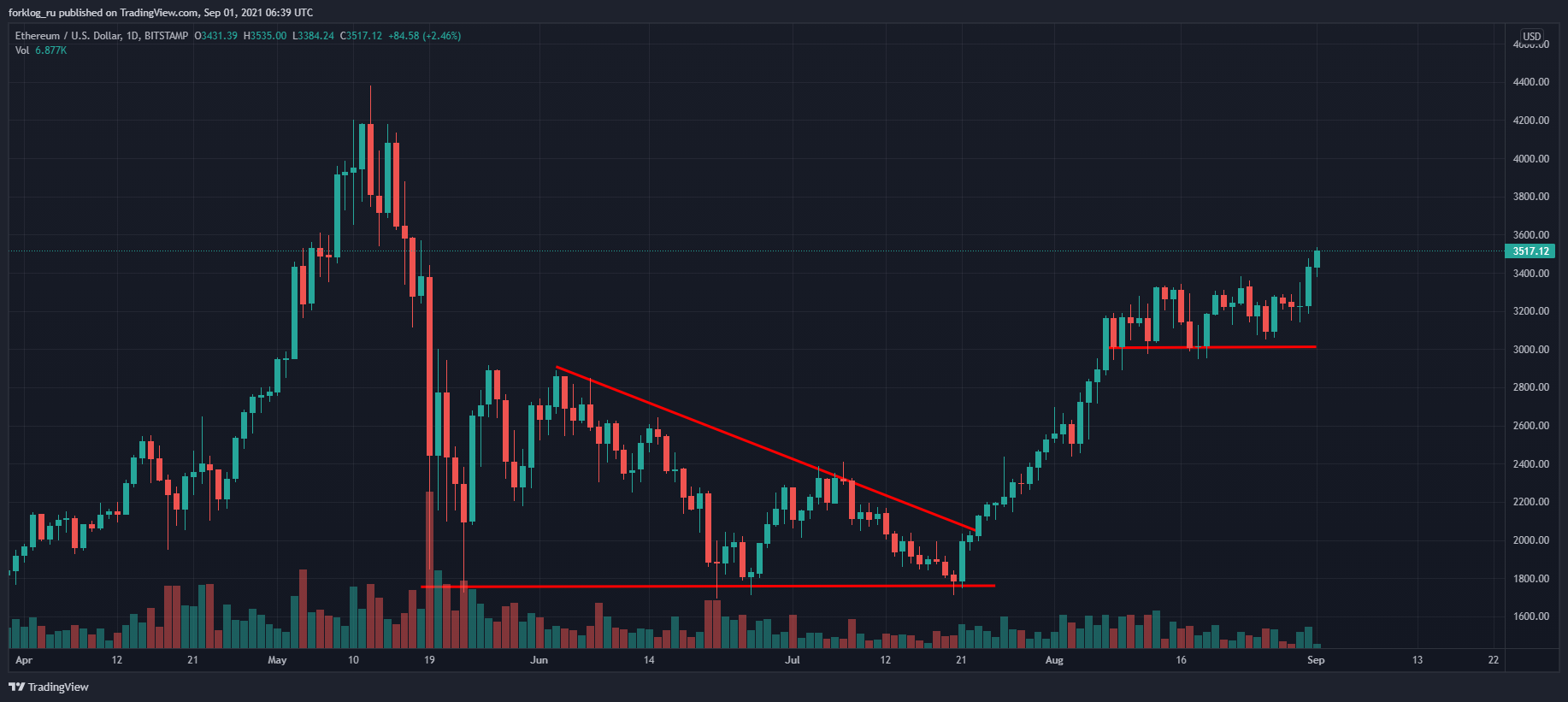
- Ethereum surged to a three-month high after breaking out from a massive down pattern.
- Starting the month at $2,500, ETH briefly topped $3,000, and after some consolidation – $3,500.
- In August, Ether rose by 35.4%.


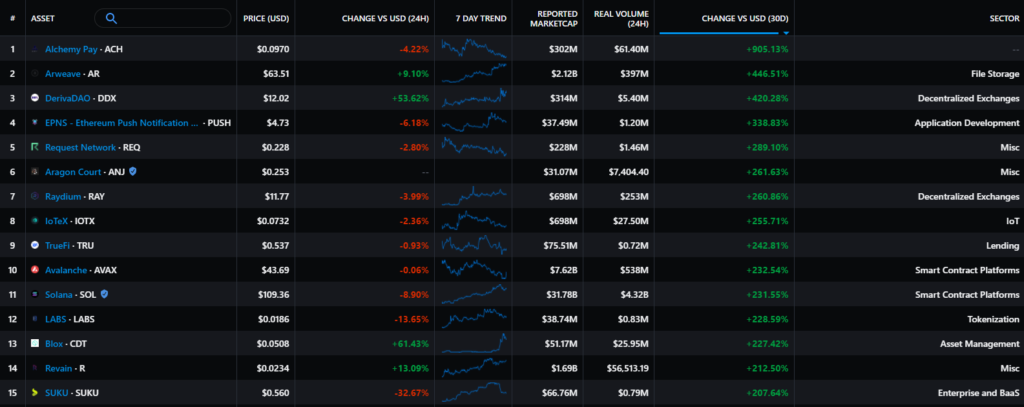


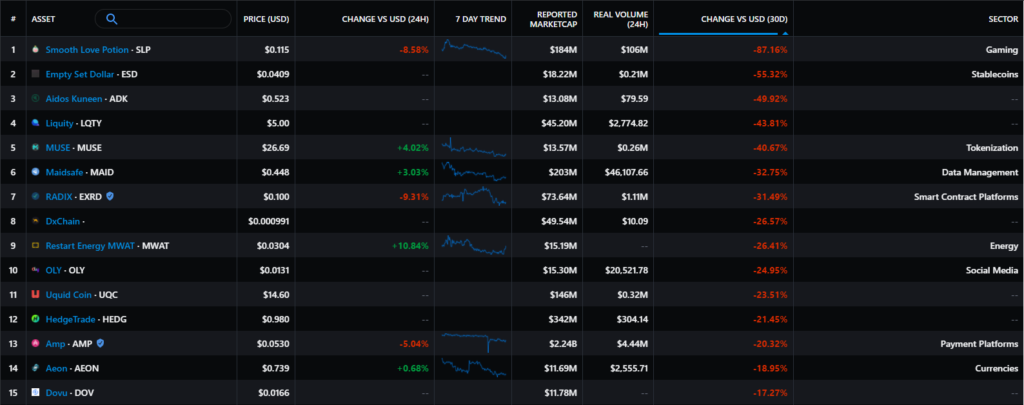
- Among mid-to-high capitalization projects, Arweave (AR) posted the best run with a 446% gain. Among the hundreds-percentage gainers were infrastructure projects Avalanche (AVAX) and Solana (SOL). Cardano (ADA) updated its all-time high near $3 on news of the upcoming smart contract launch date. Solana entered the top-10 by market cap for the first time, with a valuation around $37 billion. SOL briefly reached $130.
- The worst performer was Smooth Love Potion (SLP) from the Axie Infinity game. The regulator in the Philippines to tax token transactions, as merchants began accepting it after the game’s rise. Also among the laggards were AMP and CREAM tokens tied to the Cream Finance DeFi protocol (hack)–related.
Crypto-related company stocks in August:
MicroStrategy (MSTR): +11.5%
Coinbase (COIN): +10.7%
Galaxy Digital (GLXY): +6.3%
Performance of mining companies’ stocks
Hut8 (HUT): +65.4%
Marathon Digital (MARA): +46.9%
Canaan (CAN): +34.5%
Riot Blockchain (RIOT): +13.3%
Ebang International (EBON): +13.2%
Crypto- and mining-related stocks posted a positive run in August. The end of miner migration from China and the resulting rise in the US share of hash rate, along with the recovery of total network computing power, positively affected the stocks of mining equipment makers and digital-asset miners.
Macroeconomic backdrop


- Chair Jerome Powell’s remarks at the annual Jackson Hole symposium did not contain direct hints of a forthcoming taper or an end to the “printing press.” Among his colleagues there was a consensus that the process should start this year and finish in the first-to-second quarter of 2022.
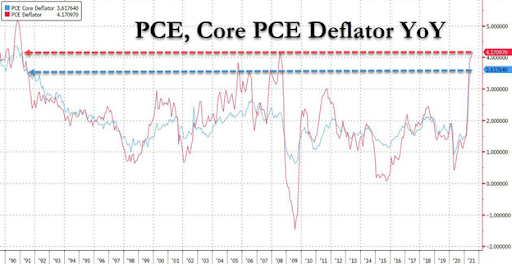
- These words could be read as a desire to gauge how Delta variant spread will affect further progress in the labour market. With the Fed’s inflation gauge at a 30-year high, the obstacle remains only the slowdown on the road to full employment.
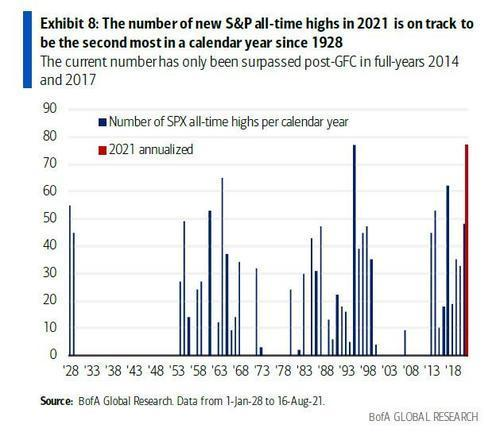
- Equities welcomed Powell’s remarks. The S&P 500 index continued its run of record highs, the longest on record.


The prospect of a return to normal monetary policy could stress the financial markets. If risk assets behave similarly to March 2020, cryptocurrencies could face pressure.
Market mood, correlations and volatility


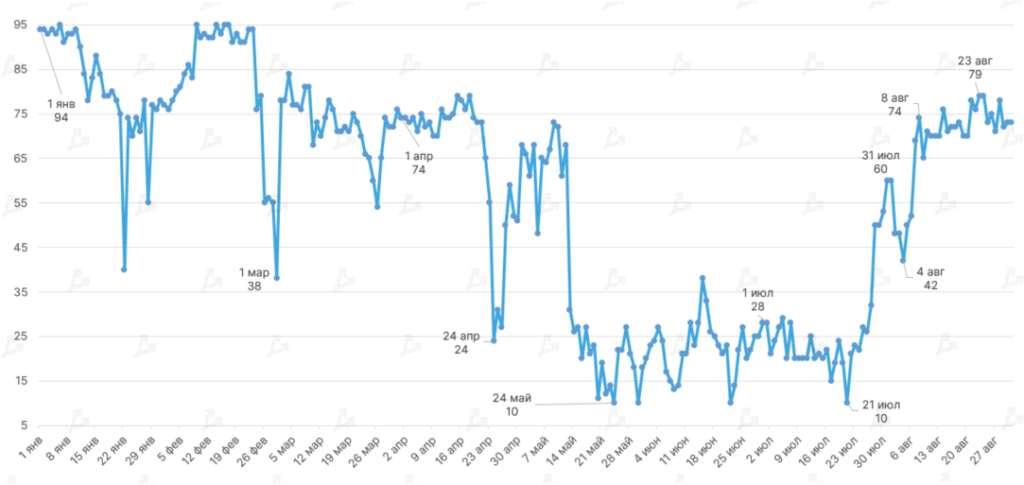


- August was bullish overall—the fear-and-greed index’s trend shows this. It started the month at 42, then moved into greed territory, signaling rising investor optimism. On Aug 23 it reached a high of 79. The average for August was 68.4 (July: 26.3); the minimum was 42; the most frequent level was 70.
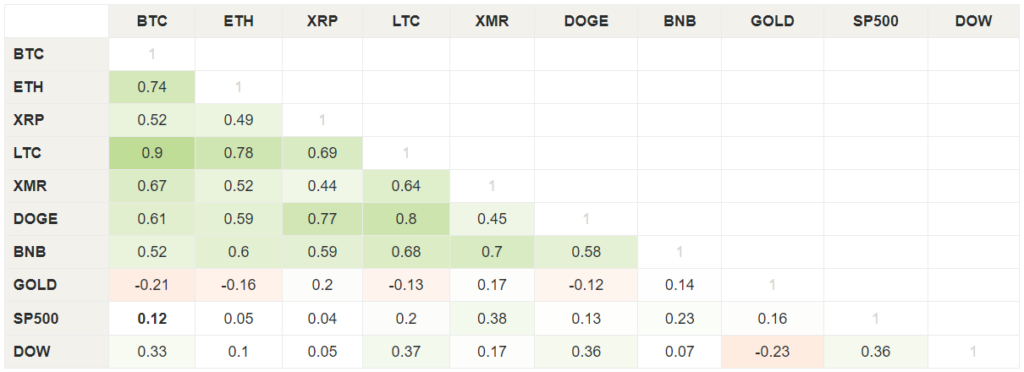
- Bitcoin and gold price movements remained divergent, though negative statistical correlation weakened (−0.21 vs −0.62 in July). Bitcoin’s correlation with the S&P 500 was 0.12, up from −0.15 in the previous month. Its correlation with the Dow Jones Industrial Average weakened to 0.33 (July: 0.74).
- Positive correlation between Bitcoin and stock markets may signal growing adoption by retail and institutional investors who also hold traditional assets.


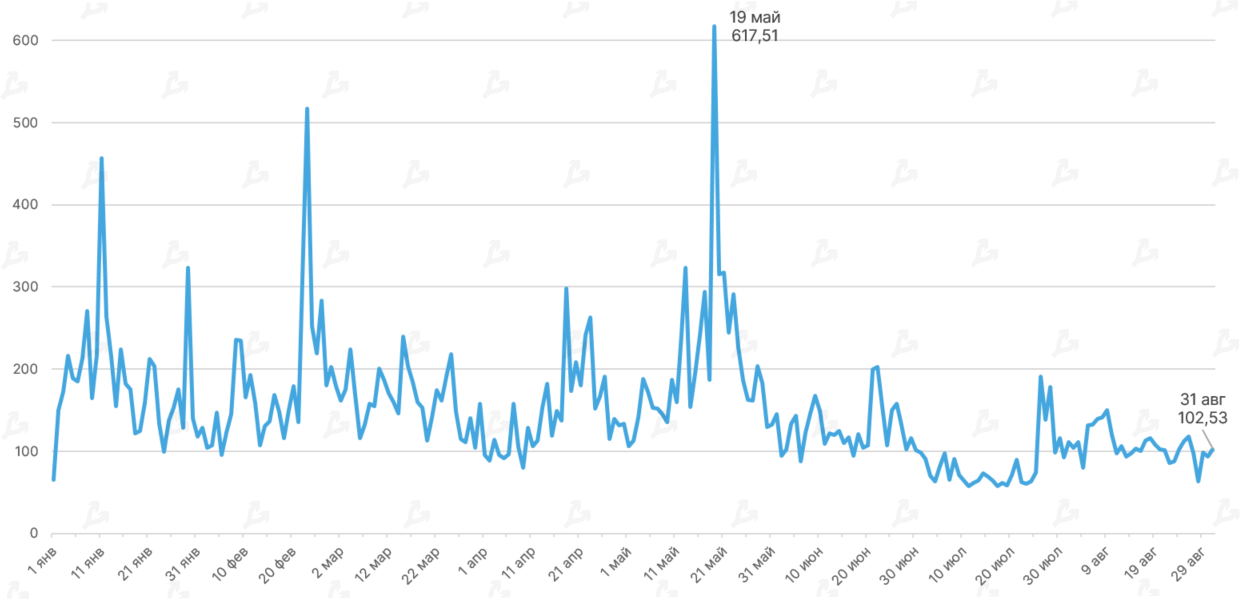
In August, the Bitcoin historical volatility index stayed in a range of 63 to 103, well below the level preceding the May 2021 market crash.
On-chain data


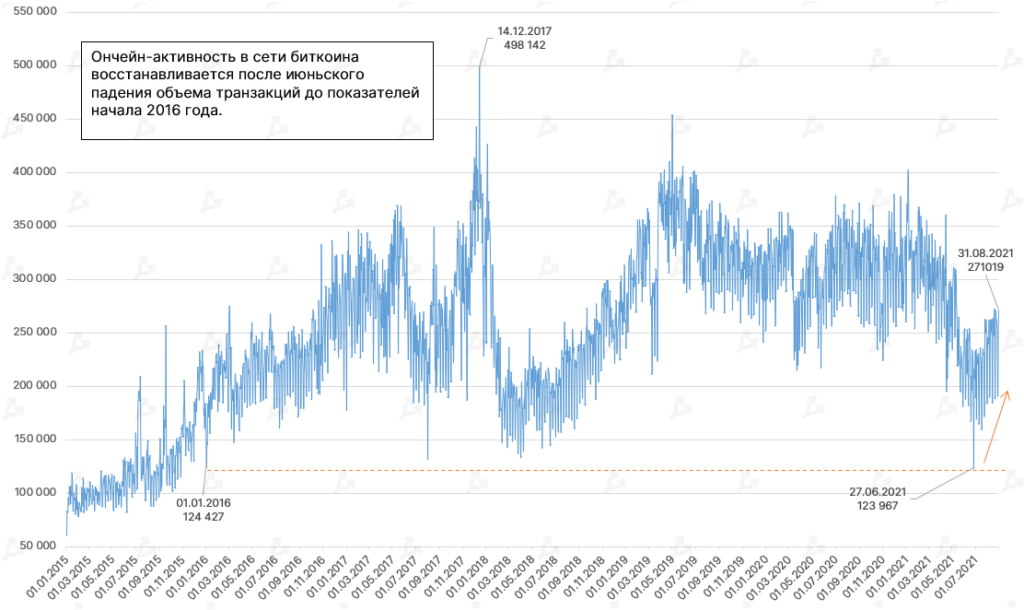

- Transaction volumes on the Bitcoin network rose after the June drop to levels seen in early 2016. The recovery of on‑chain activity coincided with a price upmove, with a break of $40,000 resulting in a sharp rise in transactions exceeding $10 million.
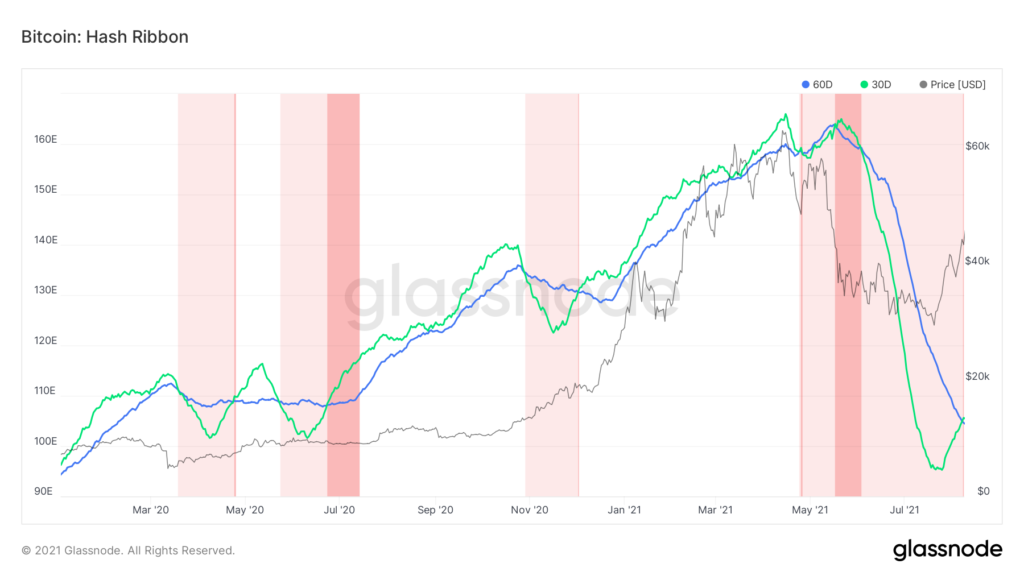
- Hash Ribbon flashed a buy signal in early August, crossing the 30-day moving average above the 60-day MA. This is a bullish signal suggesting the end of miner capitulation.
- The last buy signal for Hash Ribbon appeared in December 2020, when Bitcoin traded below $20,000. A subsequent rally took prices to a record high of $65,000.

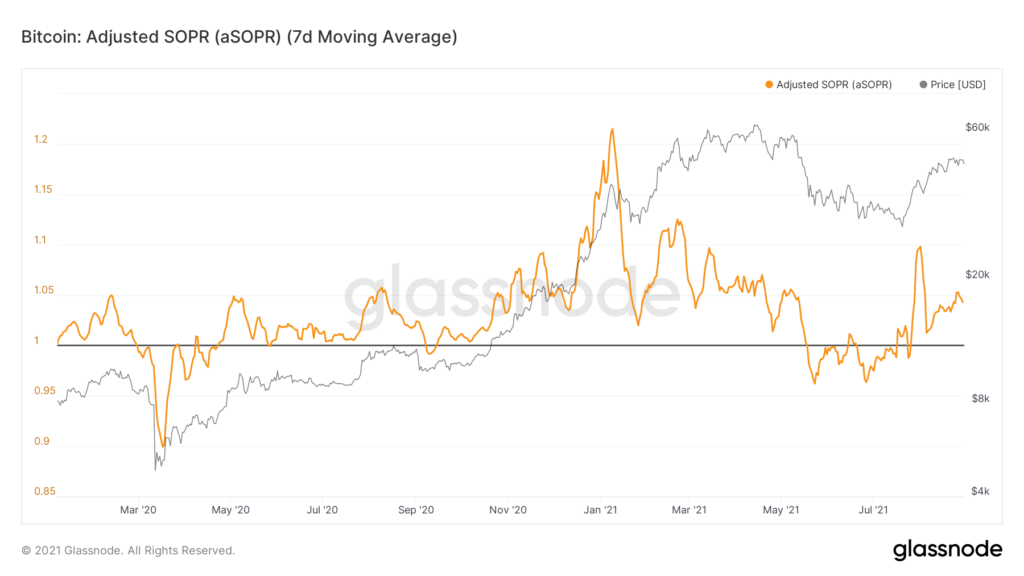
- In August, the aSOPR indicator (excluding short-lived transactions) remained above 1, signaling improving market sentiment and profit-taking rather than selling at a loss.
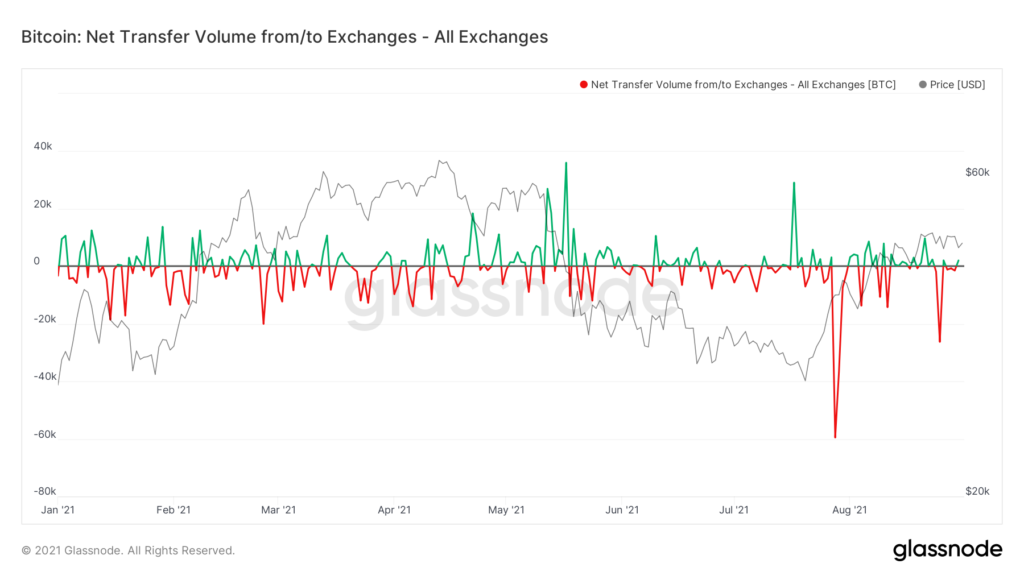
- Outflows of Bitcoin from centralized exchanges continued to dominate inflows since late July, suggesting users move assets to noncustodial wallets for cold storage and expect higher prices in medium to long term.




- In August, the number of ETH on the Ethereum 2.0 deposit contract surpassed 7.27 million. By month-end, participants had made more than 226,800 deposits.
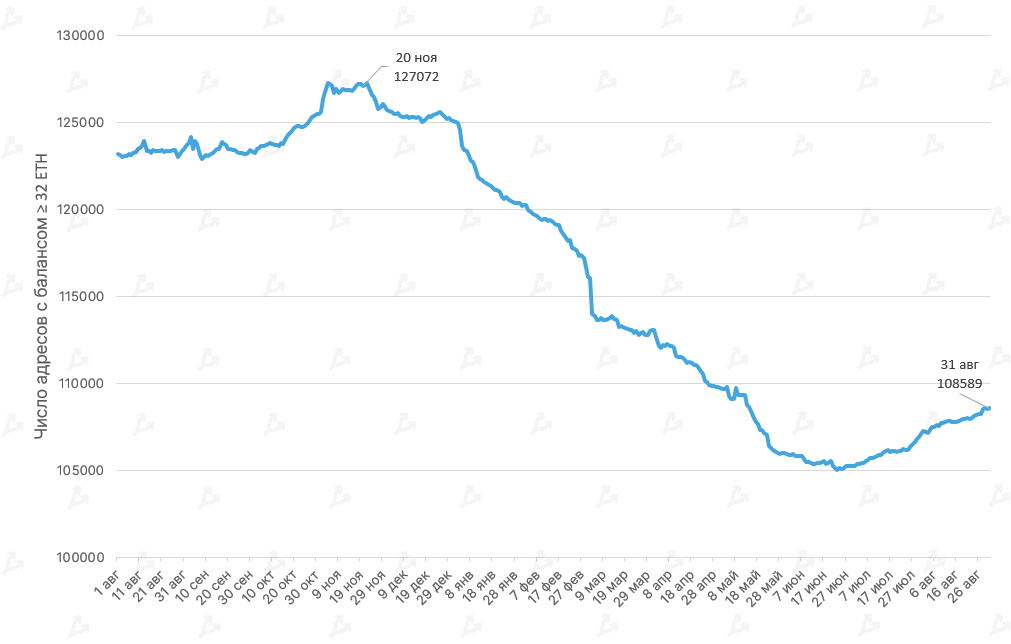
- Against the price rise of Ethereum, the count of addresses with balance ≥ 32 ETH steadily increased through August and surpassed 108,500 by month-end.
Lightning Network


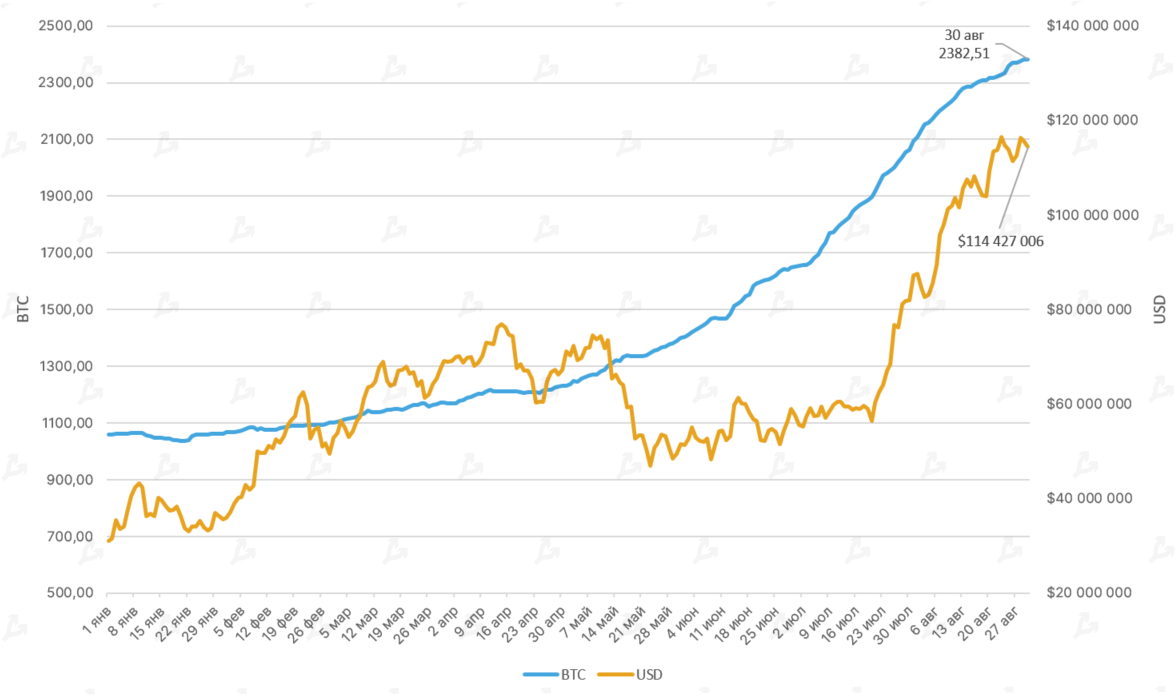
- Since the start of the year, the Lightning Network’s capacity has grown 125%, from 1,058 BTC to 2,382 BTC. In August, the metric rose 14% — by July the increase was twice as fast.
- Last month Substack added Lightning payments support. On September 1, media reported that Twitter plans to test sending tips via this technology.
Mining, hashrate, fees


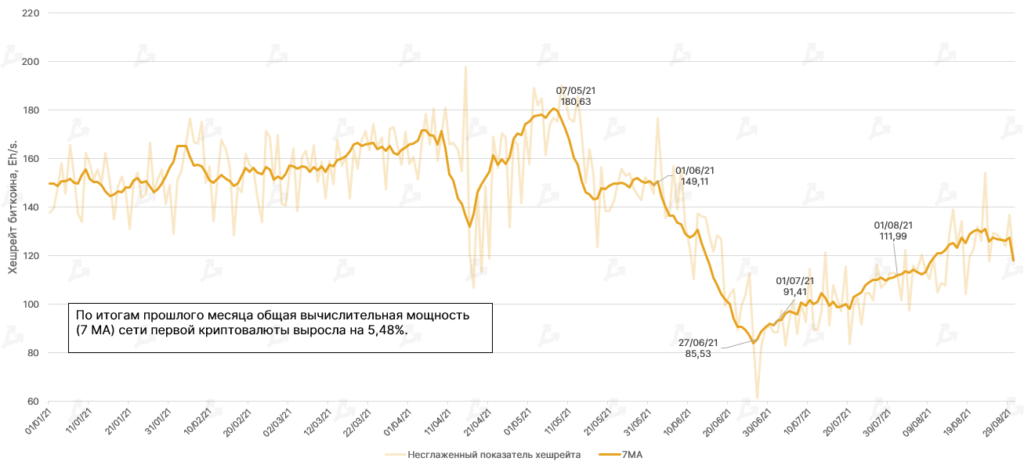


- Bitcoin hashrate continued its recovery from the June crash, sparked by the shutdown of major mining facilities in China and the subsequent migration to the US, Canada and Kazakhstan.
- For the month, the smoothed seven-day MA rose 5.48%. This signals deployment of equipment in new jurisdictions and that mining becomes more attractive as the price rises.
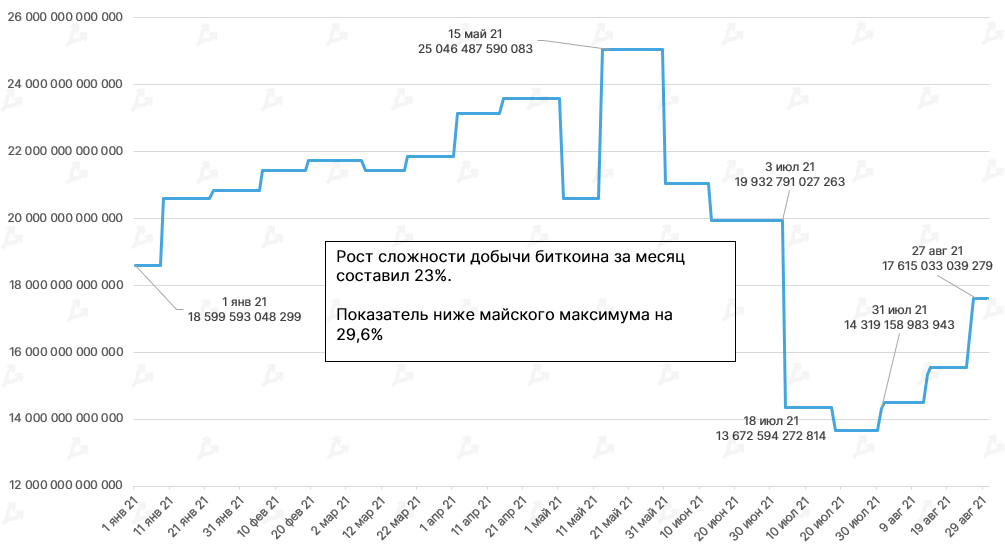
- The difficulty index, closely linked to hashrate, rose 23% in the month. Following the latest adjustment on August 25, it increased by 13.24%.


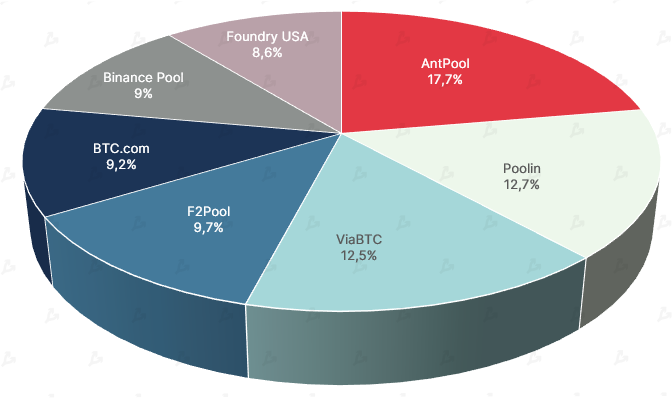


- Among mining pools, Antpool retained leadership of share in total computing power. Poolin overtook F2Pool and ViaBTC to take second place. Binance Pool fell from fifth to sixth over the month.
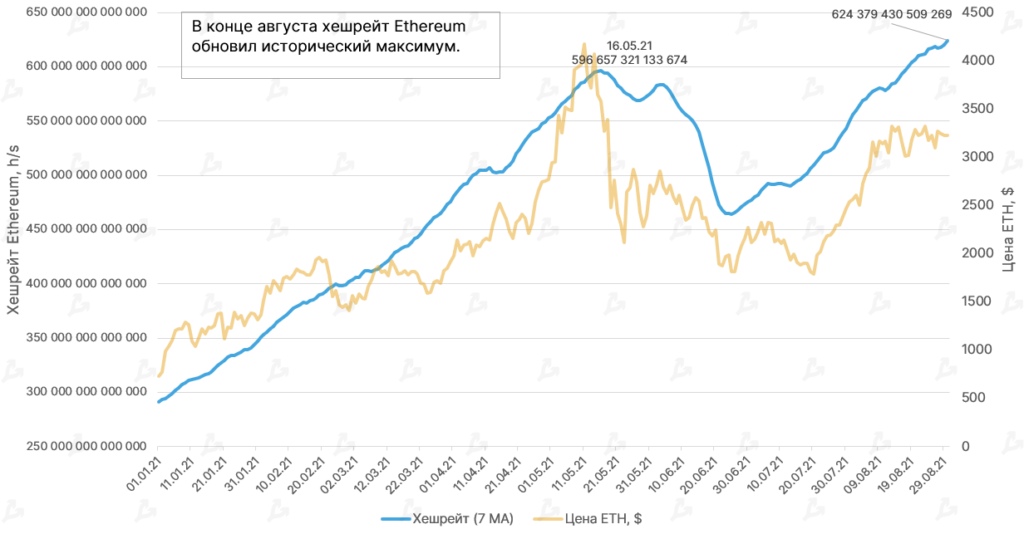
- The Ethereum hash rate hit an all-time high. The smoothed 7-day MA rose to 624.37 TH/s, surpassing the May record.
- The rise in Ethereum’s hash rate has been aided by expanding mining capacity outside China, the ongoing DeFi boom and the NFT explosion.


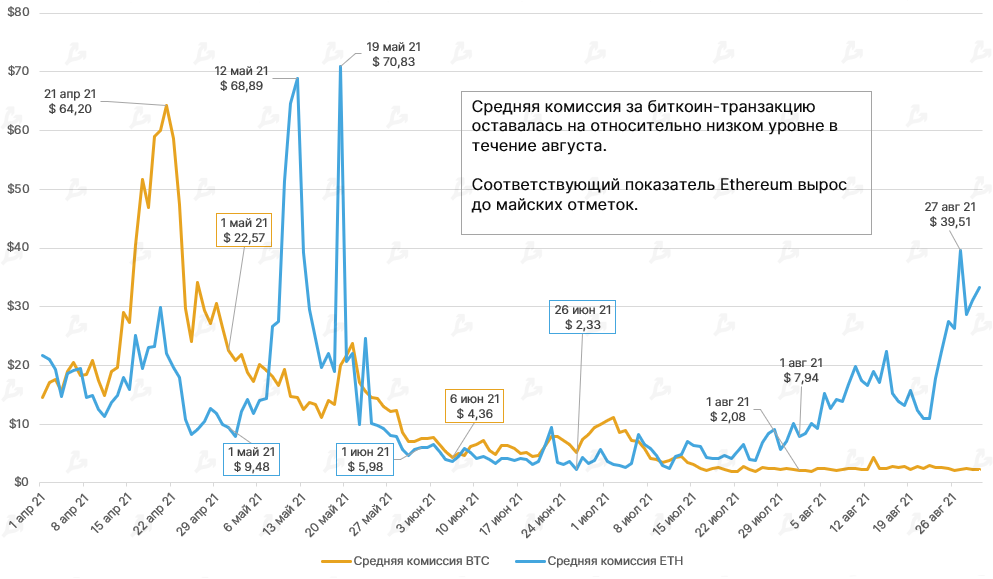
Against a backdrop of revived demand for Ethereum, the average transaction fee rose to May levels, approaching $40. London hard fork and EIP-1559 upgrade, designed to reduce gas price volatility, did not fix scaling challenges or the resulting high transaction costs.


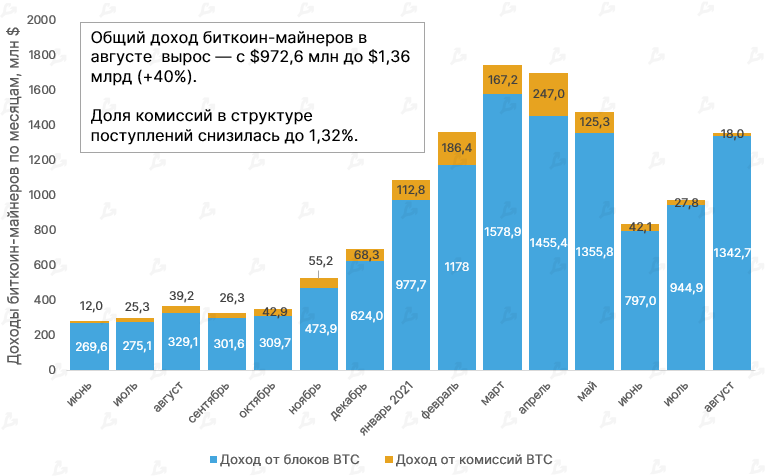


- In August, Bitcoin miner revenues rose by 40% to $1.36 billion, though the share of fees in the revenue mix declined from 2.94% to 1.32%.
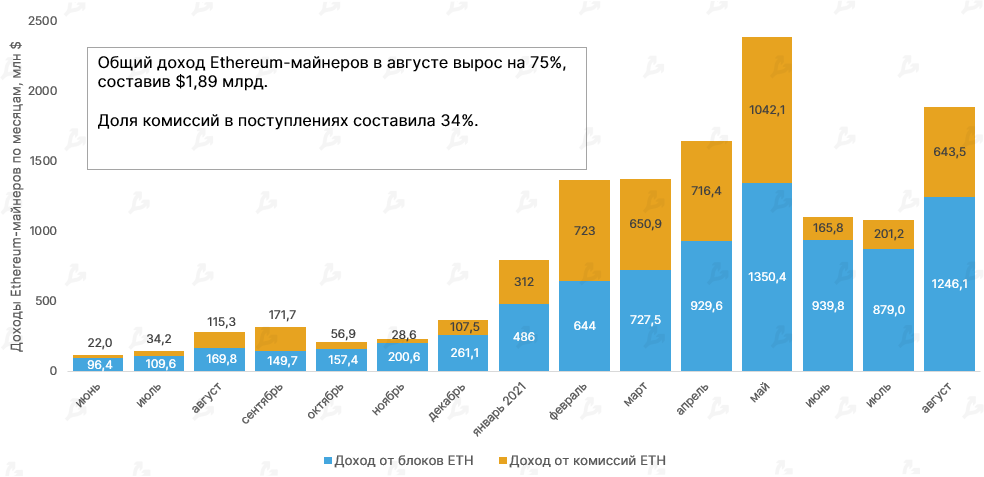
- Ethereum miners’ total revenue for the month rose by 75%, hitting $1.89 billion. The May peak of $2.39 billion remains a record.
- Fee share in Ethereum miner revenues climbed from 22% to 34%, a rise not halted by the activation of EIP-1559.
Trading volume


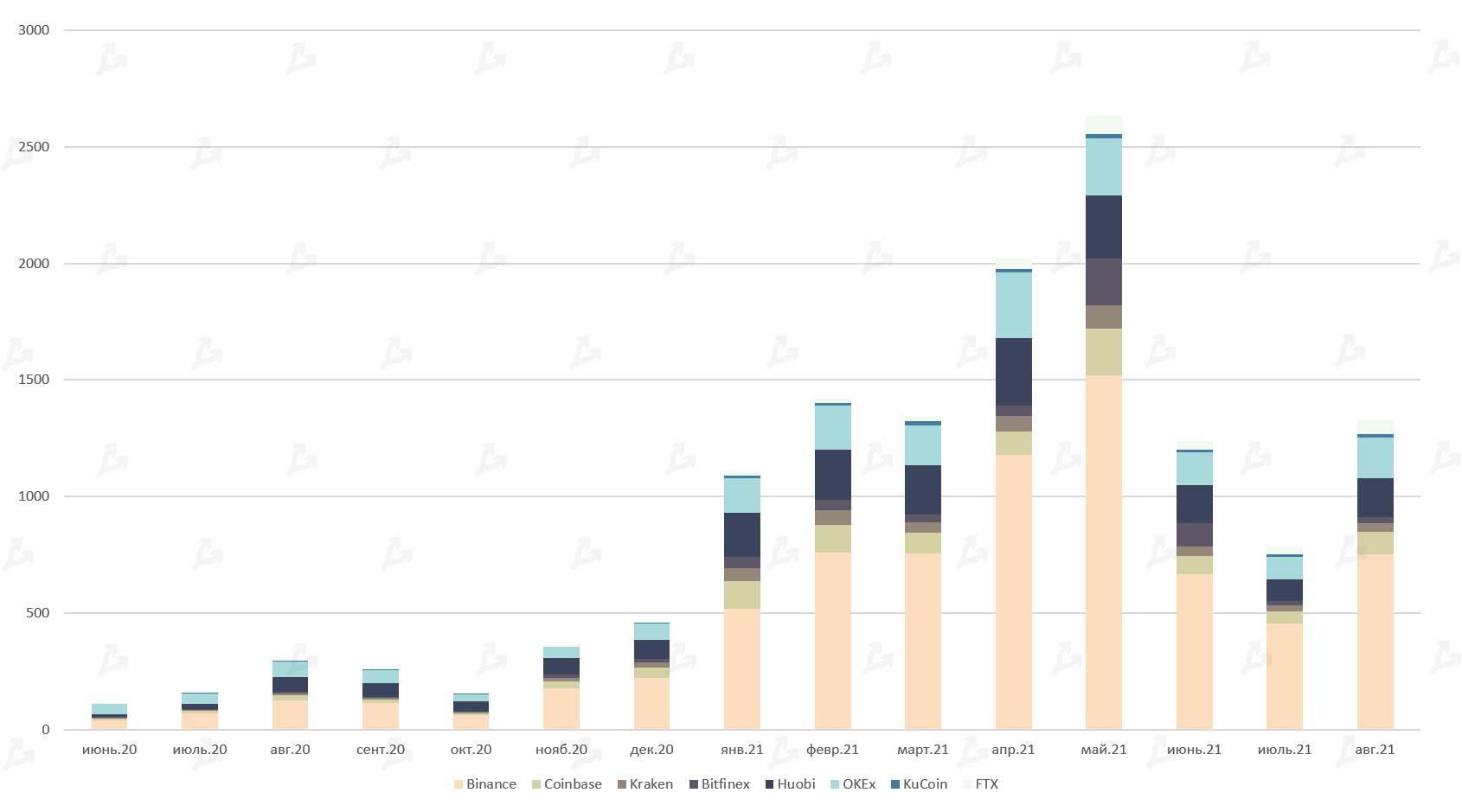
- Spot volumes on leading cryptocurrency exchanges in August reached $1.3 trillion, up 69% from July.
- Binance turnover rose to $750 billion, OKEx to $176 billion, Huobi to $166 billion, Coinbase to $96 billion.
Futures and options


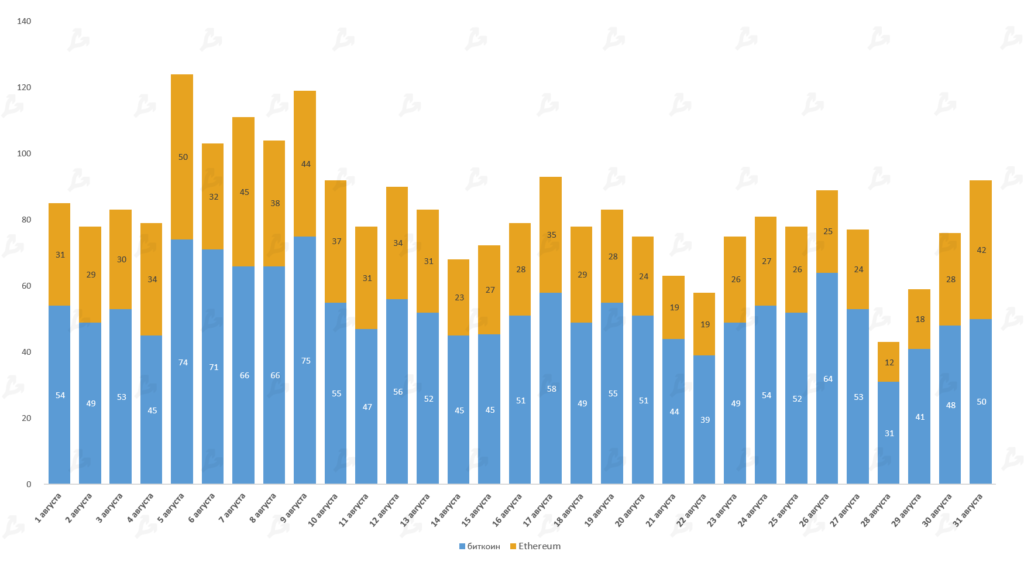


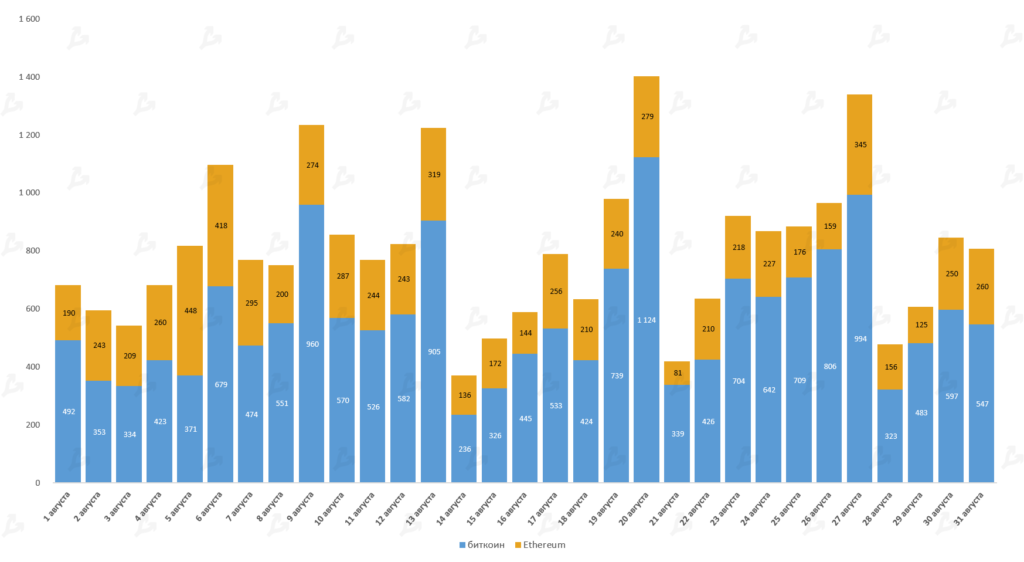
- Futures volumes rose at the month’s start as BTC price moved above $40,000.
- When attempting to reach $50,000, futures market volumes did not spike similarly.
- Overall futures and options volumes rose 17% for the month, to $1.7 trillion.


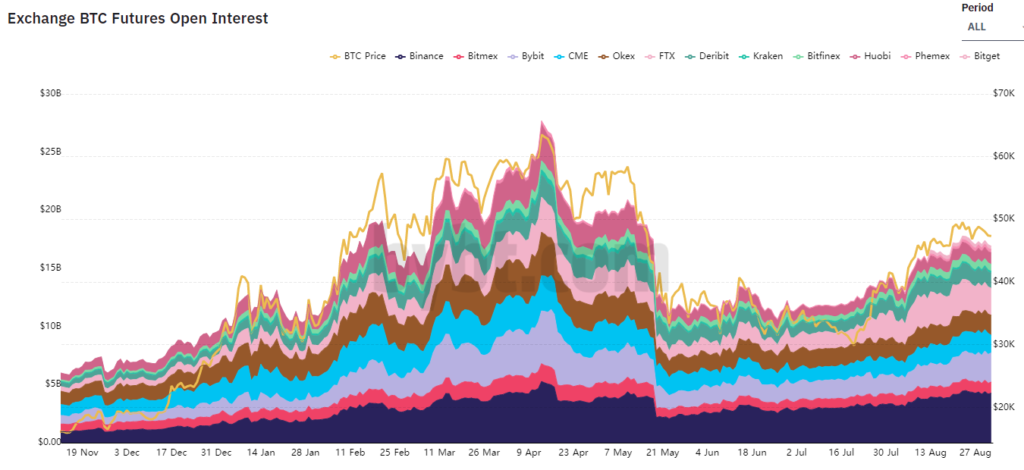


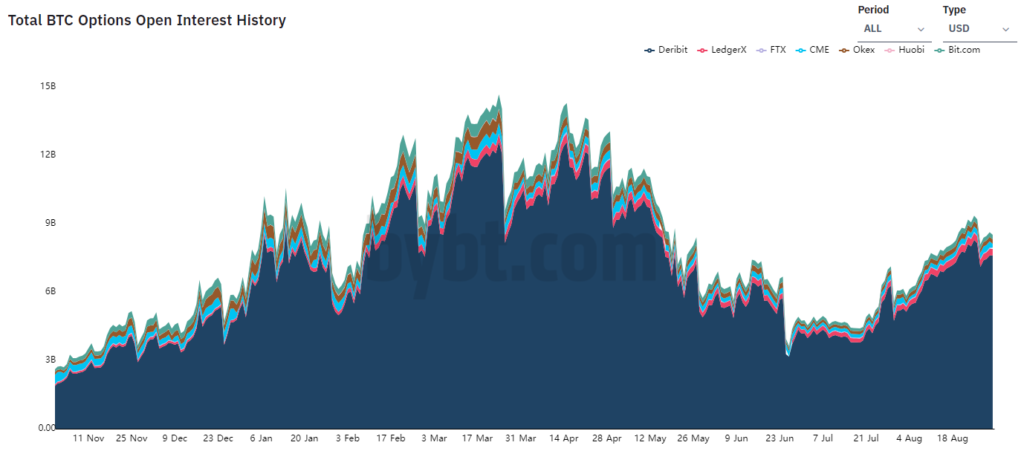
Open interest in both futures and options on Bitcoin reached a three-month high. The derivatives market activity is picking up.
DeFi


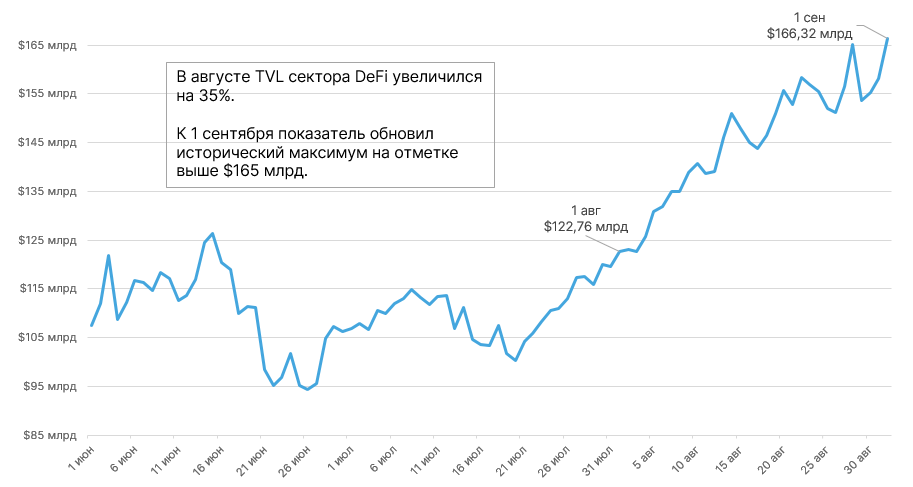


- During August, the total value locked (TVL) in DeFi continued to climb, surpassing $165 billion by September 1.
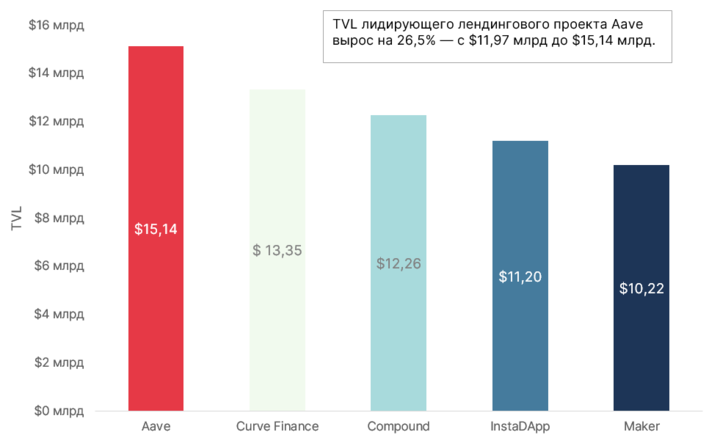
- TVL in leading lending protocol Aave exceeded $15 billion, up more than 26% for the month.
$356 million
bitDAO on the launch of the BIT governance token.
$356 million
BitDAO governance token BIT launched.
$263 million
Bitpanda in Series C; valuation rises to $4.1 billion.
$210 million
Blockstream in Series B; valuation rises to $3.2 billion.
$210 million
FalconX in Series C at a $3.75 billion valuation.
$120 million
Liquid, the Binance-backed exchange, raised as debt from FTX.
$100 million
Matrixport, spun out from Bitmain, raised Series C funding; valuation above $1 billion.
Regulatory highlights



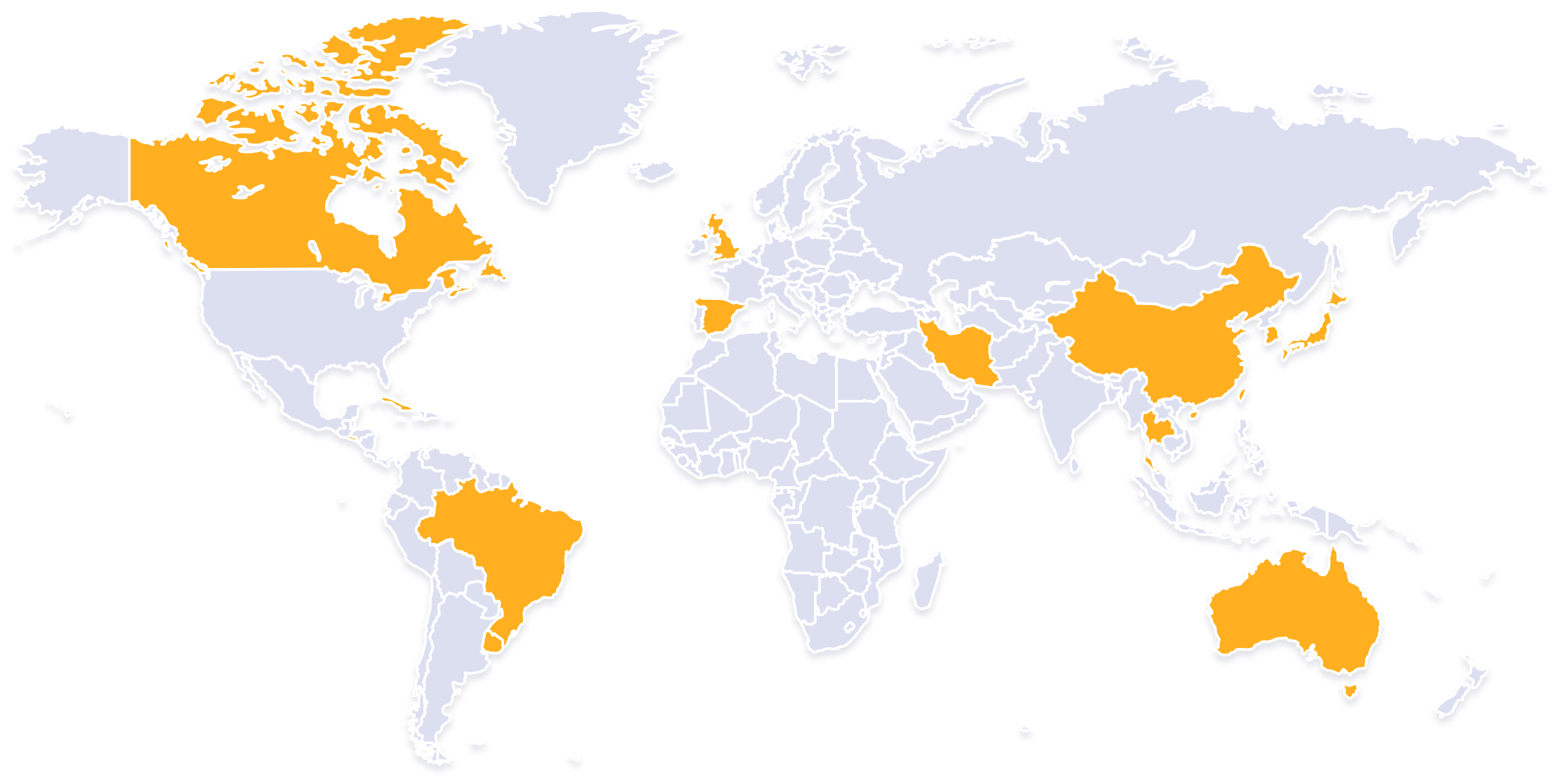
- Britain’s FCA said Binance faced settlements on all charges; regulator noted it cannot effectively supervise Binance’s activities.
- South Korea’s SEC will halt activity of 11 crypto exchanges that failed to meet customer-identification requirements.
- China’s central bank will continue to press regulatory pressure on cryptocurrency trading.
- In Uruguay a crypto regulation bill was introduced.
- The Iranian tax authority urged authorities to legitimize crypto exchanges for tax purposes.
- The Australian regulator warned investors away from unlicensed firms.
- Cuba allowed recognition and regulation of crypto assets.
- Ontario’s SEC (Canada) accused OKEx of violating securities laws.
- Spain’s regulator issued warnings to Huobi and Bybit for operating without a licence.
- Thailand officials proposed a regulatory framework for crypto custodians.
- The Brazilian central bank backed regulation of the crypto industry. The initiative will be developed with the local SEC.
- Japan is slated to present an updated regulatory framework for the crypto sector by mid-2022, with a guiding principle of “do no harm to innovation.”
- In El Salvador’s parliament, a Bitcoin fund of $150 million to back crypto-to-fiat exchange and the installation of 200 crypto ATMs were approved. Protests against Bitcoin legalization have begun in the country.


- Senate approval of a crypto tax provision in the infrastructure bill failed. Lobbyists’ attention shifted to the House of Representatives. Read a detailed analysis on ForkLog .
- SEC Chief Gary Gensler hinted at forthcoming DeFi regulation, regardless of decentralisation. Concerns were confirmed with the SEC’s contract with analytics service AnChain to monitor DeFi activity.


Notable August events
On August 5, in the Ethereum mainnet on block #12 965 000, the London hard fork went live, implementing five EIPs to improve Ethereum’s operation. The headline was EIP-1559, which burns a portion of transaction fees depending on network load and aims to reduce gas price volatility.
As of September 1, the network burned more than 150,000 ETH. The main burners included NFT marketplaces OpenSea (nearly 25,000 ETH) and Uniswap (10,000 ETH). A further 13,000 ETH were moved to transfers within the network.
On Friday, August 27, Ethereum experienced a large reorganization (over 450 blocks). It affected nodes running Geth. However, the canonical chain proved longer; major players updated their software and catastrophic consequences were avoided.
On August 10, an unknown attacker https:// attacked Poly Network and drained assets worth $611 million across Ethereum, Binance Smart Chain and Polygon — the largest DeFi hack in history.
The attacker began returning funds a day later, explaining that the hack was done “for fun”. The full return continued for about a week. Poly Network offered a $500,000 bounty, which the hacker refused.
Quotes of the month