




- Bitcoin is entering a “DeFi summer” similar to Ethereum in 2020 due to record fees.
- Network activity is largely driven by the launch of the Runes protocol.
Bitcoin is experiencing a “DeFi summer” moment amid a record surge in fees earned by miners thanks to Runes. This conclusion was reached by Bernstein, reports The Block.
“It is no longer a ‘no-frills’ blockchain where nothing happens except hodlers holding BTC,” noted analysts Gautam Chhugani and Mahika Sapra in a client note.
According to experts, the network of the first cryptocurrency is experiencing something akin to what happened with Ethereum back in 2020. At that time, numerous decentralized applications and tokens were launched on the blockchain, leading to a sharp increase in liquidity and transaction fees.
On April 20, the fourth Bitcoin halving occurred. The reward for a mined block was reduced from 6.25 BTC to 3.125 BTC.
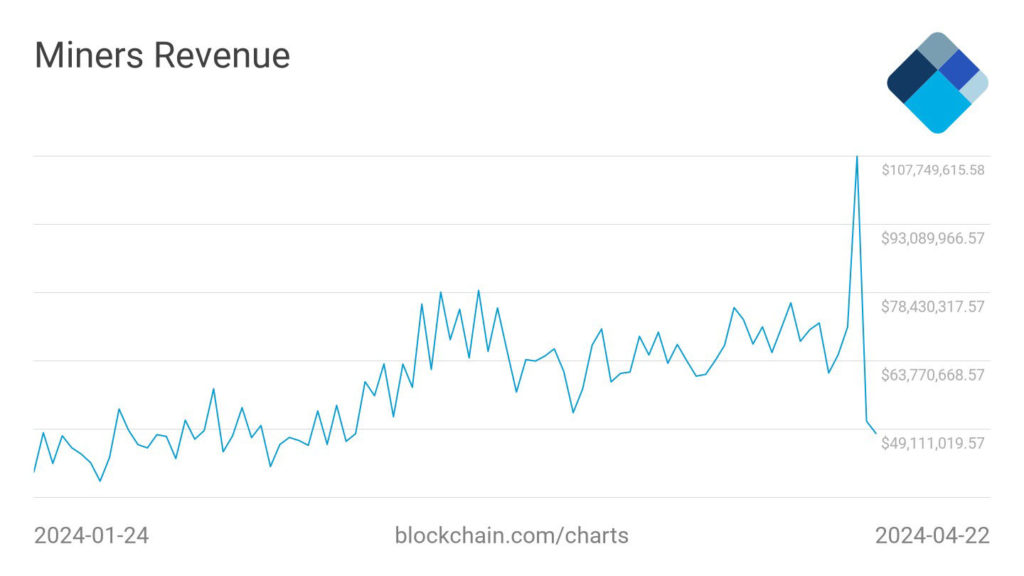
Prior to the event, miners earned a total of $60-70 million daily, including transaction fees. However, on the day of the halving, the amount jumped to $107.75 million, despite the halved block reward. Network fees accounted for $81 million (~75%). Both figures were record-breaking, according to Blockchain.


For the inclusion of 3050 transactions in the halving block #840,000, users paid $2.4 million in fees, while the reward for its mining was about $200,000.
According to mempool.space, this was followed by a record series of 104 blocks where fees constituted the majority of miners’ revenues.
Bitcoin is on a record 100 block streak of transaction fees exceeding the block subsidy. Great to see the experiment playing out and proving the theory that fees can sustain the thermodynamic security budget! pic.twitter.com/CoRm6P40HR
— Jameson Lopp (@lopp) April 20, 2024
“It’s great to see the experiment unfolding and proving the theory that fees can support the thermodynamic security budget!” commented Casa co-founder Jameson Lopp.
Excluding the incident in November 2023, when a user paid over $3 million for a single transaction, the ten most profitable blocks for miners were mined after the halving.
Fee Surge Linked to Runes Launch
Experts linked much of the transactional activity in the network to the excitement surrounding the Runes protocol. Its launch was timed with the event.
“This is driven by speculative activity in issuing new tokens (mostly meme coins),” stated Bernstein analysts.
Bitcoin developer and Ordinals creator Casey Rodarmor introduced Runes in September 2023. The protocol allows for the issuance of fungible tokens on the blockchain of the first cryptocurrency. Unlike BRC-20, it uses the UTXO model, preventing network congestion.
At the time of writing, 8249 tokens have been launched on Runes. Over 103,000 users have conducted 1.66 million transactions. The figure shows an upward trend.



NFT marketplace Magic Eden added support for assets on the protocol, taking this step earlier than planned, reports The Block.
The centralized exchange wallet OKX also announced the ability to operate with tokens.
Houston, we have a liftoff ? pic.twitter.com/pKzn54sj0Z
— OKX Wallet (@okxweb3) April 23, 2024
Analysts at Franklin Templeton have identified Runes, along with Ordinals, L2 protocols, and DeFi primitives, as one of the main drivers of innovation resurgence in Bitcoin.