



Kirill Khomyakov, Head of Regional Markets for Binance in the CIS, Central and Eastern Europe, and Africa, discussed the proposed amendments to Ukraine’s cryptocurrency regulation bill.
Earlier this month, the Verkhovna Rada of Ukraine approved in the first reading the document “On Virtual Assets Markets,” which will define the status and taxation of cryptocurrencies in the country.
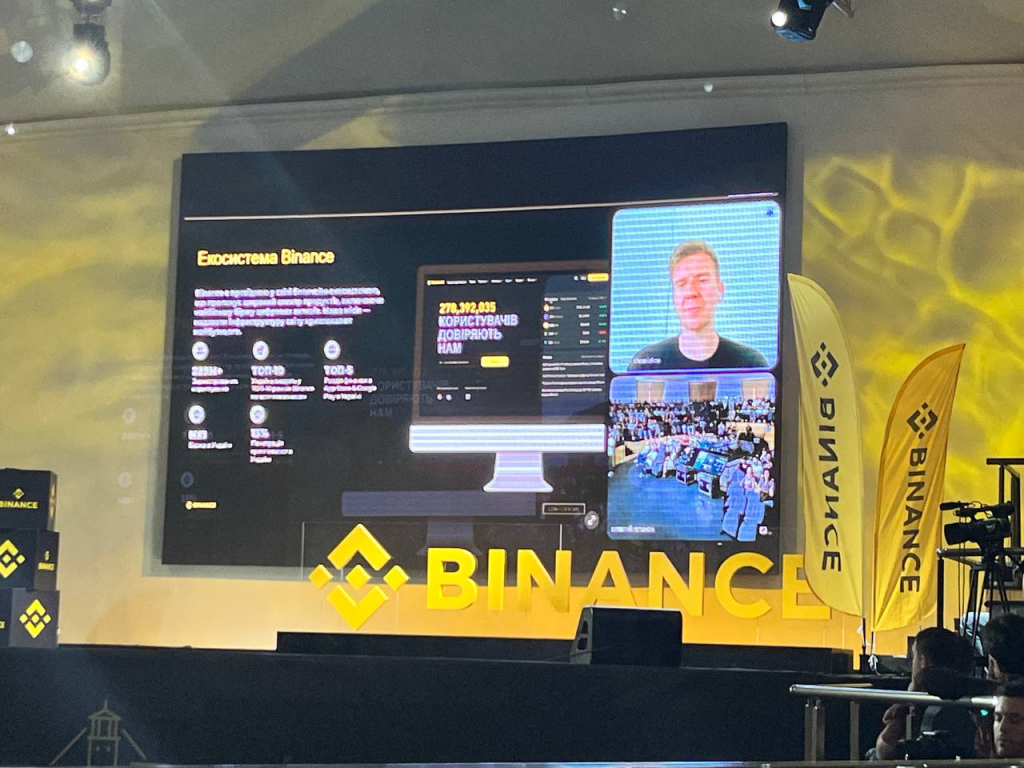
Speaking at the Binance Odesa Meetup, Khomyakov noted that the amendments, aimed at “simplifying users’ lives,” were submitted by Binance, other exchanges, and the Ministry of Digital Transformation. He expects the bill to undergo significant changes by the second reading.


Tax Regime
According to the top manager, fiscal policy is the main issue.
“Currently, taxation works on a capital gains scheme, meaning you will only pay taxes on assets sold for the national currency. This is already good — there will be no taxes on transactions, no taxes on whether your portfolio increases or decreases,” said Khomyakov.
He expects the profit tax rate when converting to hryvnia to be set at 23% — 18% under the general scheme plus a military levy. Binance proposed introducing a preferential regime, and now the decision lies with the deputies, Khomyakov added.
Implementation Timeline
Khomyakov forecasts that the second reading could take place by the end of the year, and after the president’s signature, the law will come into force on January 1. The regulator will then need 6-12 months to prepare bylaws and develop procedures.
“The good news is that until this licensing process is in place, nothing will change for us. At least until the end of this year and for roughly the first nine months of the next, everything will continue as it is,” noted the Binance representative.
He added that the Cabinet has not yet decided which agency will be responsible for regulating the crypto market — the National Bank, the National Securities and Stock Market Commission, or the Ministry of Digital Transformation.
Data Privacy
According to Khomyakov, Binance has submitted numerous amendments regarding user data protection. If supported, nothing will change for crypto platforms in this regard.
Currently, law enforcement agencies can request information on suspicious cases, but client data is not mass-transferred to any agencies, he explained.
“We believe this is very important for maintaining your security and protection. This is the main direction of the amendments, and there will be quite a few. I hope that after the law is signed, it will be much more convenient, constructive, and easy for all industry stakeholders to comply with,” emphasized the manager.
Crypto Reserve in Ukraine
Khomyakov noted that the government is discussing the creation of a national crypto reserve, but this issue is not a priority.
“The National Bank is categorically against this law, but it’s not about making cryptocurrency a means of payment on par with the Ukrainian hryvnia, but about some government body being able to purchase crypto assets and thereby increase the state’s wealth,” he explained.
Banking, Hryvnia Card, and Binance Blockchain Grants
The implementation of regulation will allow the exchange to receive free deposits in hryvnia from any bank, Khomyakov reported.
He added that Binance plans to launch a dollar card in Ukraine soon, followed by a hryvnia card.
Among the platform’s other plans is a project tentatively named “Resilience Lab,” which will provide grants for Ukrainian blockchain developers.
“There will be a fairly powerful sponsorship fund specifically for Ukraine. We will announce this soon,” Khomyakov emphasized.
Regulation of P2P Operations and MiCA
According to Khomyakov, the future of the Ukrainian P2P market remains uncertain — these mechanisms are not outlined in the proposed law. Everything will depend on the position of the regulator chosen by the Cabinet:
“I also don’t know if any separate licenses will be needed for this. In most jurisdictions where there is regulation and the possibility to work via P2P, professional traders do not need to obtain licenses, but there are examples where it is required. How it will be in Ukraine is still unknown.”
He stressed that Binance will do “everything possible” to protect its P2P platform, understanding how important it is for users.
Khomyakov reported that the exchange has completed the preparation of a full application for a MiCA license in Europe. Binance expects to receive it in the fourth quarter. These rules do not allow for P2P operations, the manager noted.
As reported in ForkLog, Juscutum’s Technology and Investment Practice Partner Petro Bilyk pointed out the need for significant revision of the Ukrainian cryptocurrency regulation bill.