



At its peak in 2021, Bitcoin, Ethereum, USDT, and USDC accounted for $2.8 trillion, or 12% of global merchandise trade. These estimates were provided by analysts at the Bank for International Settlements (BIS).


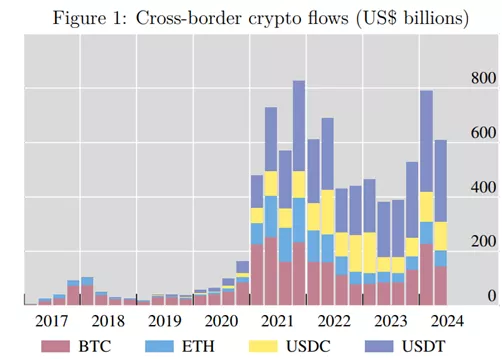
Data from 184 countries covered the period from the first quarter of 2017 to the second quarter of 2024.
Approximately $1.2 trillion of the $2.8 trillion was generated by stablecoin transactions.
In 2023, the total figure fell to $1.8 trillion, but has since begun to rise again, indicating a continuing, albeit uneven, expansion of the crypto ecosystem.
Initially, digital gold dominated transaction volumes, peaking at 80% in the second quarter of 2019. By the end of the study period, its share had fallen to about 25% as focus shifted to stablecoins.
Geographical barriers have less impact on digital asset operations compared to traditional financial systems.
The United States and the United Kingdom together accounted for 20% of cross-border payments in Bitcoin and USDC, and nearly 30% in Ethereum.

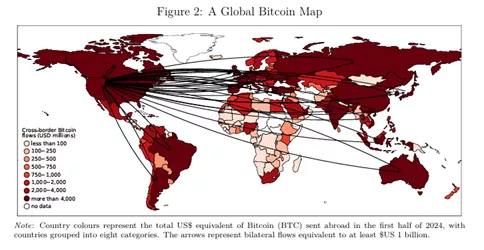
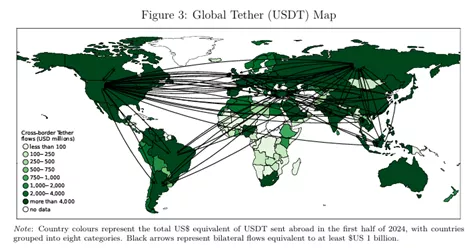
Experts noted significant geographical shifts in cross-border activity, particularly from China to other major emerging markets such as India, Indonesia, and Turkey. The latter, along with Russia, accounted for 12% of such operations in USDT.

The BIS found that measures taken by authorities in several countries to control capital flows do not significantly affect these streams.
Higher alternative costs of using fiat, such as high inflation, encourage cross-border crypto transactions.
In April, the Russian Ministry of Finance proposed developing its own stablecoins tied to various currencies.