




In the latest trading session, exchange-traded funds tied to the leading cryptocurrency drew $753.7 million—the most since October.


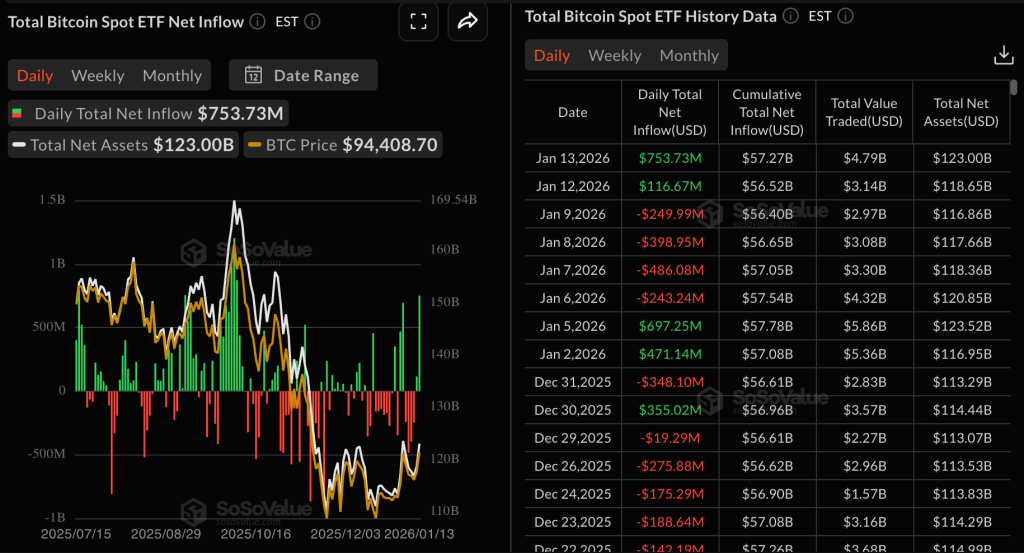
Leading the pack was Fidelity’s FBTC, which took in $351 million. It was followed by Bitwise’s BITB and BlackRock’s IBIT, with $159 million and $126 million, respectively.
Since the start of January, net inflows into bitcoin ETFs have topped $660 million, a contrast with the previous two months. Following October’s crash and amid a prolonged market slide, the products shed $3.4 billion in November and $1.09 billion in December.
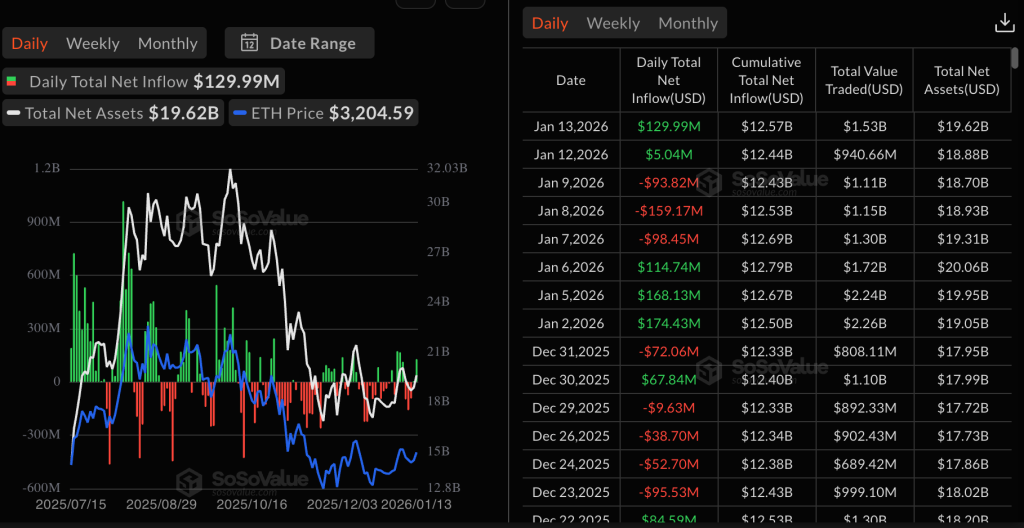
Ethereum-focused funds attracted nearly $130 million over the past 24 hours.


“Inflows into bitcoin ETFs indicate a revival of institutional demand and signal that investors are actively reallocating capital after a period of caution and de-risking at the end of last year,” — commented LVRG Research head Nick Rak.
Kronos Research CIO Vincent Liu linked the upbeat trend to an improving macro backdrop. Two factors point to this:
- Inflation data. The CPI published on 13 January showed price growth had retreated from peak levels. That strengthened market expectations for future interest-rate cuts by the Fed.
- Regulation. The US Senate Banking Committee will vote on a bill on crypto market structure. Amendments are expected, and passage would mark an important step toward legislative clarity for the digital-asset industry.
Market gains
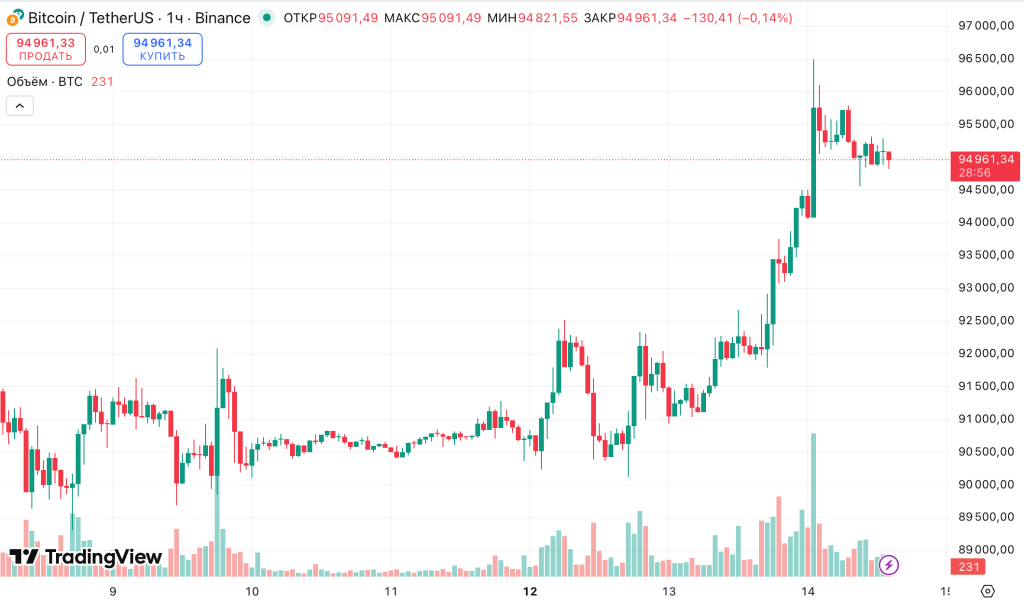
Improved investor confidence has been reflected in prices. Over the past 24 hours bitcoin rose 3.1% to about $94,900.


Ethereum’s price rose by 5.3%. At the time of writing the asset is trading around $3300.
“[The rally] is driven by sustained ETF inflows that absorb supply far exceeding miners’ issuance and create a structural tailwind. Improved regulatory clarity and the closing of over-leveraged short positions have further accelerated price action, with gains clearly led by spot demand rather than leverage,” Liu explained.
Rak of LVRG stressed that the current trajectory signals a “healthy reset” after the slump in the final quarter of 2025.
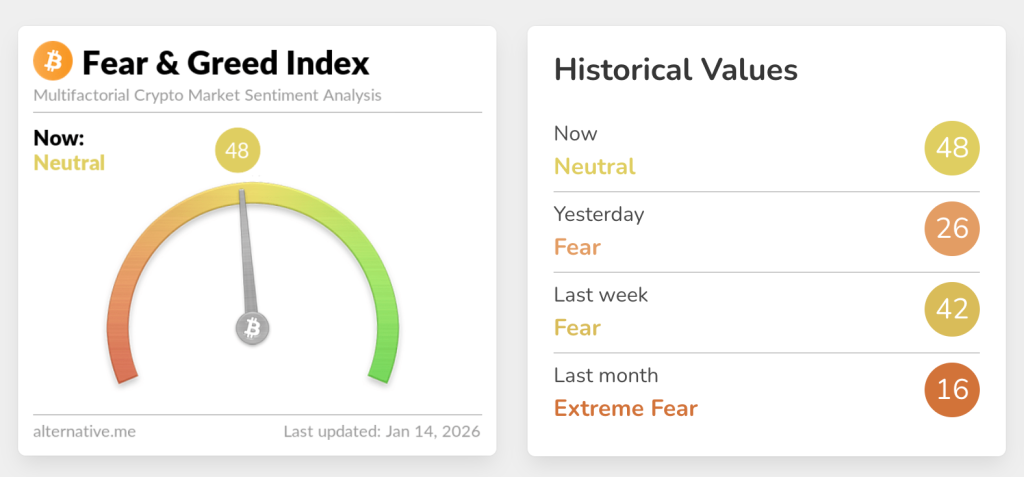
Total market capitalisation rose 3.2% to $3.3 trillion. The popular sentiment gauge turned neutral for the first time since October.


For the first time since mid-2022, the 52-week correlation between bitcoin and gold fell to zero. Historically, this preceded rallies in the leading cryptocurrency.