



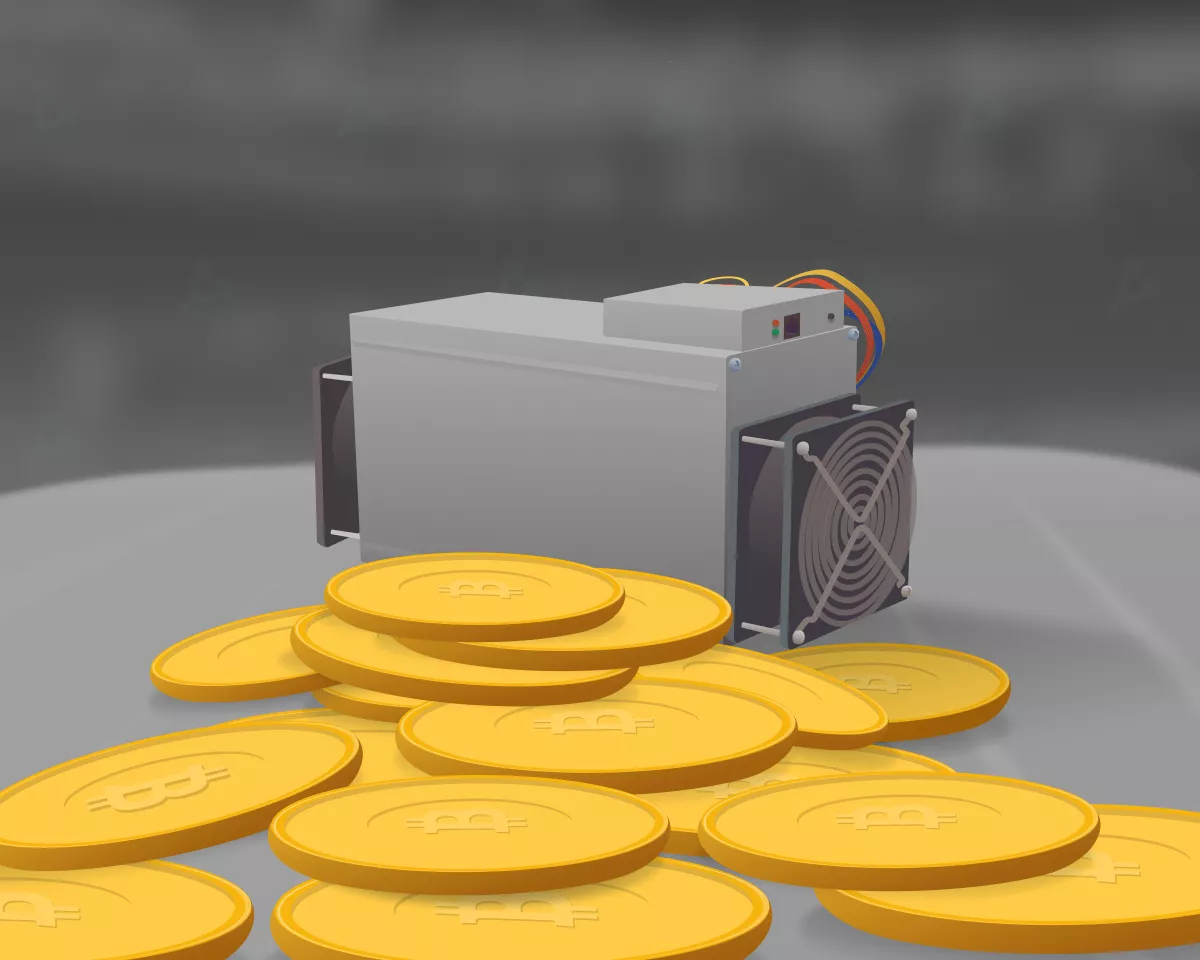
Leaders of mining companies suggest that the Bitcoin halving may harm smaller and less efficient operations, but will not pose a problem for major players, according to Cointelegraph.
The halving of block rewards is expected to significantly impact the revenues and profitability of cryptocurrency miners.
Industry management believes that in this scenario, efficiency and scale of operations will be crucial, as miners will compete for a share of the reduced rewards.
Adam Swick, Chief Development Officer at Marathon Digital, told the publication that the halving will serve as a test to identify the most efficient and well-funded enterprises. One of the largest public miners in North America is actively preparing for this stress test.
“While the immediate effect is a reduction in rewards and profitability, these companies are generally more resilient, given their greater access to capital and efficient operations,” Swick explained.
He suggested that smaller and less profitable enterprises might not survive the halving at all.
According to OceanBit co-founder Michael Bennett, effective balance and capital structure management are also coming to the forefront.
“Mining companies with debt burdens and securities nearing maturity will sell shares for their purposes, as we continue to overcome historical highs, to reduce credit servicing post-halving when competition intensifies and operational efficiency becomes king,” he said.
Greg Beard, CEO of Stronghold Digital Mining, noted that historically, halving has forced miners to adapt to low profitability conditions by switching to more efficient equipment. He suggested that many miners will need to convert their Bitcoin reserves into fiat to pay for purchases.
Swick made a similar prediction, adding that the peaks of the first cryptocurrency temporarily increased profits and demand for services, but later this will become a pressure factor.
“If miners have not accumulated sufficient resources to withstand the halving, we will likely see some organizations sell off their BTC reserves or even, in extreme cases, abandon operational sites to preserve capital,” Swick believes.
Hashrate Reduction, Industry Consolidation, and Hopes for Price Growth
According to the CEO of Stronghold, preparation for the halving has already led to a “quartering of the mining economy,” as several players have increased equipment capacity regardless of asset price growth.
As a result, the blockchain’s hashrate has steadily reached new highs since the beginning of 2023, reaching 626 EH/s in March 2024 (7 DMA).


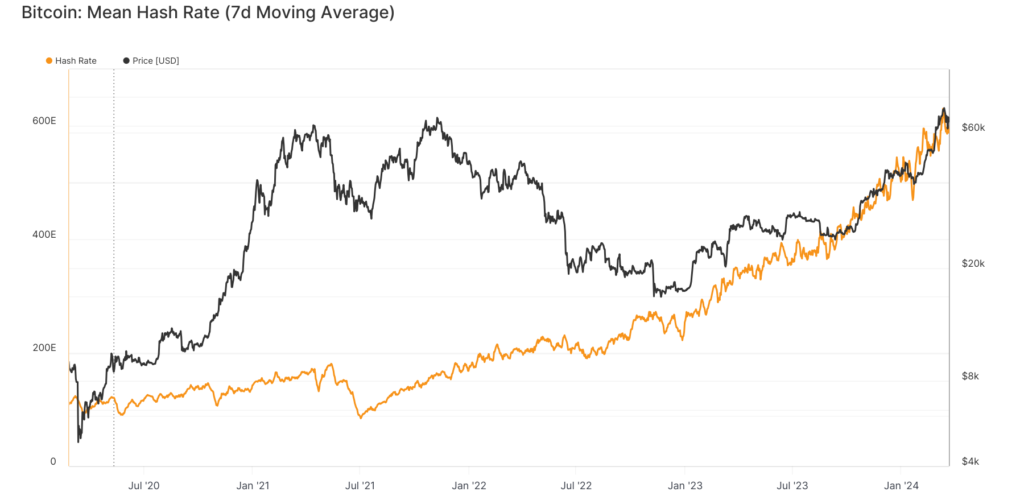
The top manager is confident that the situation will change because some equipment will become unprofitable to operate.
“I expect the hashrate to drop after the halving, as less efficient installations will be shut down. The question is, what will be the scale of this reduction?” he added.
According to Galaxy Digital specialists, approximately 15-20% of the total computing power of the Bitcoin network will become unprofitable after the block reward reduction.
The Director of Development at Marathon noted that preparation for the halving has provided ample opportunities to increase mining capacity.
In January, the company closed a deal to acquire two operational data centers with 390 MW from Generate Capital.
In March, Marathon finalized an agreement to purchase a site from Applied Digital Corporation with 200 MW. It is assumed that control over the enterprise will allow the company to reduce the cost of Bitcoin mining there by about 20%.
In November 2023, Marathon launched a mining data center in Paraguay.
Swick predicts significant consolidation in the industry amid profitability challenges post-halving. He also expects to see equipment improvements, larger data centers, and energy solutions that will subsidize costs.
“The mining industry is likely to become more decentralized as participants seek unique energy assets and situations where they can add value to generating enterprises, rather than just being customers,” said a Marathon representative.
The head of Stronghold agrees that miners capable of maintaining low costs will benefit after the halving.
Beard noted that the recent approval of spot Bitcoin ETFs in the US has exacerbated the existing imbalance between supply and demand.
The co-founder of OceanBit, in turn, pointed to the significant potential for cryptocurrency price growth. He emphasized that only BlackRock and Fidelity have been accumulating an average of 5,000 BTC per day since the launch of the exchange-traded funds.
“As the daily issuance of Bitcoin will decrease from 900 to 450 at the halving, assuming global demand remains constant or increases, we will see continued price growth,” Bennett is confident.
As reported, amid improving market dynamics, Bernstein analysts raised their Bitcoin forecast to $90,000 by the end of the year.