



Bitcoin Hashrate Declines by Nearly 6% Over the Quarter
Bitcoin's hashrate fell by 5.8% in Q1 2026 due to outdated equipment shutdown.
In the first quarter of 2026, the hashrate of the leading cryptocurrency (30 SMA) decreased from 1066 EH/s to 1004 EH/s. The 5.8% drop was attributed to the shutdown of outdated equipment, according to experts at Hashrate Index.
Global hashrate dropped to 1,004 EH/s in Q2 2026, down -5.8% QoQ.
The cause is profitability.
Bitcoin fell ~50% from its $124K peak → hashprice hit an all-time low of ~$27.89/PH/s/day → 252 EH/s of legacy hardware went offline.https://t.co/0Ln8YuZAXF pic.twitter.com/Lk6nbInkYg
— Hashrate Index 🟧⛏️ (@hashrateindex) April 6, 2026
They believe that geographical shifts in the distribution of network capacities are also explained by negative trends in mining profitability, rather than “geopolitical conflicts.”
Changes among the leaders during the period were minimal:
- The United States firmly held the lead with a 37.4% share. The hashrate reduction of 0.13%, to 375 EH/s, was due to the shutdown of unprofitable installations and diversification into AI;
- Russia strengthened its second position — 16.9% compared to 16.4% previously;
- China rounded out the top three, increasing its share from 11.7% to 12%. However, in physical terms, the country’s hashrate decreased by 1.35%, from 125 EH/s to 120 EH/s. Experts linked this to the aftermath of December raids by authorities against miners in the Xinjiang Uygur Autonomous Region.
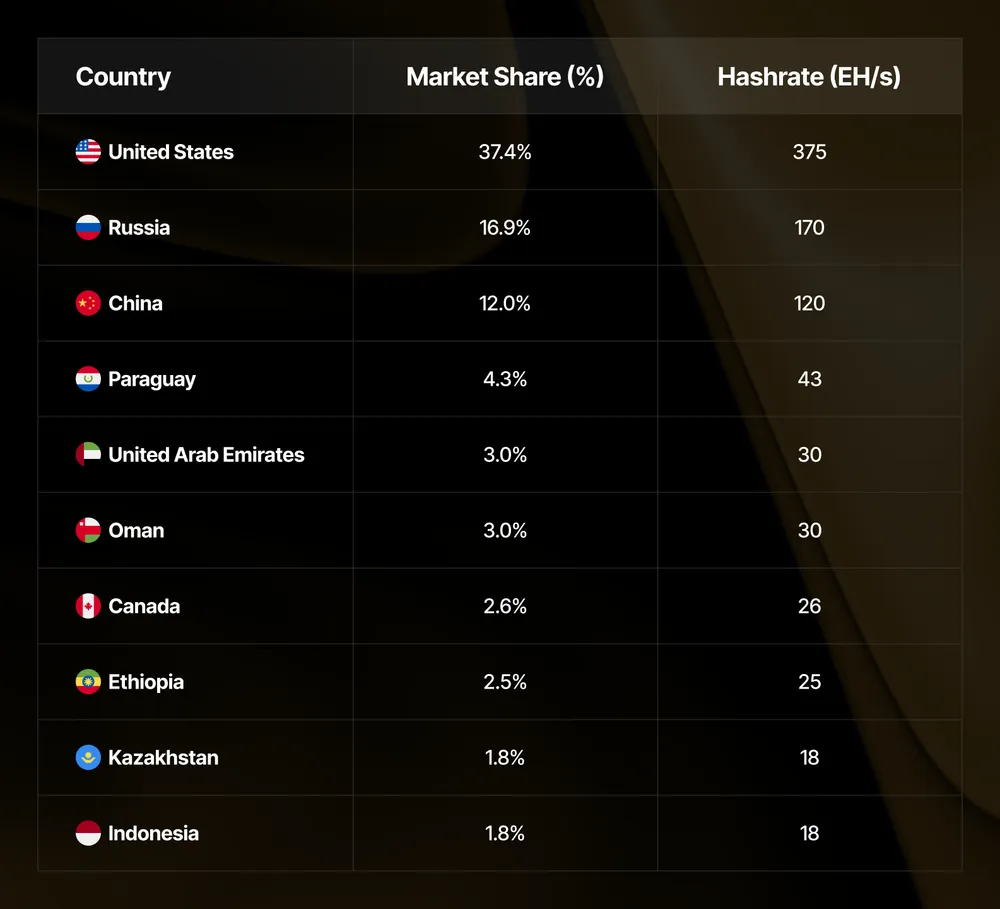
The three countries collectively account for nearly 65% of the global Bitcoin network’s capacity.
“While this indicates a continued concentration, the ongoing rise of Ethiopia in the top ten and the strengthening positions of Middle Eastern and Southeast Asian countries point to gradual diversification,” analysts emphasized.
They noted that on an annual basis, several jurisdictions demonstrated “remarkable” hashrate growth:
- Kyrgyzstan — 300%;
- Laos — 100%;
- Finland — 100%;
- Paraguay — 54%.
Hashrate Index explained the success of these countries by the deployment of modern equipment and competitive advantages in energy supply.
Amid regional conflict, Iran lost about 7 EH/s from 9 EH/s at the start of the year. However, the war did not affect the figures of neighboring UAE and Oman.
According to Hashrate Index specialists, current changes indicate the formation of a more diversified mining geography. Jurisdictions that remain attractive to miners consistently offer:
- cheap and abundant electricity;
- favorable regulation;
- access to infrastructure and capital.
In early April, Bitcoin’s difficulty increased by nearly 4% following a drop of about 8% during the previous recalculation.
Рассылки ForkLog: держите руку на пульсе биткоин-индустрии!