




For the first time since mid-September, the computational power of the leading cryptocurrency’s network has fallen below the psychological threshold of 1000 EH/s, according to data from the Hashrate Index.
In the past 24 hours, Bitcoin’s hashrate decreased from 1002 EH/s to 992 EH/s.


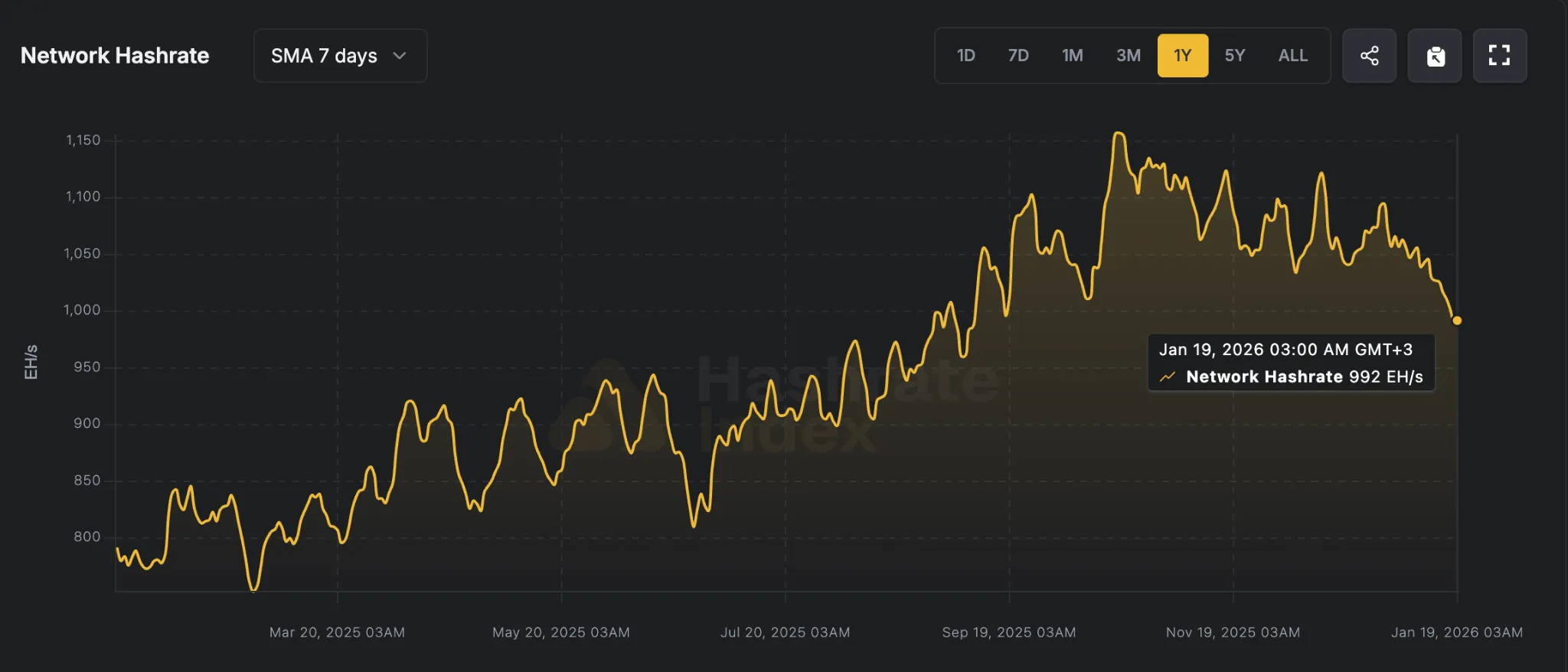
At its peak in mid-October, the figure was 1157 EH/s. Since then, it has plummeted by 15%.
Meanwhile, Bitcoin mining difficulty continues to decrease, making cryptocurrency mining easier by reducing the computational effort required to find a block.
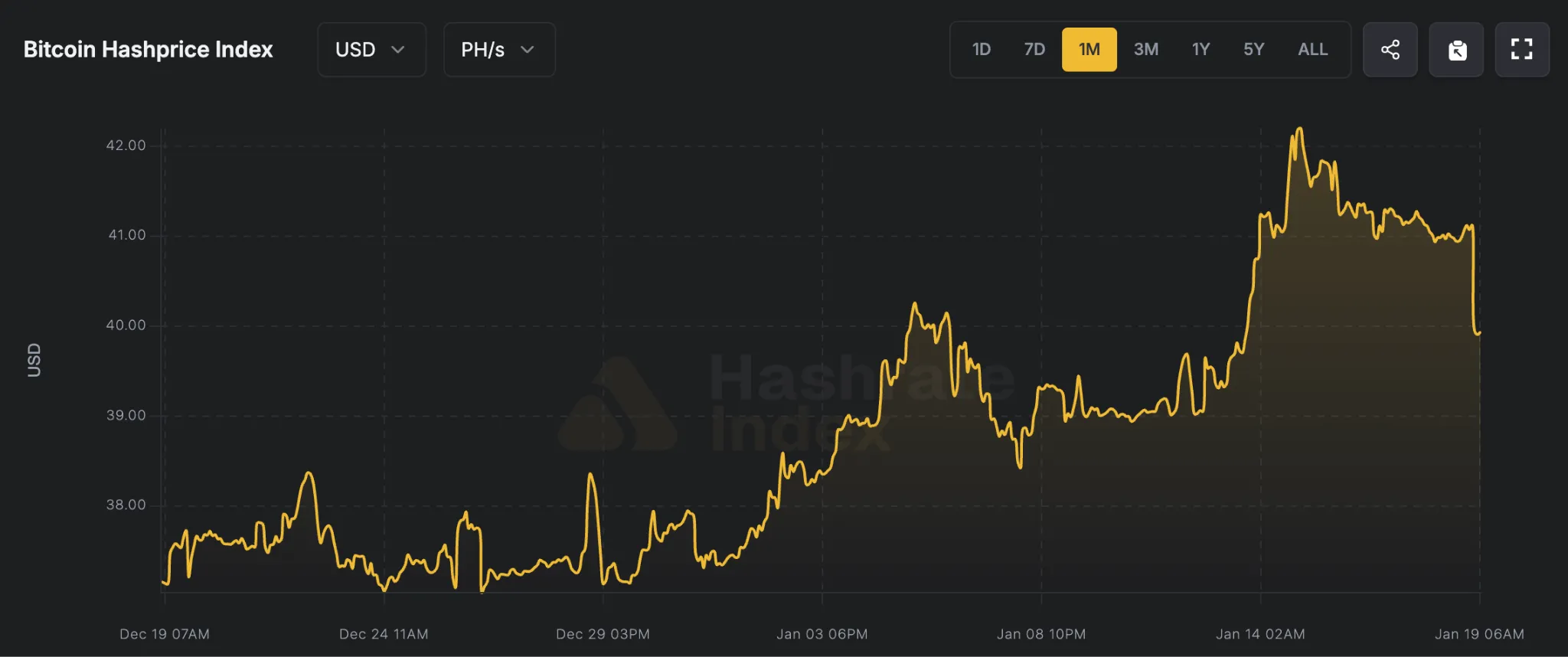
Over the past month, the hashprice has also risen from $37.15 to $40 per PH/s per day, indicating increased profitability for miners.

Why is the Hashrate Falling?
Leon Lyu, founder of StandardHash, attributed the outflow of power to fundamental changes in the industry. Miners are redirecting energy resources en masse to support artificial intelligence tasks in search of higher margins.
Bitcoin Hashrate Alert: A Shift in the Mining Landscape 📉
For the first time since Sept 2025, BTC’s 7-day average hashrate has fallen below 1 ZH/s. A -4.34% difficulty adjustment is expected in ~3 days.
What’s driving the exodus? 🧵
1️⃣ The AI Pivot: Major mining firms are… pic.twitter.com/hg8O8xBIkx
— Leon Lyu (@LeonLyuLv) January 19, 2026
Previously, analysts at TheMinerMag described the situation as the most serious crisis in the Bitcoin mining sector. Due to declining revenues and rising debts, even companies with efficient equipment and low electricity rates are operating on the brink of profitability.
In these conditions, the infrastructure of mining centers—access to powerful energy networks and industrial cooling—becomes an optimal base for HPC. Operators are shifting from the SHA-256 algorithm to leasing their capacities to AI companies.
Lyu also suggested that some manufacturers, like Bitmain, are deploying excess equipment through opaque or indirect schemes. As a result, publicly disclosed hashrate data may underestimate actual capacities.
“While manufacturers connect their excess capacities, the net outflow of hashrate confirms the immense pressure on miners’ profitability. AI is not just a trend; it actively competes for power grids,” the expert concluded.
Earlier, Justin Bons, founder of the European company Cyber Capital, predicted the collapse of Bitcoin within the next 7-11 years.
According to him, problems will begin with a mining collapse—the network’s security budget will shrink, leading to double-spending attacks and blockchain reorganizations.