




The share of Bitcoin’s circulating supply that had not moved for more than a year fell by 1%, or $3.6 billion, as the price of digital gold rose in November, according to Unchained Capital, citing the HODL Waves indicator.
Nearly 1% of the total supply of #bitcoin moved out of long-term storage (>1 year in the same address) during the price run-up from $13,700-$19,670 in November.
61.43% of the supply of bitcoin has not moved in >1 year. #HODLwaves, h/t @glassnode https://t.co/by2nmlXQIJ pic.twitter.com/WPrserjaSN
— Unchained Capital (@unchainedcap) December 3, 2020
The change in the indicator suggests likely profit-taking by some long-term investors. The overall trend remains upward — since the start of the year the indicator has risen from 39% to 44%, which points to a decline time preference among market participants.


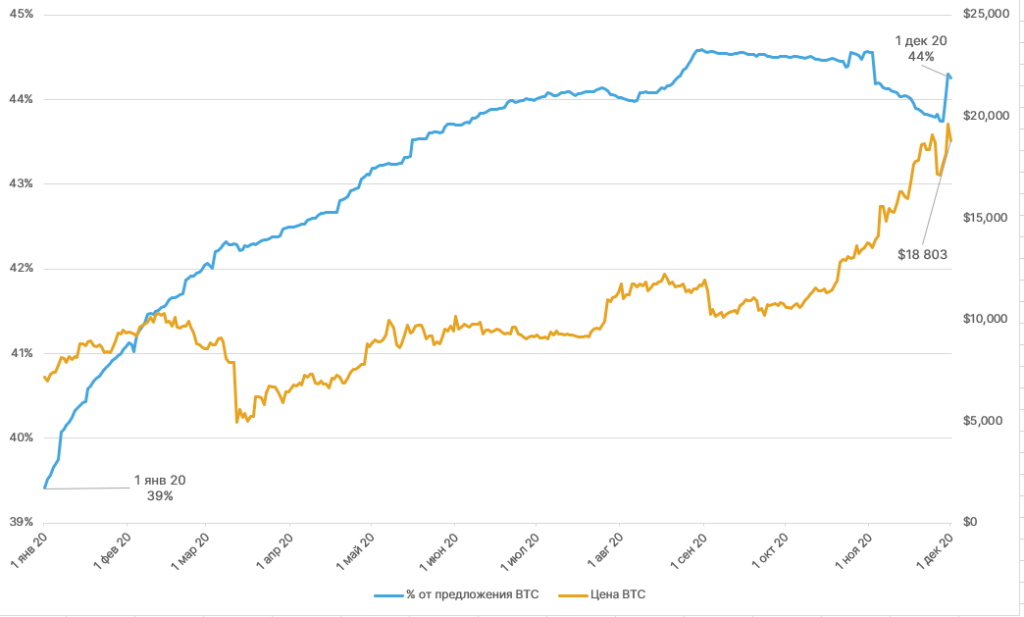
Bitcoin price and the share of coins that have not moved for more than two years. Data: Glassnode.


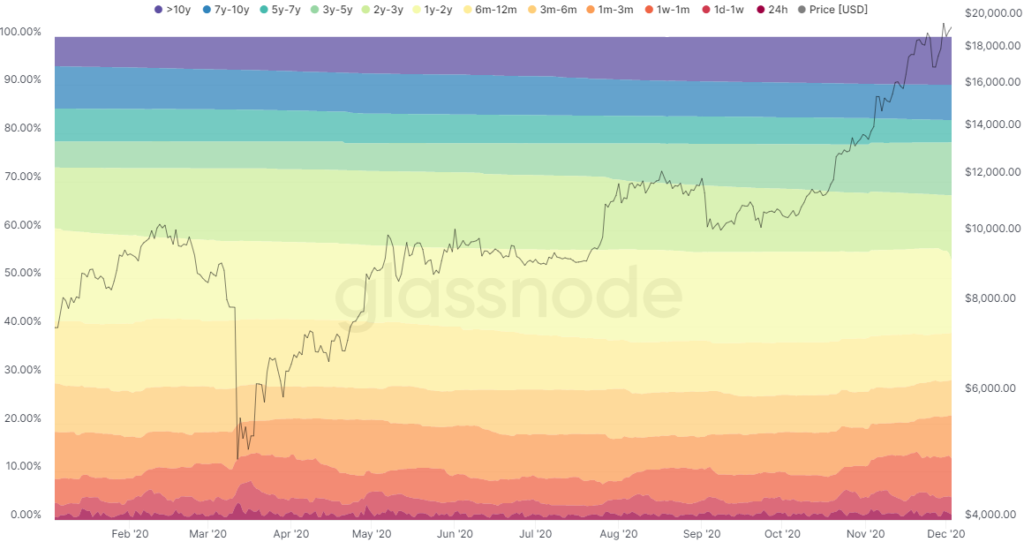
HODL waves dynamics from Unchained Capital.
HODL-волны биткоина — новый инструмент анализа данных
According to Glassnode data, nearly 19.6 million Bitcoin addresses were active in November. The metric was the third-largest on record for the leading cryptocurrency — the previous peaks were recorded in December 2017 and January 2018.


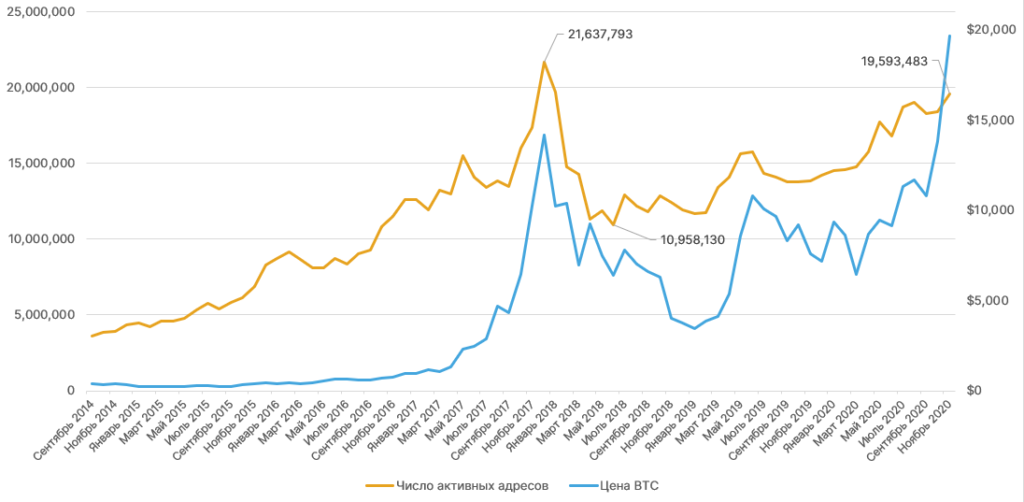
Dynamics of the number of active Bitcoin addresses. Data: Glassnode.
In November, the broader trend of shrinking balances on centralized exchanges (CEX) continued. Over the month, the figure fell by 3%, and since the start of the year by 17%.
As of December 1, 12.94% of the total Bitcoin supply was held on centralized exchanges.


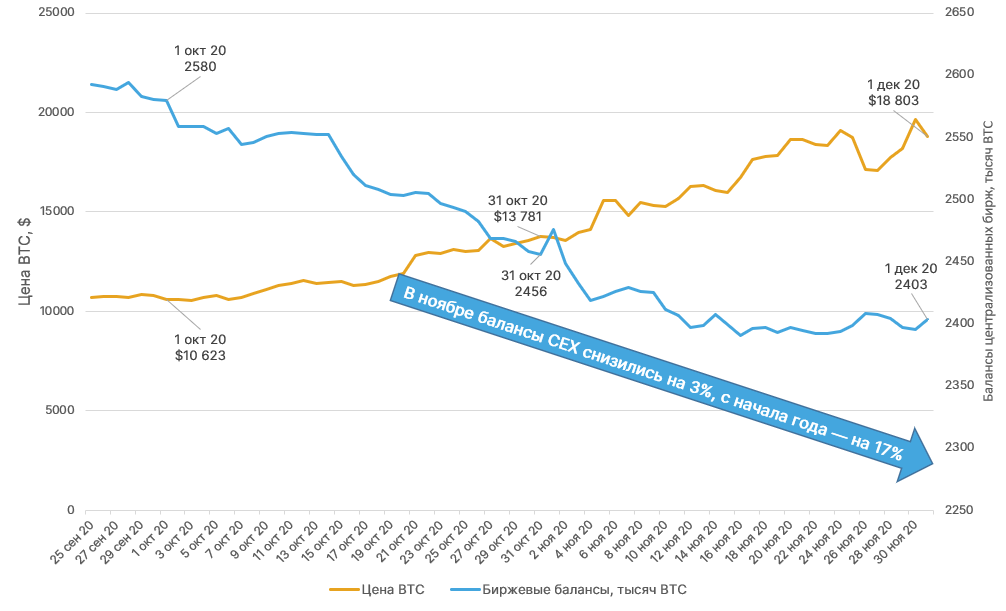
Bitcoin price and the dynamics of centralized exchange balances. Data: Glassnode, Yahoo Finance.
On November 24, Bitcoin rose for the first time in 2020 above $19,000. On the subsequent correction, prices fell below $17,000.
On November 30, the price of the leading cryptocurrency reached a new all-time high, surpassing $19,686.
Subscribe to ForkLog’s channel on YouTube!