



Following the latest adjustment, the difficulty of mining the leading cryptocurrency increased by 1.99%, reaching a record level of 88.1 T.


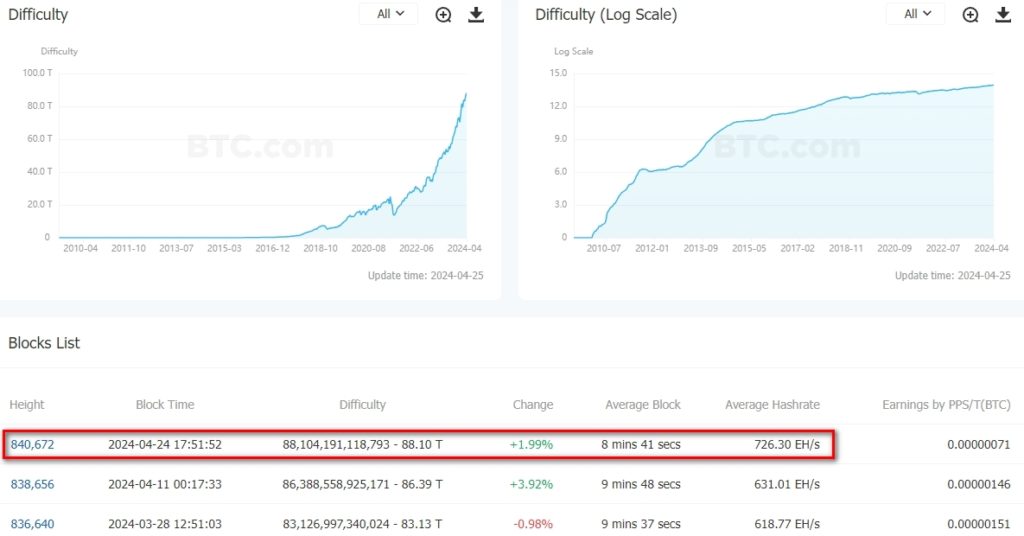
The average hash rate since the previous change was 726.3 EH/s.
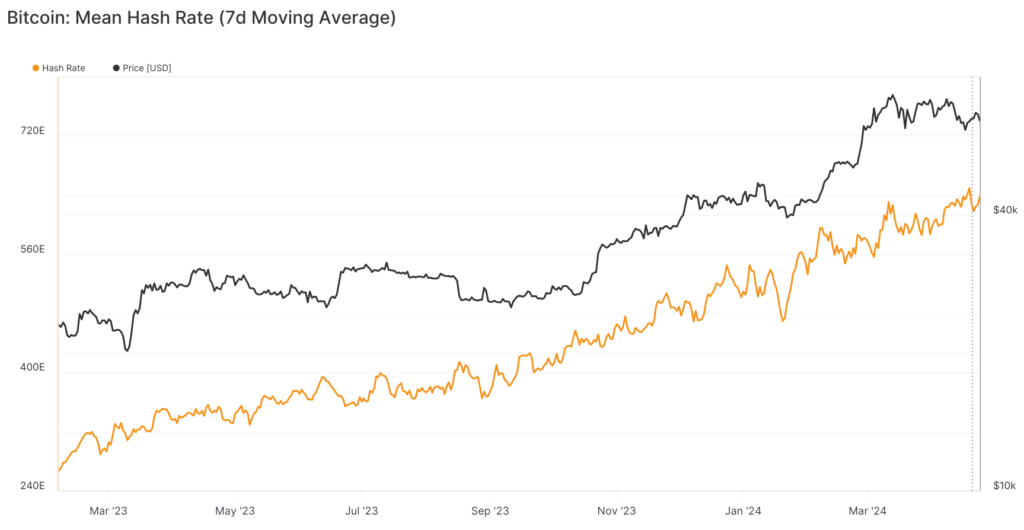
According to Glassnode, the smoothed 7-day moving average reached a peak of 649.6 EH/s on the eve of the halving on April 20. After the block reward reduction, it slightly adjusted to 638 EH/s.


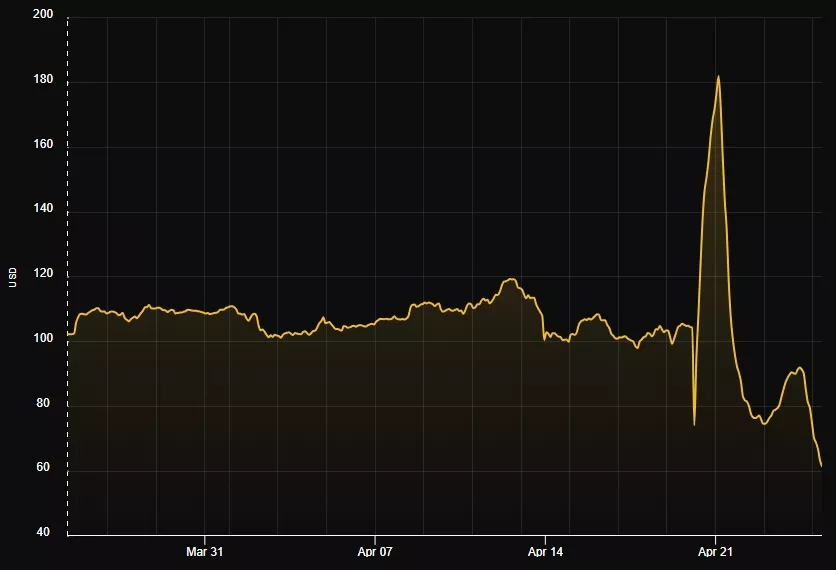
Data from Hashrate Index indicates that the hash price fell to $61.5 per PH per day. Before the halving, it hovered around $110, showing significant volatility during the event.


The increase in difficulty will exert additional pressure on mining profitability. According to calculations by CryptoQuant CEO Ki Young Ju, the cost of mining one bitcoin with an Antminer S19 XP will be approximately $80,000. A similar estimate was provided by Hashlabs Mining co-founder Jaran Mellerud for the Antminer S19J Pro—$75,000. Both experts based their assessments on the US market, where mining costs, including hosting, reach $0.08 per kWh.
At the time of writing, digital gold is trading at $63,950, having gained 4.5% over the past week (CoinGecko). In early April, Marathon CEO Fred Thiel suggested that the market had already priced in the halving, and the event would not significantly impact prices.
Marcus Thielen, Head of Research at 10x Research, warned of the risk of potential sell-offs by miners of accumulated bitcoin reserves following the block reward reduction. The expert noted that historically, exponential price growth for the cryptocurrency began six to eight months after a halving. Until then, miners might resort to selling reserves worth around $5 billion to sustain operations.
Back in March, miners earned a record $2 billion, with fees accounting for $85.8 million of the total.