



The latest recalibration has seen the difficulty of mining the leading cryptocurrency rise by 3.92%, setting a new high at 86.39 T.


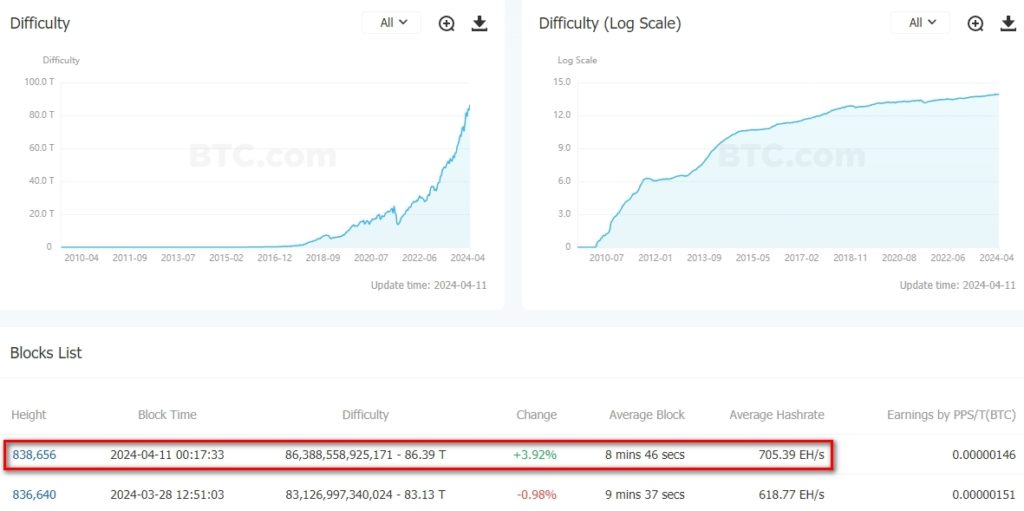
The average hash rate since the previous adjustment was 705.39 EH/s. The interval between blocks has shortened to less than nine minutes, compared to the protocol’s intended 10 minutes.
According to Glassnode, the network’s computational power, smoothed by a 7-day moving average, reached a peak of 630.8 EH/s on March 11. After a period of correction, it has once again approached this record level, currently standing at 629.12 EH/s.


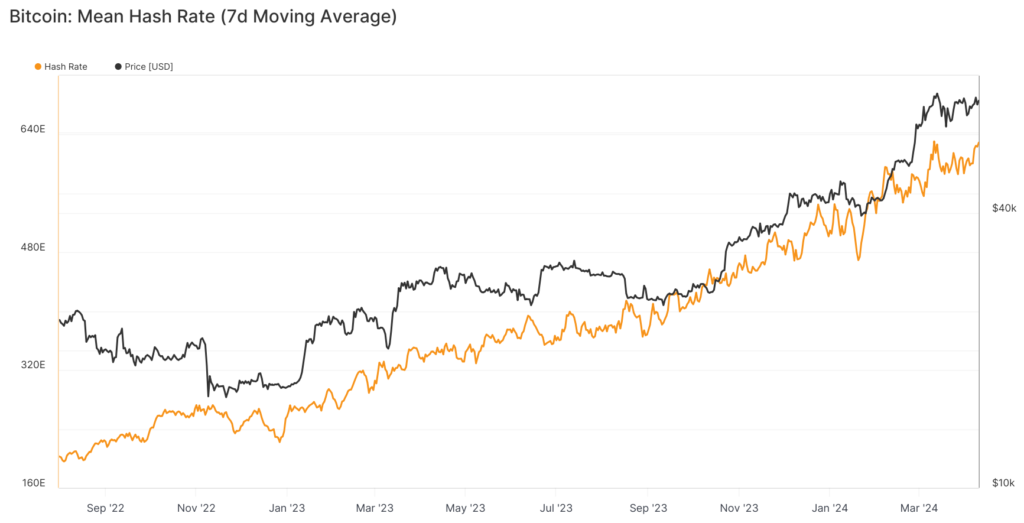
This difficulty adjustment is the last before the anticipated Bitcoin halving on April 20.
The halving, which reduces the reward by half, has historically led to a decrease in hash rate as miners shut down unprofitable equipment to avoid losses.
Experts at Galaxy Digital have estimated a potential reduction in capacity of 15-20%. Jaran Mellerud, co-founder of Hashlabs Mining, believes the hash rate could drop by 5-10%.
His former colleagues at Hashrate Index are more optimistic, predicting a decline of 3-7%.
According to the service, as of April 11, the hashprice reached a weekly high of $113.5 per PH per day.


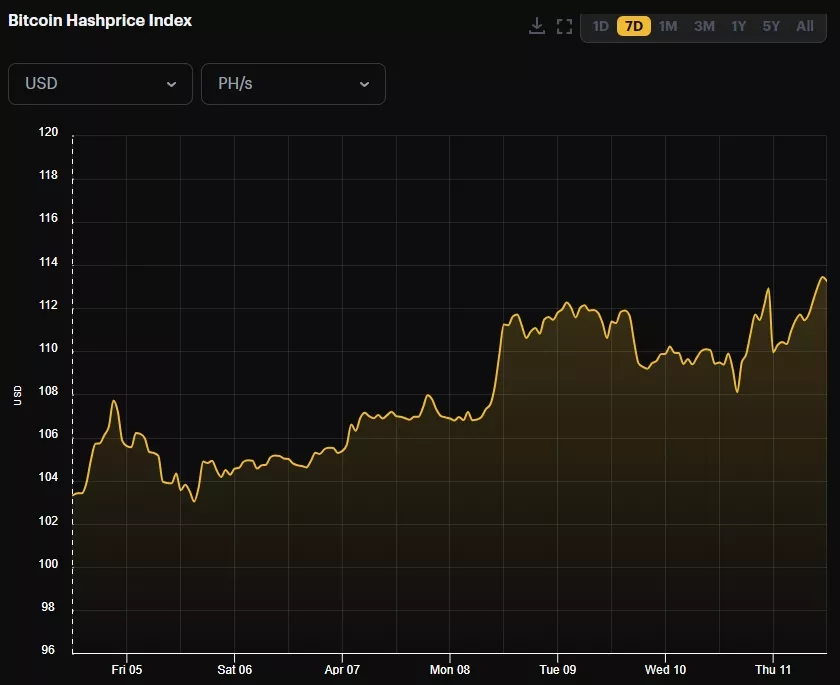
The indicator rose alongside Bitcoin’s price recovery to levels above $70,000 (CoinGecko). The cryptocurrency recently fell below $68,000 amid the release of U.S. consumer inflation data.
Earlier, Fred Thiel, head of mining company Marathon, expressed confidence that the upcoming halving is already factored into Bitcoin’s price.