




- The ratio of bitcoin options positions suggests a rise in the price of digital gold.
- Macroeconomic factors support an upward trend.
- Traders’ expectations for Ethereum options have become less optimistic.
The ratio of call and put options on bitcoin indicates traders expect a spot price of $70,000-$100,000 by the end of 2024, according to CoinDesk analyst Omkar Godbole.
The first cryptocurrency’s quotes returned to levels above $63,000 amid the Federal Reserve’s decision to maintain the key rate. Disappointing non-farm employment data in the US contributed to the recovery of digital gold, the expert noted.
“We are seeing some bullish movement in volatility and rates after a reversal bounce on Friday and over the weekend. Calls have become more expensive than puts, with demand for the former with strikes in September ranging from $75,000 to $100,000,” states a report by QCP Capital.
Experts at Paradigm confirmed the above conclusions, noting market participants’ expectations of growth. For instance, one trader closed a call position with a strike price of $200,000 on March 25 and opened a contract with a strike at $85,000 expiring in July.
According to Deribit, traders have opened record positions worth $688 million with an execution price of $100,000 and various expiration dates. This represents the largest open interest in terms of value levels on the exchange.


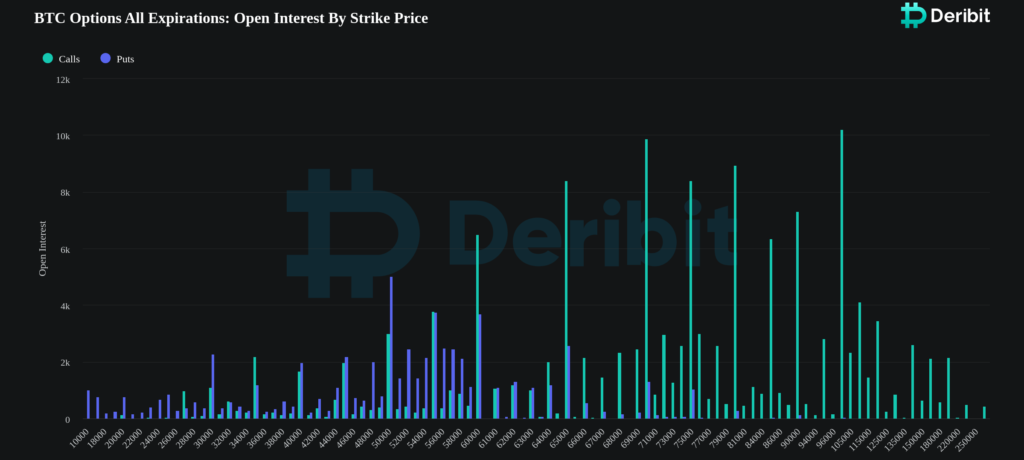
Analysts Optimistic About BTC
Relying on fundamental indicators and technical metrics, experts express confidence in the prospects of the first cryptocurrency.
“Bitcoin continues to be supported by the current US election cycle and deficit financing. Therefore, we adjusted our ‘critical threshold’ from $68,300 to $62,000 in our May 3 report. Above this mark, the market remains bullish,” wrote 10X Research.
Swissblock Insights noted that the dollar index (DXY) is in a defensive position, as defined by Federal Reserve Chairman Jerome Powell.
Experts pointed out that the DXY value decreased by 1.2%, which historically favours risk assets like cryptocurrencies.
“The weakening of the dollar is likely to persist as long as economic data supports this trend and Fed representatives do not begin to counter Powell’s position. The labour market shows signs of weakening, but the most aggressive voices within the regulator may push to maintain high rates for an extended period, which could affect the movement of the US currency,” specialists noted.
Ledn’s Chief Investment Officer John Glover, based on Elliott wave theory, suggested a rise in the first cryptocurrency to $92,000. Ralph Elliott, the concept’s author, visually identified the development of trends in the stock market in five stages. If the first, third, and fifth phases are waves representing the main trend, then the second and fourth show temporary pullbacks.
“BTC’s price movement continues to follow my expected path for the fourth wave, as seen on the chart. Although a drop to $56,000 may have completed the correction, I still expect to see a price of $52,000-55,000 before the stage concludes,” the analyst believes.
Ethereum’s Implied Volatility Rises
According to analysts, the degree of uncertainty regarding the future price of the second-largest cryptocurrency by market capitalization is higher than that of bitcoin in the context of implied volatility (IV).
According to The Block’s dashboard, bitcoin’s IV fell from 72% to 55% after the halving. For ether, the metric’s decline was less significant—from 76% to 65%.


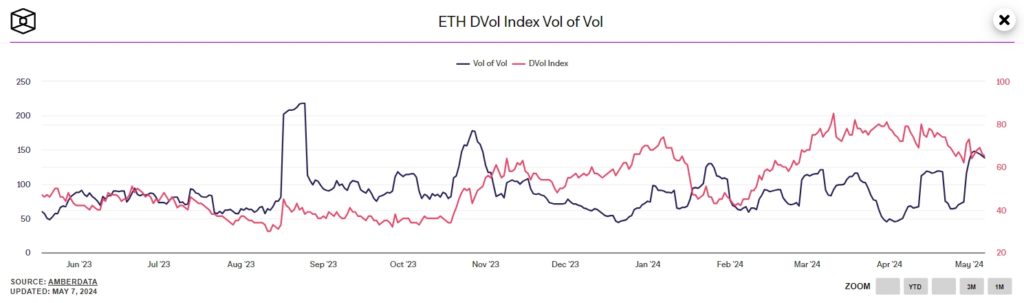
Bitfinex noted traders’ uncertainty regarding Ethereum options due to the summer lull in the market.
According to QCP Capital, the degree of positivity in traders’ sentiment for ether options is lower than for bitcoin. Put contracts are more expensive than calls, indicating bearish market sentiment.
“Ethereum options reflect concerns that the SEC will not approve the deadlines for spot ETFs from VanEck and Ark21 on May 23 and 24,” experts noted.
Earlier, trader and analyst Rekt Capital suggested that bitcoin had reached a local bottom at $57,000 and entered an accumulation phase.