




On May 16, following the release of macroeconomic data in the United States, the leading cryptocurrency surpassed the $66,000 mark, gaining nearly 7% in a day. ForkLog reports on the market’s condition and shares insights from consulted experts.
At the time of writing, Bitcoin is trading at $66,240, with a market capitalization of $1.3 trillion and a dominance index of 56.11%.


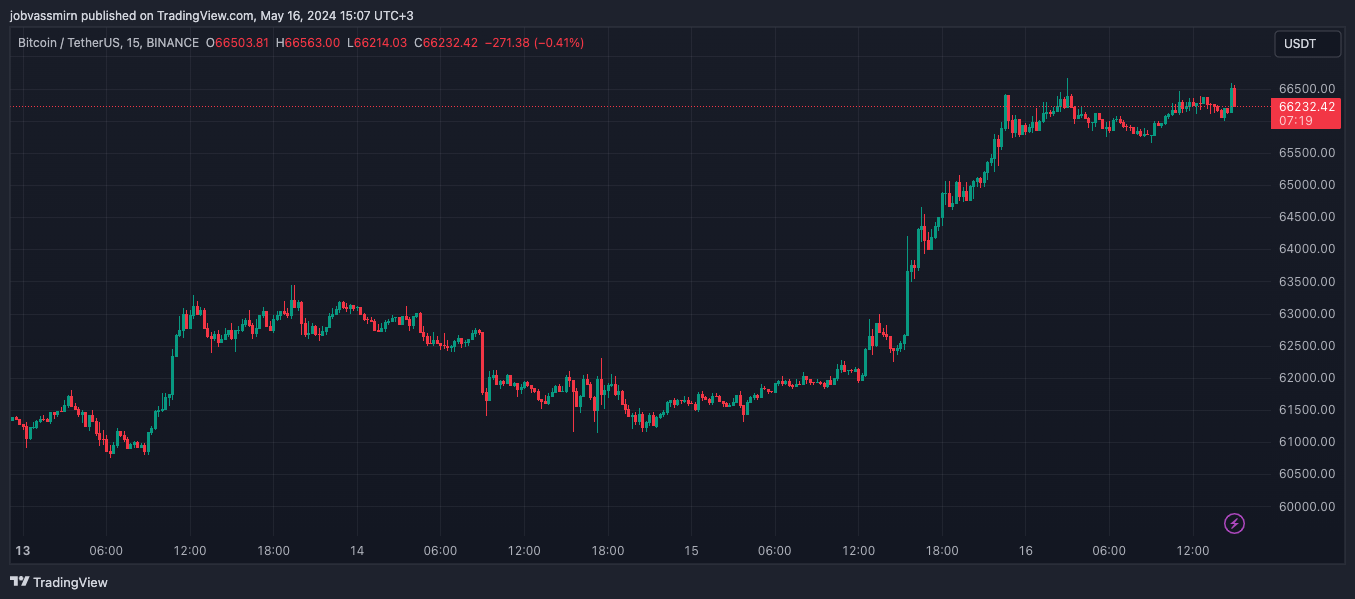
Other top-10 cryptocurrencies entered the “green zone,” except for BNB (-2.9%).

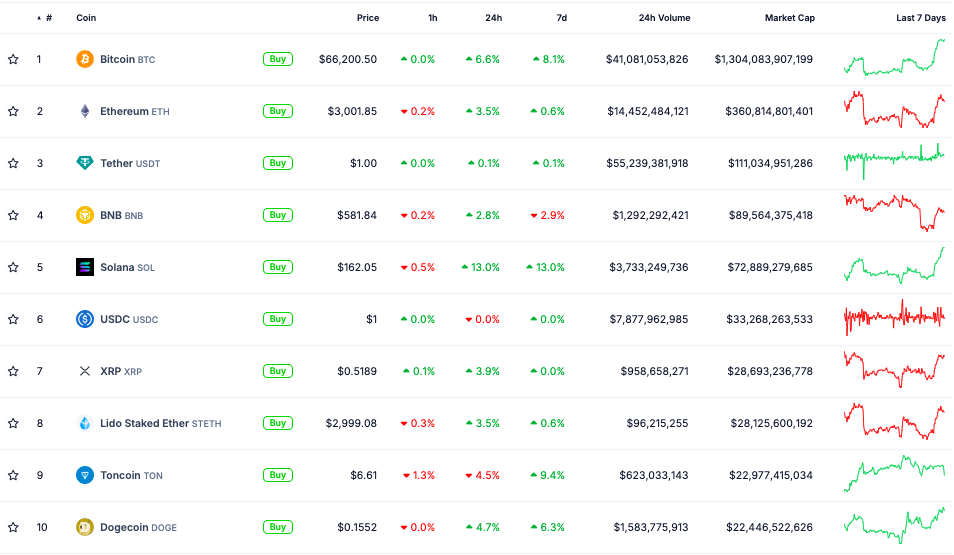
Ethereum also surpassed the $3000 mark, closely mirroring the dynamics of digital gold.
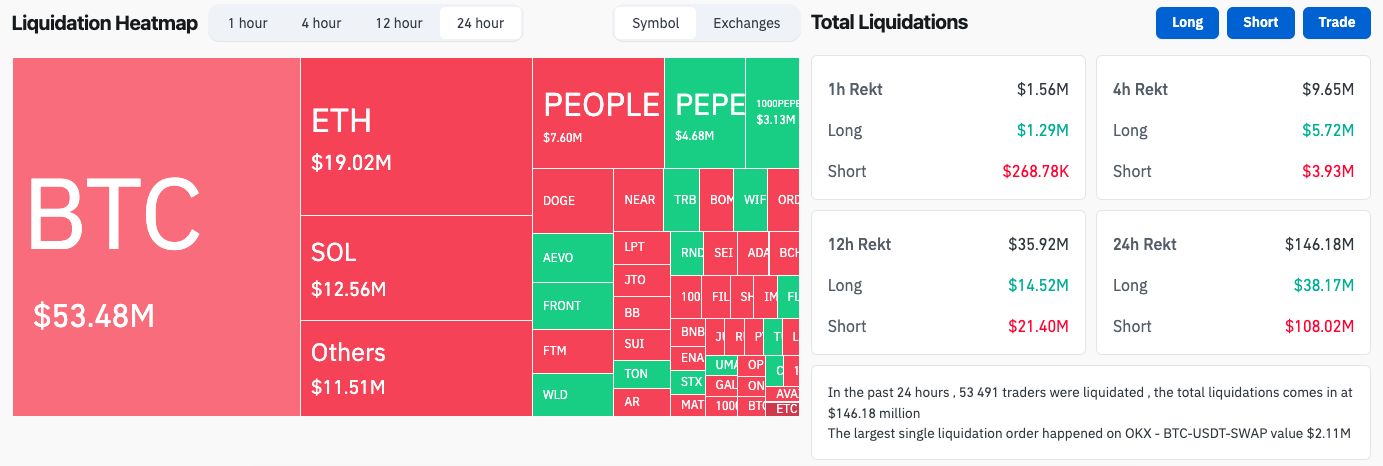
According to Coinglass, the market saw $146 million in liquidations over the past day, with $108 million in short positions.

CryptoQuant analysts noted an impending liquidity surge driven by the influx of “stablecoins.”
Incoming Liquidity Surge
“Stablecoin inflows suggest a substantial increase in liquidity entering the market, which can affect #Bitcoin‘s supply and demand dynamics and potentially lead to increased price volatility.” – @Woo_Minkyu
Link ?https://t.co/re2rTMytuf
— CryptoQuant.com (@cryptoquant_com) May 16, 2024
“Stablecoin inflows suggest a substantial increase in liquidity entering the market, which can affect Bitcoin’s supply and demand dynamics and potentially lead to increased price volatility,” the publication stated.
Expert Opinions
Trader Artem Zvezdin told ForkLog that the effect of Bitcoin’s halving has already begun to take hold:
“At the moment, the correction has ended, and further growth of the leading cryptocurrency can be expected due to the reduction in supply from the halving of miners’ rewards.”
According to him, the market downturn was driven by the classic trading strategy of “buy the rumor, sell the fact,” which investors executed after the halving.
Trader and author of the Telegram channel Coenplus, Vladimir Coen, noted that for over a month, Bitcoin has been trading within a broad range of $58,000 to $67,000. In his observations, the coin’s dynamics in May “clearly coincided with [the release of] data in the U.S.”
Throughout the month, there was a significant decline on forecasts of rising inflation from the University of Michigan and a sharp increase following the release of consumer inflation figures, the interlocutor emphasized.
“An interesting trend has emerged: after five days of growth, there are six to eight days of decline, during which optimism in the crypto market sharply falls. However, this year, when the fear and greed index hits its lowest levels, there is a rapid rise on certain news,” Coen observed.
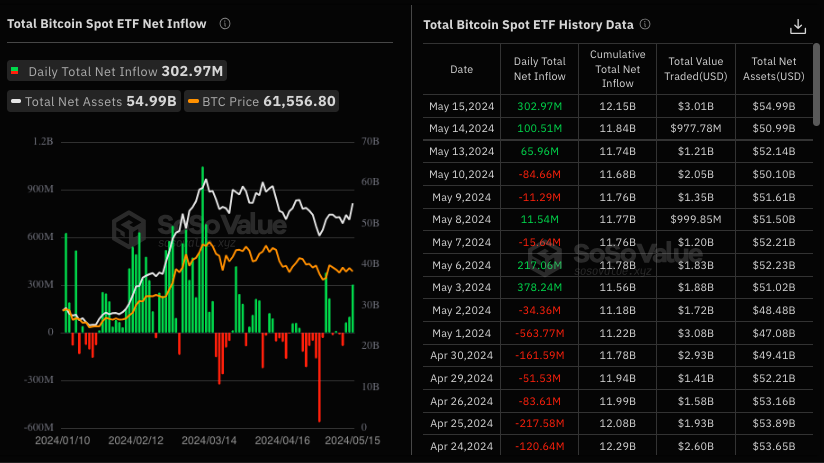
Among positive factors, he also highlighted the resumption of inflows into spot Bitcoin ETFs and the decline of the dollar index.

Zvezdin noted that digital gold reacts first to positive signals, followed by other cryptocurrencies.
“Demand flows from Bitcoin to altcoins, and nothing changes here. As long as it is not overbought, significant growth in altcoins is not expected. But when the asset approaches the $80,000 mark, we will likely see confident dynamics in Ethereum,” the expert added.
Coen pointed to a decline in global interest in the leading cryptocurrency, as evidenced by minimal new addresses and transactions on the network.
Bitcoin needs to close this week above the $66,000 level, the expert believes. This would provide potential for further growth, but in the $69,000-72,000 range, there remains a “huge volume of supply.”
Coen clarified that without additional drivers and liquidity inflows, the asset has little chance of rising above $70,000.
“The bullish trend is intact. Bitcoin just rose too quickly, and now a natural correction is occurring,” he noted.
According to Coen, Ethereum is “under the influence of rumors” about its recognition as a security by the SEC. Negative pressure on the coin is also exerted by the low chances of spot ETH-ETFs appearing in May and its increased issuance, the speaker emphasized.
“About 80% of major Ethereum holders are in profit and are gradually selling off their reserves. If Ether fails to consolidate above the $3200 level this week, the decline will continue. Demand from major players is in the $2300-2600 range,” Coen concluded.
Earlier, analysts at Standard Chartered stated that Bitcoin had reached its bottom within the correction, confirming a target of $150,000 by the end of the year and $200,000 by the end of 2025.
Former BitMEX CEO Arthur Hayes suggested that digital gold could surpass the $60,000 level and move towards $70,000 by the end of August.