




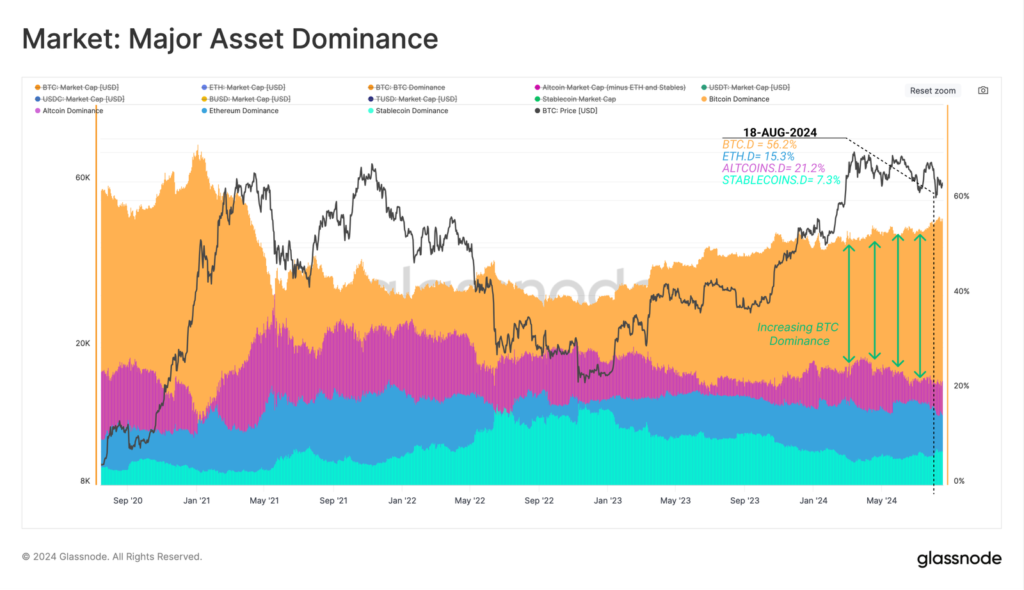
The dominance of the leading cryptocurrency has surpassed 56%, driven by the steadfastness of long-term investors amid market turbulence, according to a report by Glassnode.
#Bitcoin, as the leading digital asset, continues see its dominance expand, now commanding a staggering 56% of the total market capitalization.
Supporting this, Bitcoin Long-Term Holders remain steadfast in their conviction, with significant accumulation pressure below the… pic.twitter.com/RQqSiHzexB
— glassnode (@glassnode) August 20, 2024
Since the end of the bear cycle in November 2022, the market structure has changed as follows:
- Bitcoin’s dominance has increased from 38.7% to a “staggering” 56.2%;
- Ethereum’s share has decreased by 1.5% — from 16.5% to 15.2% — remaining relatively stable over the past two years;
- Stablecoins have experienced a more pronounced decline of 9.9% — from 17.3% to 7.4%;
- The altcoin sector has seen significant losses of 5.9% — from 27.2% to 21.3%.


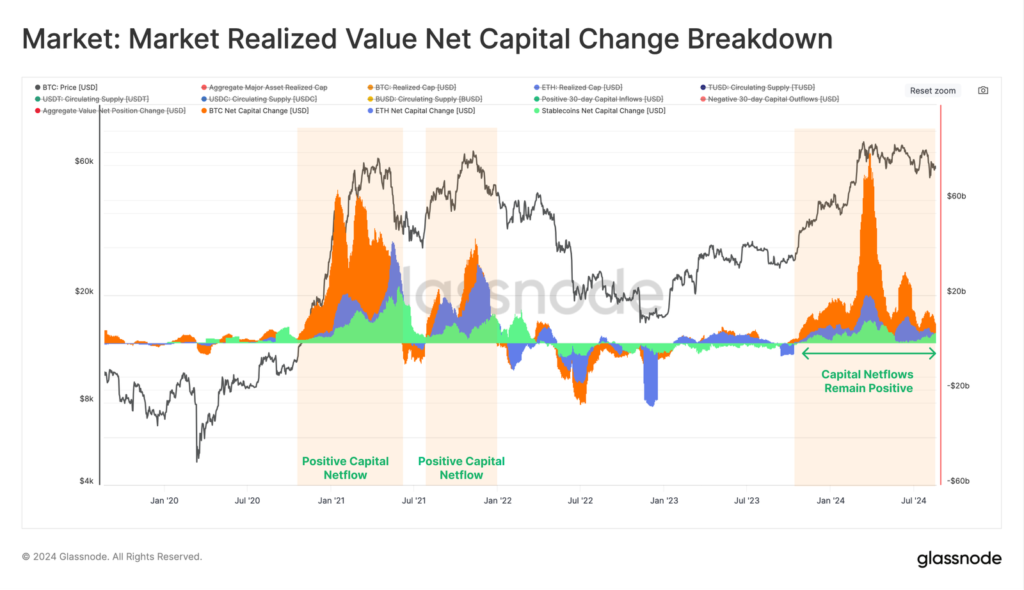
An analysis of net capital change shows positive shifts for Bitcoin, Ethereum, and stablecoins. Only 34% of trading days saw a more significant 30-day inflow of US dollar-denominated capital. This trend persisted despite a correction following the ATH in March.
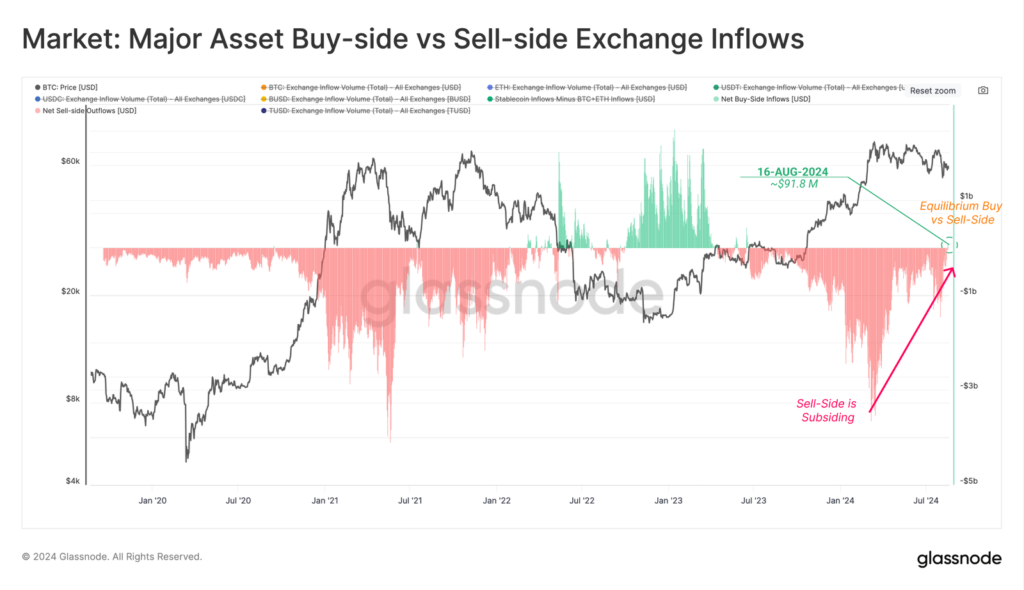
Next, analysts used the Buy-Side vs Sell-Side metric to identify shifts in capital dynamics for Bitcoin and Ethereum combined.
The metric can be considered within the following frameworks:
- Values close to zero suggest a neutral mode, where buyer inflows are equal to seller inflows.
- ? Positive values indicate a net buying mode, where stablecoin inflows exceed the combined values from those selling the first and second cryptocurrencies;
- ? Negative values indicate a net selling mode, where stablecoin inflows from buyers do not offset the seller figures for Bitcoin and Ethereum.
After the ATH in March 2024, selling pressure eased, specialists noted. Currently, the first positive values since June 2023 have been recorded ($91.8 million/day).
Long-Term Investors
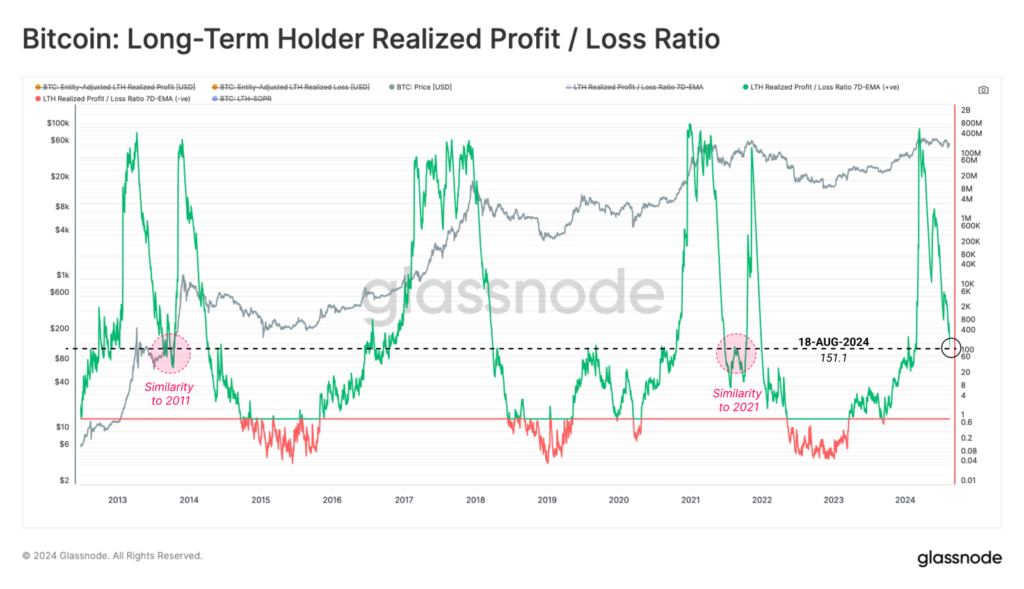
Amid recent market turbulence, the daily volume of realized profits by long-term investors reached $138 million. In each transaction, buyers and sellers are on equal footing, and any demand-supply imbalance is resolved through price changes, specialists explained.
From this, they concluded that $138 million is the amount needed to absorb supply and maintain stable prices.
According to analysts, despite the unsettled market situation, prices have remained unchanged over the past few months, indicating a certain equilibrium has been reached.


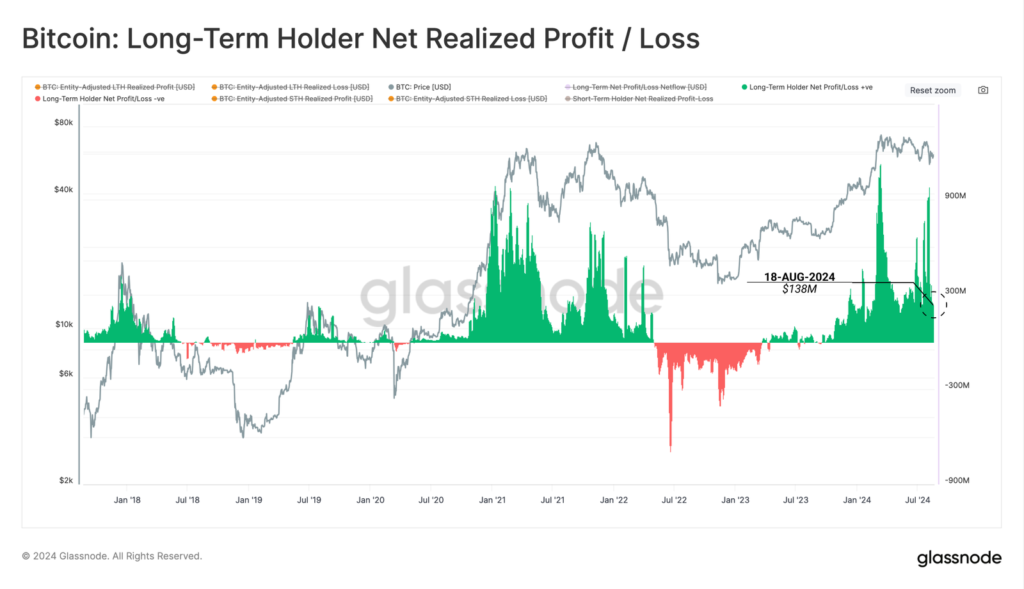
The realized profit/loss ratio for holders remains elevated, though it has significantly decreased from its peak. This suggests that this market participant category is becoming less inclined to lock in profits.
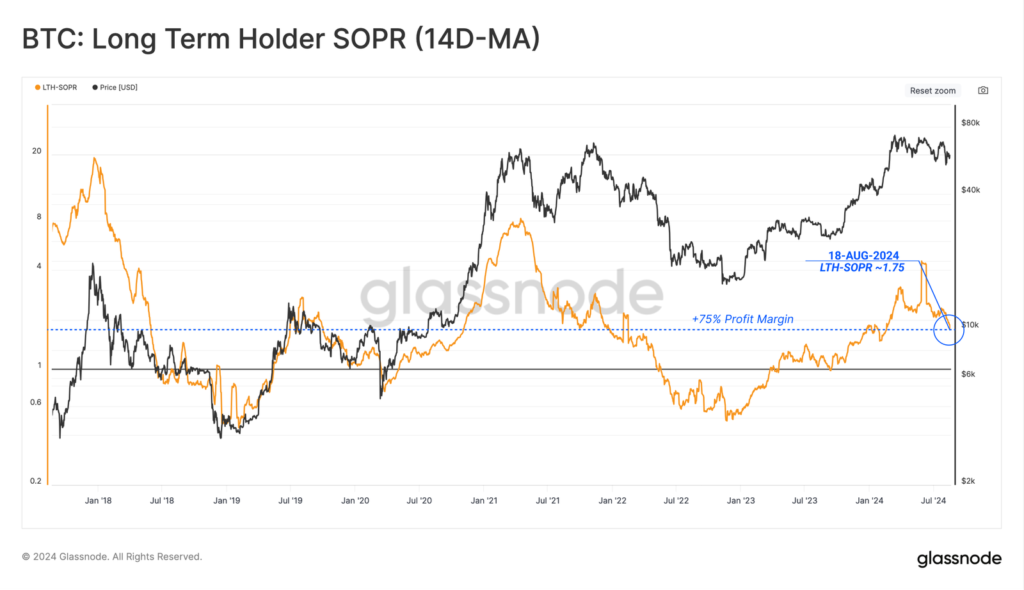
In terms of SOPR, the average profit for holders is 75% and remains high.
Short-Term Investors
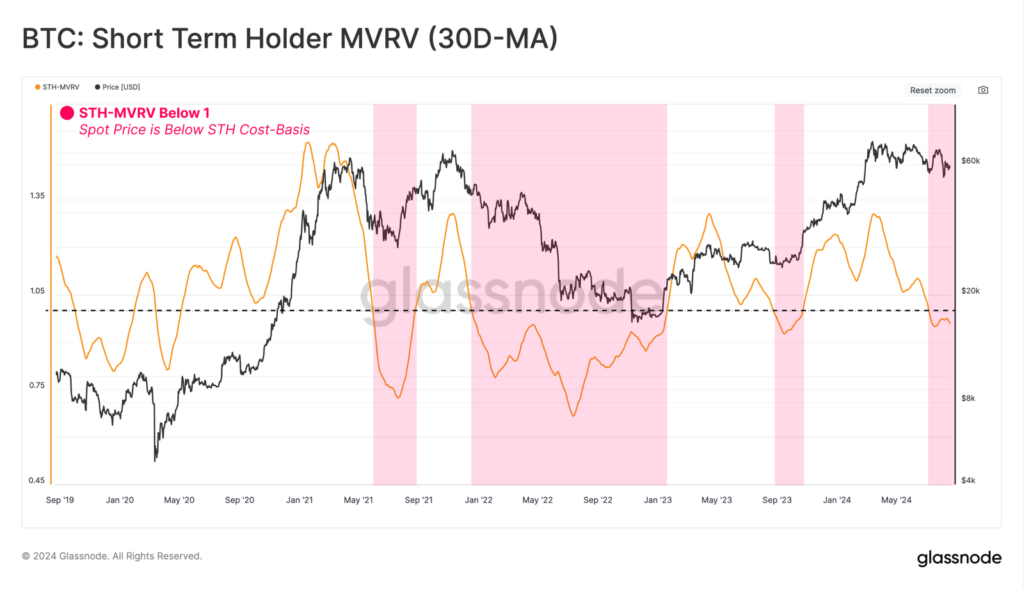
Using the MVRV Ratio metric for speculators with a 30-day average, experts measured the degree of their characteristic unrealized financial stress. The corresponding ratio fell below the equilibrium value of 1.0, indicating that the average new investor is now experiencing unrealized losses.
Such periods of short-term unrealized losses are common during bull runs. However, prolonged periods when the indicator falls below 1.0 can increase the likelihood of investor panic and precede a more severe bear market trend, specialists explained.
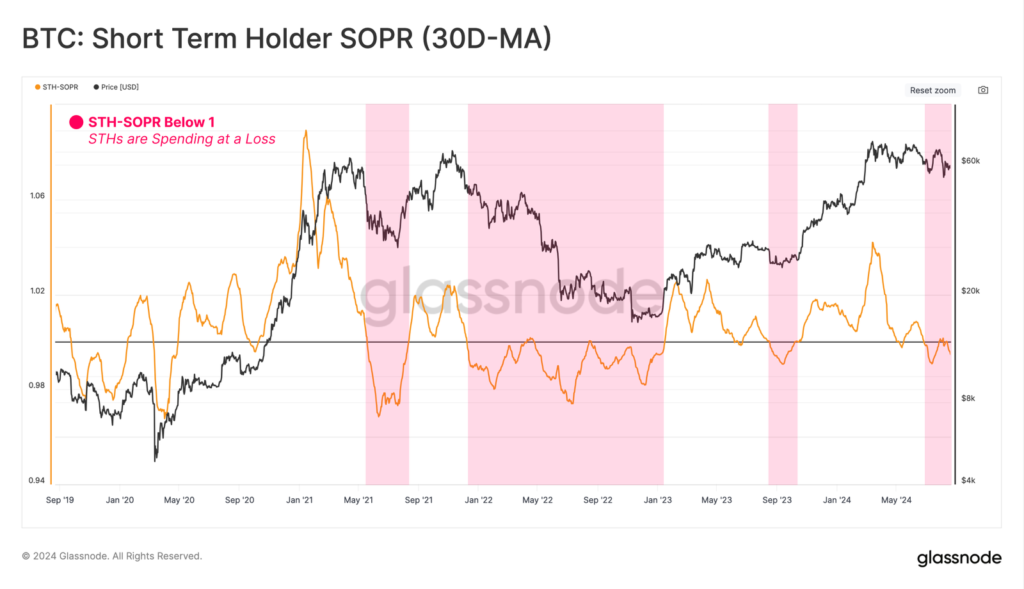
As unrealized losses grow, the expectation that speculators will eventually capitulate and spend acquired coins increases. Such periods of significant losses realization by new investors occur when SOPR falls below the equilibrium value of 1.0.
These circumstances are characteristic of the current situation. In other words, the market is at a decision point, experts noted.
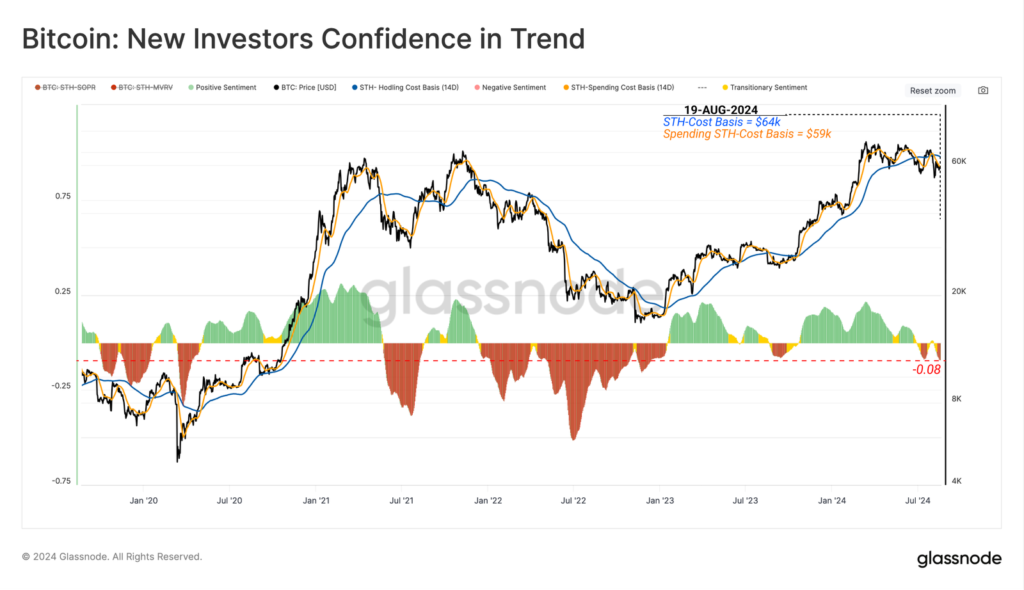
The chart below compares the average purchase cost of coins by new investors who succumbed to emotions and exited their positions with those who continue to hold. Based on the analysis of the spread between the two values, analysts concluded that a moderate overreaction occurred when the price fell below $50,000.
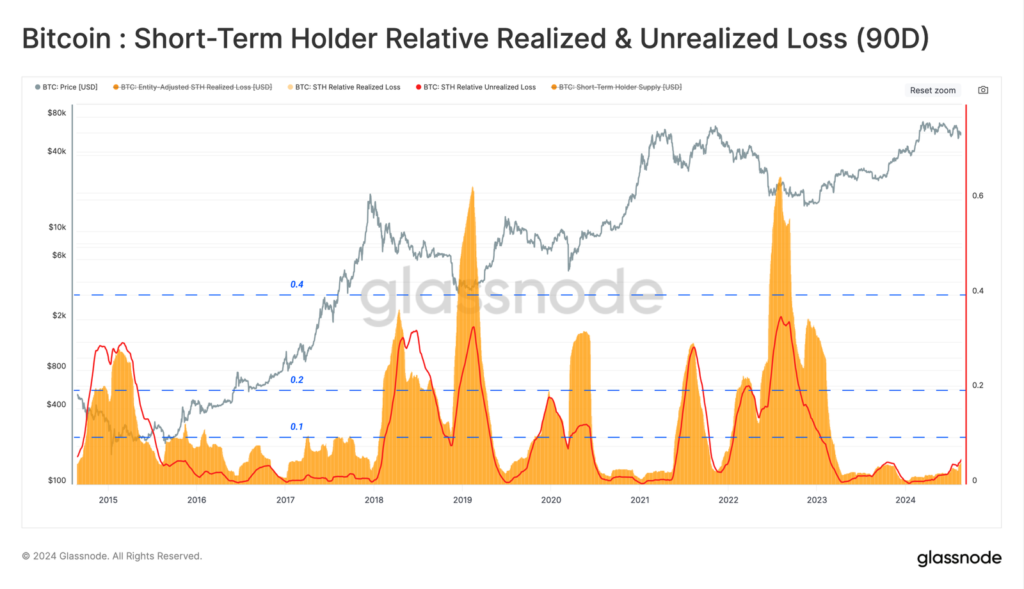
In conclusion, analysts compared the 90 DMA of realized and unrealized losses for speculators. According to specialists, during the formation of cyclical price lows, the magnitude of the two values fluctuates between 10% and 60% relative to the total capital of short-term investors.
Currently, neither metric has reached even the lower boundary of this range. Experts found similarities between the current structure and the 2016–2017 cycle. Based on this, they emphasized that the impact on market sentiment may not be as severe as it might appear at first glance.
As experts have noted, after the wave of long position liquidations, conditions have emerged for Bitcoin to return to its ATH. They believe this will occur after the US elections due to a liquidity influx.
Earlier, former BitMEX CEO Arthur Hayes described the leading cryptocurrency as a more reliable safe-haven asset than gold, due to the absence of national control.