




Digital gold is ending November in the red despite favourable historical seasonality. Bitfinex analysts reckon demand for the asset could return soon.
November is traditionally bitcoin’s strongest month, with an average return of 40.95%. This year, however, prices have fallen by more than 23% month-to-date. October also closed down 3.69%.


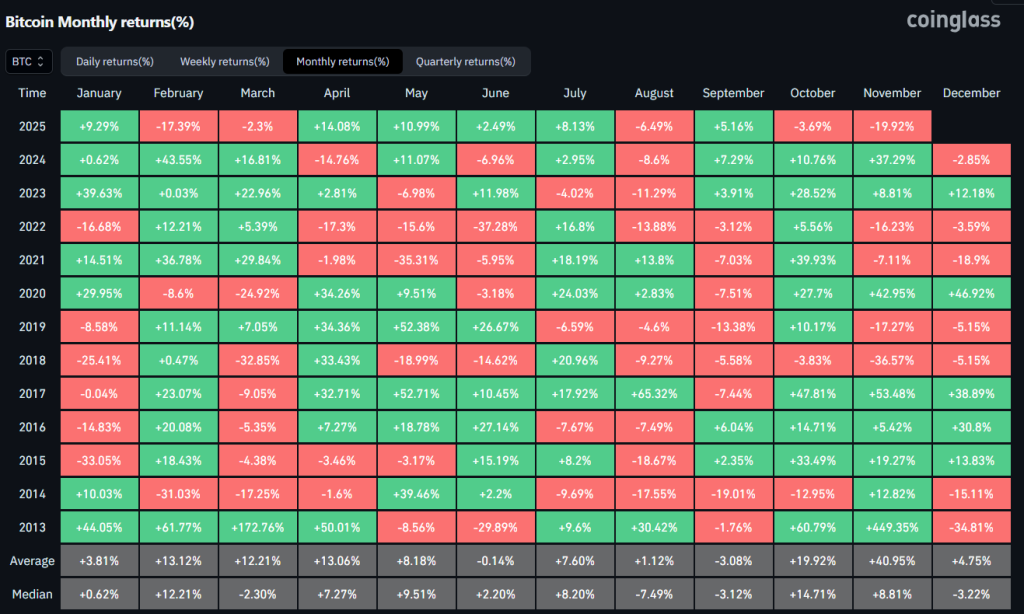
Bitfinex notes that seasonal metrics have not worked this quarter. At the time of writing, bitcoin trades around $87,500.


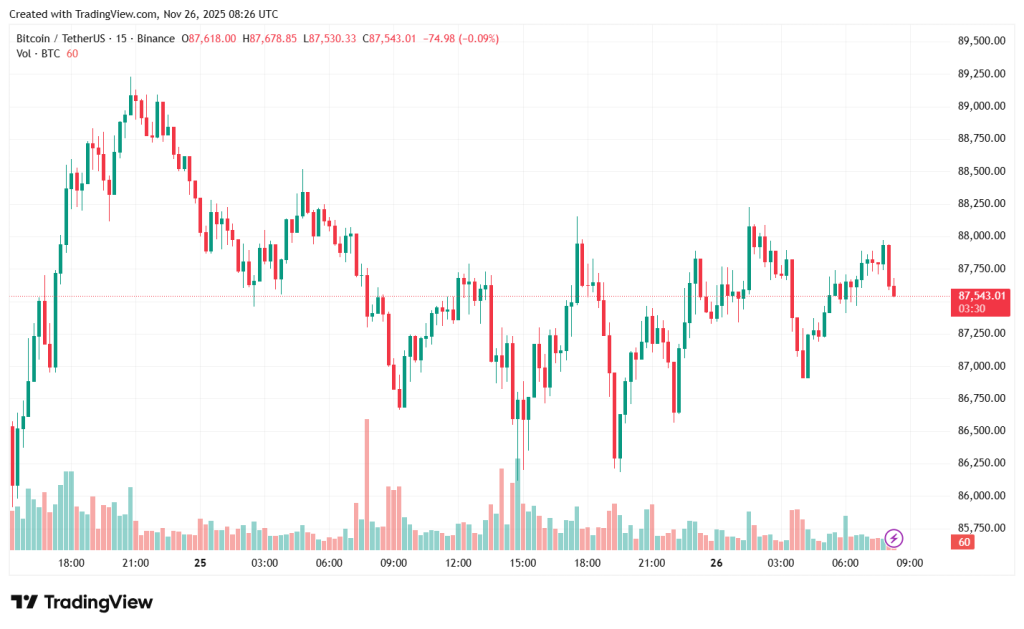
According to CoinGlass, the asset’s price has fallen below the realised price of short-term holders—investors who own coins for fewer than 155 days. Analysts noted this is only the third time since the start of 2024.
Experts attribute the decline to an overheated market. Buying between $106,000 and $118,000 was ‘abnormally active’. That cohort is now ‘capitulating and locking in losses’.
Bitfinex stressed the market faces two paths: a significant rebound in demand or a long, deep accumulation phase.
A macro asset class
The digital-asset industry is shifting from a venture-style model to a traditional tradable macro asset class, Zero Hedge reported, citing a JPMorgan note.
JPM: “Crypto is moving away from resembling a venture capital style ecosystem to a typical tradable macro asset class supported by institutional liquidity rather than retail speculation… One speaker noted that it could potentially reach $240k over the long term, thus indicating… pic.twitter.com/1dtHzegemu
— zerohedge (@zerohedge) November 25, 2025
Institutional liquidity, supplanting retail speculation, is the key driver, the experts said.
One bank speaker suggested the asset’s price could reach $240,000 in the long run.
A signal for upside
A shift of funding rates into negative territory signals trader capitulation and changing sentiment, said an analyst using the pseudonym Darkfost.
It seems that the investors who tried to long during this correction have finally been squeezed ou 🫠
💥 Funding rates have calmed down and even turned negative, which sends a strong signal that investor behavior is shifting.
They waited for BTC to correct more than 30% before… pic.twitter.com/HvIZtizjhp
— Darkfost (@Darkfost_Coc) November 25, 2025
According to the expert, investors who went long during the correction were forced to close. Participants began shorting bitcoin aggressively only after the price fell by more than 30%.
Darkfost recapped funding mechanics:
- 0.01% is considered neutral (the standard rate on Binance);
- a drop below 0.01% indicates sellers dominate;
- negative readings signal strong dominance of short positions.
The analyst noted that, historically, such shifts occur when a correction is nearing completion. Traders try to join the downtrend too late.
He believes the market may enter a ‘disbelief’ phase. If the leading cryptocurrency starts to recover as shorts build, that could trigger short liquidations and accelerate the price rise.
Risks for bitcoin
Alphractal analysts recorded a sharp decline in the annualised Sharpe ratio of the leading cryptocurrency. The indicator points to weaker risk-adjusted returns in the short term.
📉 BTC Sharpe Ratio Drops Sharply — Signaling a Less Efficient Market in the Short Term
The annualized Sharpe Ratio for Bitcoin has fallen sharply once again, and this brings an important signal for anyone tracking the market through a professional lens.
The Sharpe Ratio… pic.twitter.com/G3ftPQkmH3
— Alphractal (@Alphractal) November 26, 2025
Earlier, the analyst known as MorenoDV drew attention to this. He noted that current readings do not guarantee a bottom but point to high potential future returns. For confirmation of a trend change, the indicator must turn higher.
Alphractal cited reasons for the drop:
- a volatility spike after a series of sell-offs;
- a partial loss of gains accumulated over 12 months;
- rising systemic risks that weakened trend quality;
- market ‘noise’ from aggressive whales and margin traders.
Similar dynamics were observed in 2019, at the 2021 peak and during the 2022 market capitulation. Historically, these patterns foreshadowed challenging periods in the short to medium term.
When the Sharpe ratio structure breaks down, bitcoin’s price typically enters a prolonged range or faces additional corrections. Rebuilding a durable trend takes longer.
Alphractal noted the signal is locally bearish. Yet bull markets have always emerged after such ‘resets’ and participants’ reassessment of risk.
In November, the long-to-short ratio for the leading cryptocurrency on Binance exceeded 3.8. That points to traders’ belief in a bitcoin rebound.