



Bitwise CEO Sees Bitcoin as a Shield Against Iran’s Economic Collapse
Protests in Iran highlight Bitcoin's role in safeguarding savings, says Bitwise CEO.
Protests in Iran amid the collapse of the national currency have underscored the necessity of digital gold as a means of safeguarding savings, according to Bitwise CEO Hunter Horsley.
Economic mismanagement —
The story of the past, present, and future.
Bitcoin is a new way for the people to protect themselves. https://t.co/C8nWz4DPFN
— Hunter Horsley (@HHorsley) December 29, 2025
He described the situation in the country as a result of “economic mismanagement.” According to the expert, there is no single solution to overcome these difficulties, but Bitcoin is certainly one of the best ways for people worldwide to protect themselves from currency collapse.
“Economic mismanagement — the story of the past, present, and future. Bitcoin is a new way for people to protect themselves,” wrote the Bitwise CEO.
Cryptocurrency trading is permitted in Iran, but the rules for asset storage remain somewhat unclear.
Mining is strictly regulated, with authorities intensifying their crackdown on illegal cryptocurrency mining in the country. In November, 104 farms were shut down in Tehran alone, and 1,465 devices were seized.
What is happening in Iran?
In early December, the price of the Iranian rial plummeted to a record low in the history of the Islamic Republic — 1.2 million per US dollar.
By December 28, the national currency had fallen to 1.44 million per dollar. This led to a sharp increase in purchase prices for entrepreneurs, prompting shop owners and other businesspeople to take to the streets of Tehran. They were soon joined by ordinary citizens with political slogans; the protests became widespread and spread to other cities, reports Bloomberg.
Police harshly dispersed the protesters, using tear gas against them.
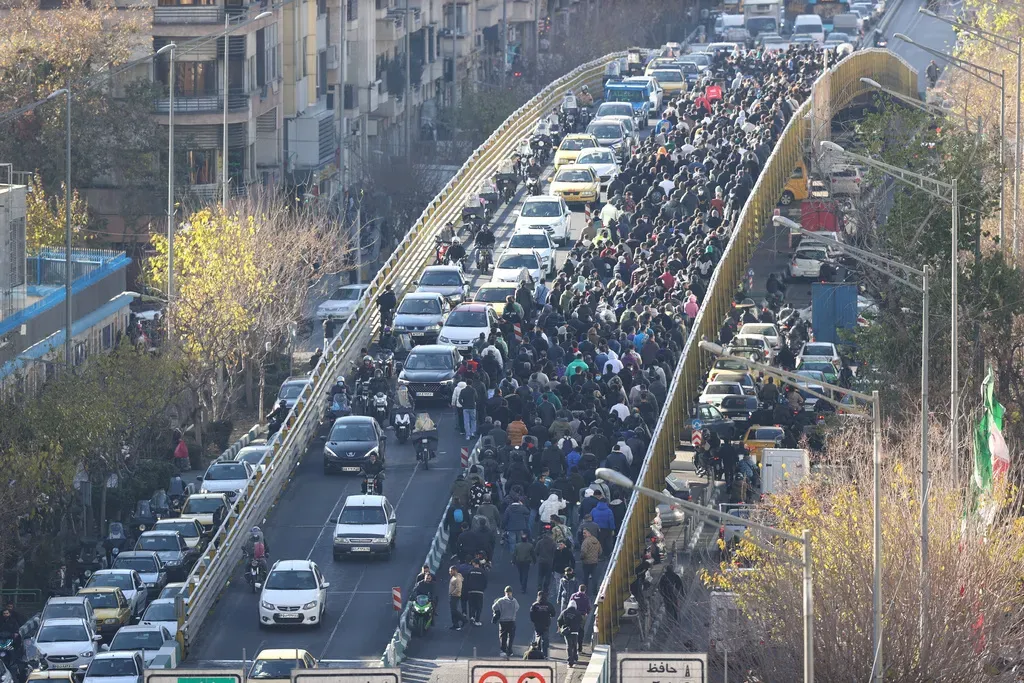
The exchange rate recovered to about 1.38 million, but the situation remains critical.
According to media reports, the government has already held an emergency meeting to discuss “currency, trade, and social policy.” Following this, it was announced that the head of the local central bank, Mohammad Reza Farzin, had resigned. He was replaced by former economy minister Abdolnaser Hemmati.
When Farzin took office in 2022, the rial was trading at about 430,000 per dollar.
Bloomberg highlighted that the crisis in Iran is rooted in US sanctions. Another blow to the economy was the war with Israel, noted the Financial Times.
According to the state statistical center, inflation in December rose to 42.2% year-on-year and 1.8% compared to November. Food prices jumped 72%, and health and medicine costs rose 50% compared to the same period last year.
Local media also reported that the government plans to raise taxes in the new Iranian year (beginning March 21). This has further concerned the country’s citizens.
Back in December 2025, Iranian authorities announced their intention to regulate cryptocurrencies to circumvent sanctions.
Рассылки ForkLog: держите руку на пульсе биткоин-индустрии!