




The decentralized finance (DeFi) sector has the potential to pull the industry out of its prolonged correction, according to Bitwise’s Chief Investment Officer Matt Hougan.
“Bear markets present enormous opportunities for those who are attentive. Right now, one is forming in DeFi,” the expert noted.
According to him, leaders in the segment have already become “serious businesses with real users.” Trading volumes on Uniswap regularly surpass those of Coinbase, and Aave generates over $100 million in annual revenue.


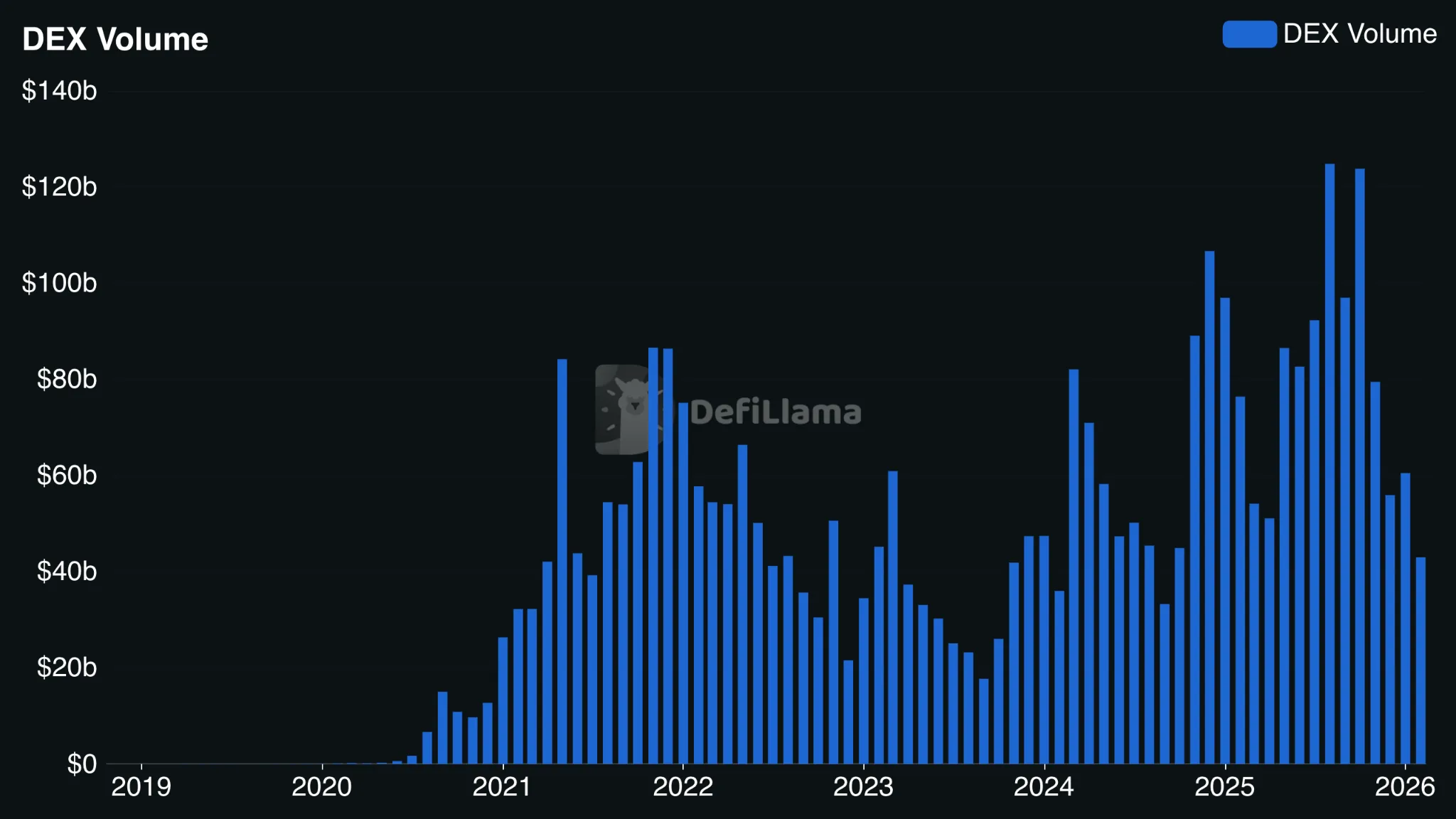
Recent changes in the governance of leading protocols and the influx of institutional investments indicate strengthening fundamentals in the segment. Hougan is confident that these will be the main drivers of the next bull market.
“Crypto investors are tired of promises; they want to see real users, revenue, and value. DeFi fits this description perfectly,” he stated.
A New Phase for DeFi
The chief event, according to Bitwise’s investment director, is a new governance proposal for Aave called Aave Will Win. Historically, DeFi tokens “have been poor investments.” Despite the development of many decentralized platforms, their governance tokens have significantly declined:
- over the past year, the price of AAVE has plummeted by 50%;
- UNI is trading at levels from five years ago.
The weak performance is largely due to regulatory pressure. At the time many projects were launched, the SEC took a tough stance, using the Howey Test to classify assets as securities.
To avoid scrutiny, developers intentionally deprived tokens of income rights. As a result, the market was flooded with “empty” governance tokens, economically disconnected from the success of the protocols themselves.
In Hougan’s view, the initiative by Aave Labs is a game-changer. It proposes that all revenue from products under the Aave brand will be directly funneled into the DAO treasury, owned by token holders. The deal also transfers intellectual property rights and revises the incentive system between developers and the community.
“Theoretically, every dollar of product revenue will go to the DAO. It will decide how to use the funds — for instance, to finance Aave development, buy back tokens, or create reserves,” the expert emphasized.
In this scenario, AAVE becomes the central economic asset of the ecosystem, while the development company becomes a service provider interested in the token’s growth.
The initiative sparked discussions within the community, but Hougan believes the trend towards strengthening tokenomics could transform the sector.
“Looking more broadly, a large picture emerges. AAVE — the second-largest DeFi asset — is transforming from a mere governance token into one whose holders have a clear right to protocol revenues. And if Aave can do it, so can other DeFi projects,” concluded Bitwise’s investment director.
Pressure on the Altcoin Market
The “alternative coins” sector is experiencing challenging times. Selling pressure has reached a five-year high, noted CryptoQuant contributor IT Tech.
Altcoin Sell Pressure Just Hit a 5-Year Extreme
“Retail is out. Smart money rotated. No institutional alt accumulation in sight. This is not a dip. It’s 13 months of continuous net selling on CEX spot.” – By @IT_Tech_PL pic.twitter.com/xtu8MIK0Fd
— CryptoQuant.com (@cryptoquant_com) February 18, 2026
In the last 13 months alone, the cumulative difference in buying and selling volumes of cryptocurrencies, excluding Bitcoin and Ethereum, has dropped by $209 billion.
Back in January 2025, supply and demand were balanced — the indicator was near zero. However, since then, continuous net selling has been recorded on centralized spot exchanges. The decline occurs amid a correction in digital gold, which at the time of writing is trading around $67,500.
The analyst highlighted structural changes in market participant behavior:
- retail investors have exited altcoin positions;
- “smart money” has rotated into other assets;
- institutional interest in accumulating “alternative coins” has vanished.
IT Tech believes that the situation cannot be described as a typical dip. The indicators signal not a bottoming out, but a factual absence of buyers in the altcoin segment.
As reported in Matrixport, Bitcoin selling pressure has eased. According to them, market sentiment has dropped to extreme lows.