




In October and November, the cryptocurrency market is expected to rebound following the resolution of macroeconomic and political uncertainties in the United States. This perspective was shared by Bitwise CIO Matt Hougan.
September has historically been the worst month for bitcoin’s performance, with an average price decline of 4.5%. In 2011, prices plummeted by 41.2%, the expert highlighted.


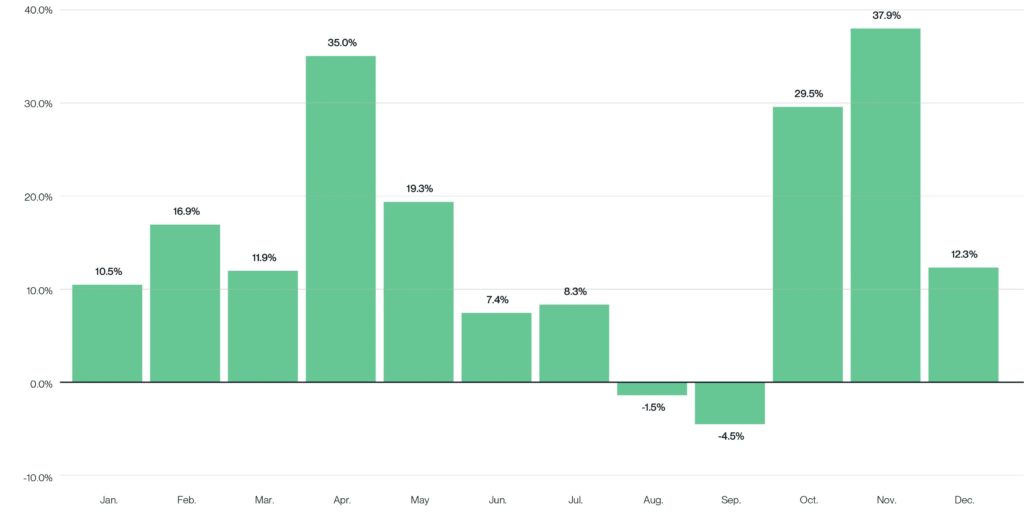
According to him, the “back-to-school blues” effect impacts all high-risk assets, including the leading cryptocurrency. For instance, in the first week of September this year, digital gold lost 7%, while the Nasdaq-100 index fell nearly 6%.
“Economists have attempted to explain this with various factors — a surge in volatility after the inactive summer months, mutual fund losses at the end of the fiscal year — but no one can pinpoint exact reasons,” Hougan wrote.
The digital asset industry faces additional pressure from the enforcement activities of the SEC. In September, the agency’s reporting period ends, prompting lawyers to close open cases, the expert noted. For the 2024 fiscal year, the Commission collected a record $4.8 billion from crypto startups, according to Social Capital Markets.
Hougan added to these seasonal factors the uncertainty in the markets caused by:
- the U.S. presidential elections;
- the timing and scale of the Fed‘s key rate cuts;
- a mixed picture of flows into spot bitcoin and Ethereum ETFs.
“My base scenario remains: we will see significant growth as this uncertainty begins to dissipate in October and November. The fact that this aligns with historical trends may be coincidental, or it may not,” he concluded.
Analysts at Bernstein have predicted that bitcoin’s price could reach $90,000 by year-end if Donald Trump wins the election, or test $30,000 with the opposite outcome.
Meanwhile, during the first round of debates, candidates did not address the topic of cryptocurrencies.